
Dudleya pulverulenta
chalk dudleya
Brilliant, chalk-white succulent grows along rocky slopes of California's chaparral, Monterey County south into northern Baja. Pots, rockeries, dry gardens. Avoid summer water.
 Height | 8–20in |
|---|---|
 Width | 8–20in |
 Tolerates | Coast, Cold, Drought, Deer, Gophers, Heat, Pots, Rooftops, Neglect, Salt, Wind |
 Water needs | Lowest |
This winter growing succulent, thrives with only rainfall within its native range. It will tolerate some light summer watering to keep it plump, say once a month, but typical wet to dry succulent watering during summer will kill this plant. Preferably, allow it to go through its natural cycle of leaf attrition, where the crown will shrivel up, appearing almost 'dead' during summer only to explode into growth with winter rains. If rains fail water monthly from fall through spring. | |
 Hardy to | 20°F |
 Exposure | Part Shade – Full Sun |
 Plant traits | Flowering, Humming Birds, Rock Garden, Rosette, Solitary, Succulent |
 Indoor / outdoor | Outdoor |
 Drainage | In Ground: Cactus Mix, In Pots: Cactus Mix, Tolerates Sandy Soil |
 Fertilizing | Low Needs |
 Origin | California |
 California native | Yes |
 Sunset zones | 14–24 |
Growing Notes
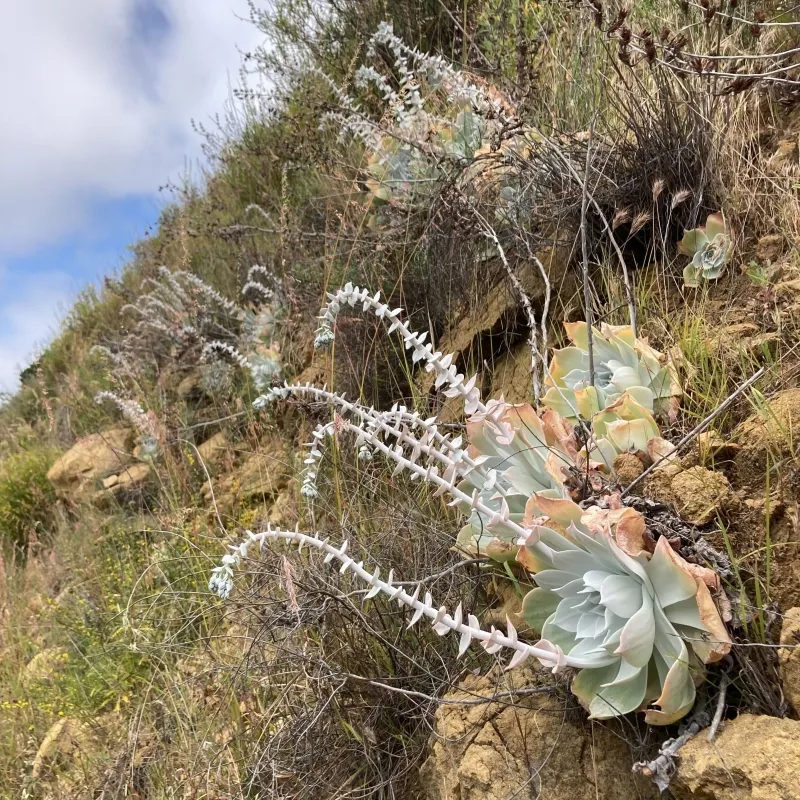
Some growers note that planting this succulent at an angle allows rain water to drain away, preventing crown rot. Others say that this plant prefers to be grown on a slope, as it is often seen in habitat.
Appreciates full sun with an eastern or western exposure, but if grown in a southern exposure it prefers part shade.
Since this plant prefers a dry summer grow it in a medium to large sized pot, allowing it to make the most of winter rains.
Special Interest
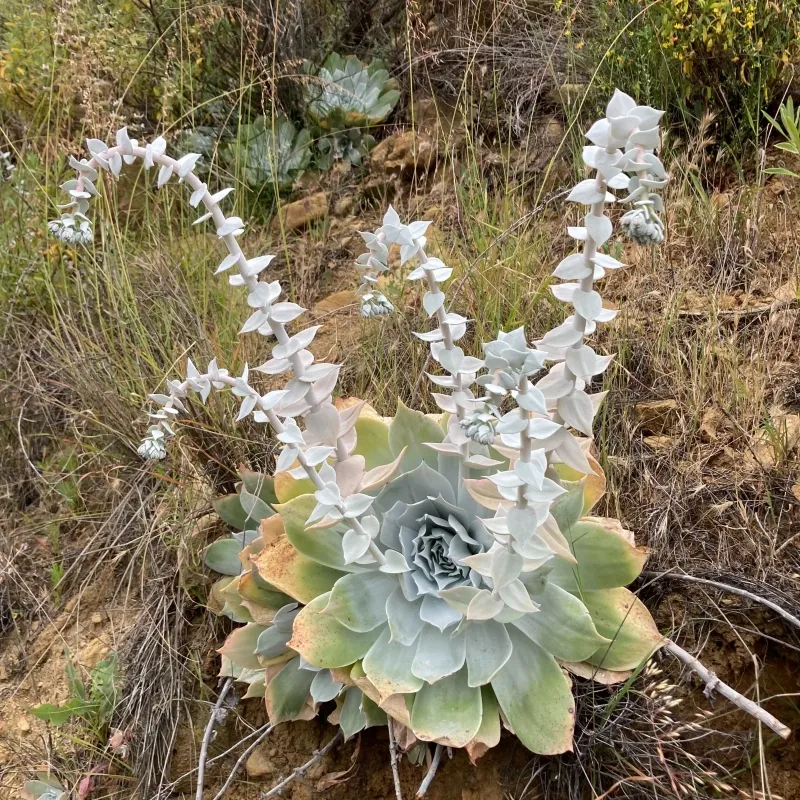
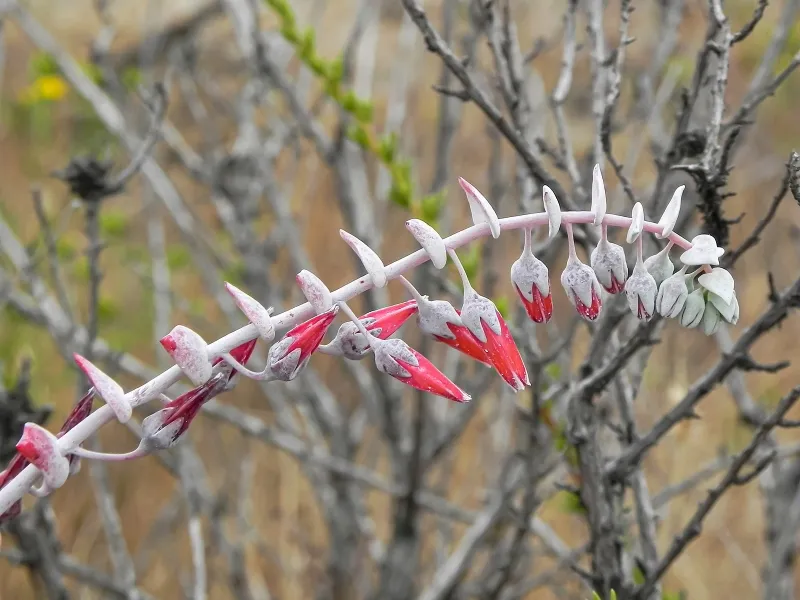
In late winter to spring pinkish white flower spikes emerge, around a foot tall, and hold pale green to white flower buds, which open rose-red.
Links
The above information reflects the observations of Grubb and Nadler and our extended plant community. We always consider input from fellow horticulturists and welcome feedback from those with additional information on the culture of this plant.
© 2020–2026 Grubb and Nadler. All rights reserved.