
Dudleya virens
bright green dudleya
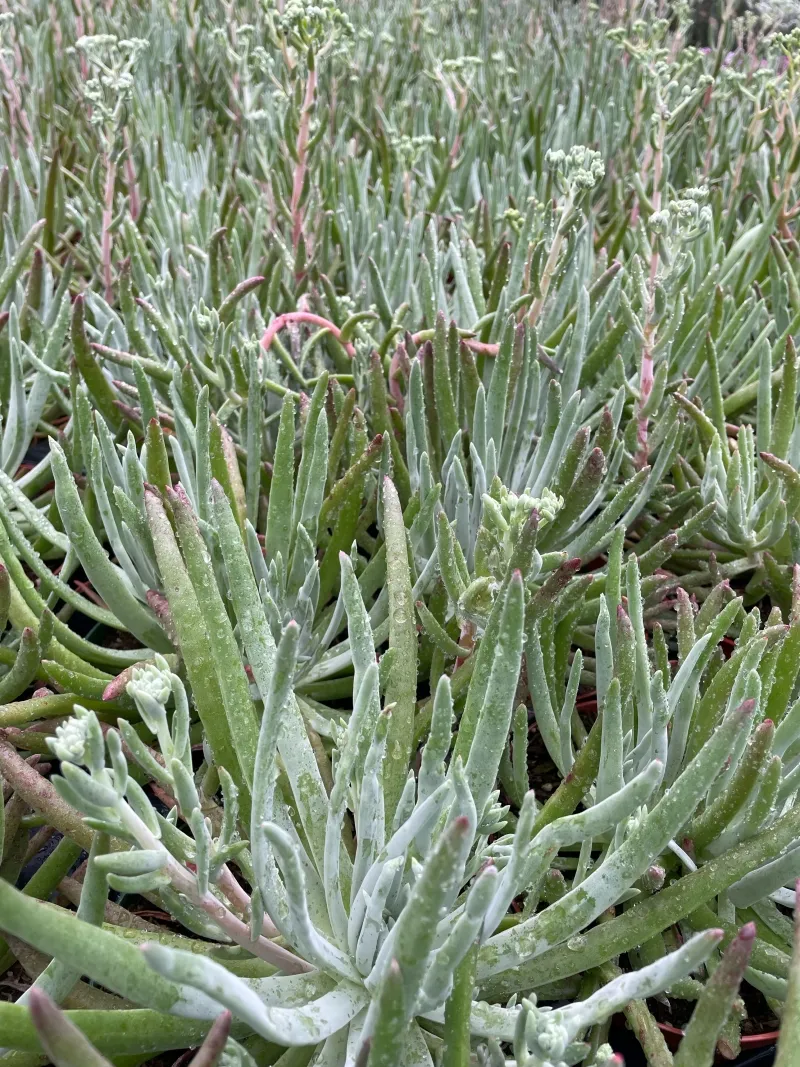
California native. The green live-forever has clustering habit with low trunks over time. Clusters of white star flowers in summer.
 Height | 6–12in |
|---|---|
 Width | 12–18in |
 Tolerates | Coast, Cool Summers, Drought, Fog, Pots, Neglect, Salt, Wind |
 Water needs | Lowest |
Dudleyas thrive best in areas that aren't too far from the coast. They appreciate winter rains and fog drip during the summer, but often respond poorly to heavy summer watering. At a minimum, be sure dudleya are bone dry before watering during summer. Waiting for the lower leaves to shrivel will help ensure you aren't overwatering. If you choose to withhold summer water entirely, your dudleya may look withered or 'dead' by August, with only a few inner leaves still succulent, but then will plump up quickly with rain (or irrigation) in the fall. They grow in rocky outcrops, so good drainage is essential, especially if you plan on watering during summer to keep the plant from looking too stressed. | |
 Hardy to | 25°F |
 Exposure | Part Shade – Full Sun |
 Plant traits | Flowering, Rosette, Succulent, Suckering |
 Indoor / outdoor | Outdoor |
 Drainage | In Ground: Cactus Mix, In Pots: Cactus Mix, Requires Perfect Drainage, Tolerates Sandy Soil |
 Fertilizing | All Purpose |
 Origin | California, USA |
 California native | Yes |
 Sunset zones | 9, 14–17, 19–24 |
Growing Notes
Dudleya are from our Mediterranean climate, making them very carefree on the coast of California. Though they can be planted year round, planting during the fall coincides nicely with the plant's active growing season.
On the coast they love full sun, but if they are grown inland, give them some afternoon shade.
Upright shoots of dangling candy corn flowers are usually present in the spring. They come in warm colors from yellow to red and pink. Prune off older dead flower spikes once they are dry and brittle.
Dudleya leaves are even more delicate than other succulents, so be sure they are handled gingerly and placed away from high traffic areas.
Extremely salt tolerant.
Which store do you shop at?
The above information reflects the observations of Grubb and Nadler and our extended plant community. We always consider input from fellow horticulturists and welcome feedback from those with additional information on the culture of this plant.
© 2020–2026 Grubb and Nadler. All rights reserved.