
Encephalartos altensteinii
breadtree
Showy, choice cycad from South Africa is easy to grow in well-drained soil with moderate summer irrigation. Good in pots.
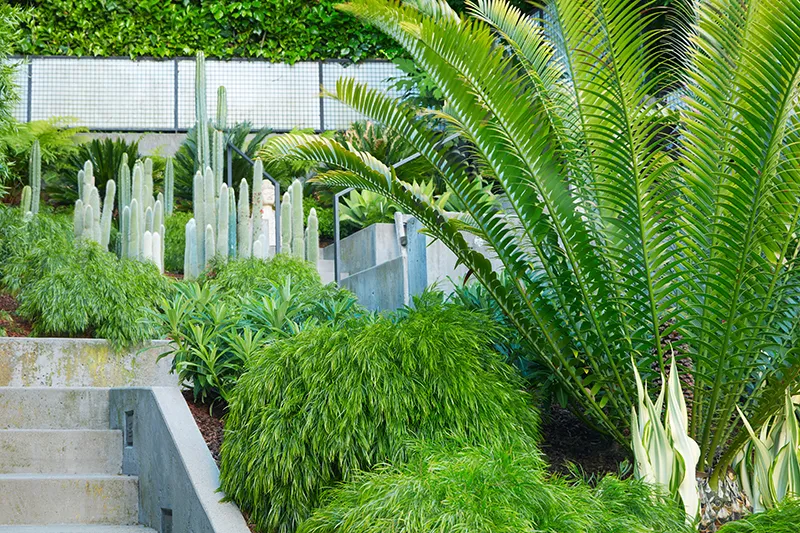
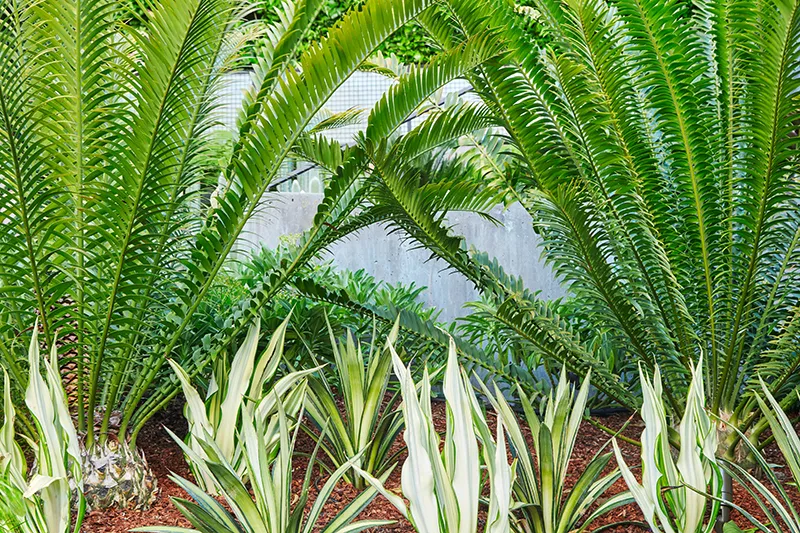
 Height | 2–10ft |
|---|---|
 Width | 3–6ft |
 Tolerates | Cool Summers, Drought, Deer, Heat, Pots, Wind |
 Water needs | Low – Moderate |
Cycads need good drainage to thrive, and most require average water once established. Many of the South African cycads like this one are quite drought tolerant at maturity. | |
 Hardy to | 22°F |
 Exposure | Part Shade – Full Sun |
 Plant traits | Armed, Rosette, Suckering, Trunking |
 Indoor / outdoor | Outdoor |
 Drainage | In Ground: Cactus Mix, In Pots: Cactus Mix |
 Fertilizing | All Purpose |
 Origin | E Africa |
 California native | No |
 Sunset zones | 13–24 |
Growing Notes
Cycads look adorable when they're small! And it's a good thing, too, because these plants are slow-growing, taking decades to become large specimens, and much longer to achieve the scale of plants in habitat. Cycads flush leaves infrequently, often only once a year, but when they do it's quite the show, as they flush a whole crown of leaves all at once.
Since cycad leaves are slow to replace themselves, be extra careful not to physically damage them.
As older leaves turn brown, they can be pruned back to the trunk and removed.
Be sure to fertilize your cycad in the spring. Without a good amount of food, your cycad might skip a year of flushing its leaves!
If gophers are prevalent in your area be sure to cage this plant.
This plant will send off pups, but only after many years of growth as a solitary plant.
Special Interest
Cycads look like palm trees, but they are gymnosperms that bear either male or female cones, making them more closely related to a pine tree than a palm tree. Their similar appearance is created by convergent evolution, whereby dissimilar plants adapt similar forms to survive.
Since they require a male and female plant to produce and are very slow growing, large cycads are usually quite expensive and rare.
The oldest potted plant on earth is a cycad: Encephalartos altensteinii (like this one!) in the Kew Gardens collection. This plant was brought to England and planted there in 1775, when it was already likely quite old.
A Cycas rumphii was planted in the Lincoln Park Conservatory in Chicago to mark its completion in 1890. It was estimated at over a hundred years old when planted, and it still grows in the collection today. It is older than Chicago itself, which was incorporated in 1833.
The above information reflects the observations of Grubb and Nadler and our extended plant community. We always consider input from fellow horticulturists and welcome feedback from those with additional information on the culture of this plant.
© 2020–2026 Grubb and Nadler. All rights reserved.