
Euphorbia abyssinica
Candelabra tree spurge
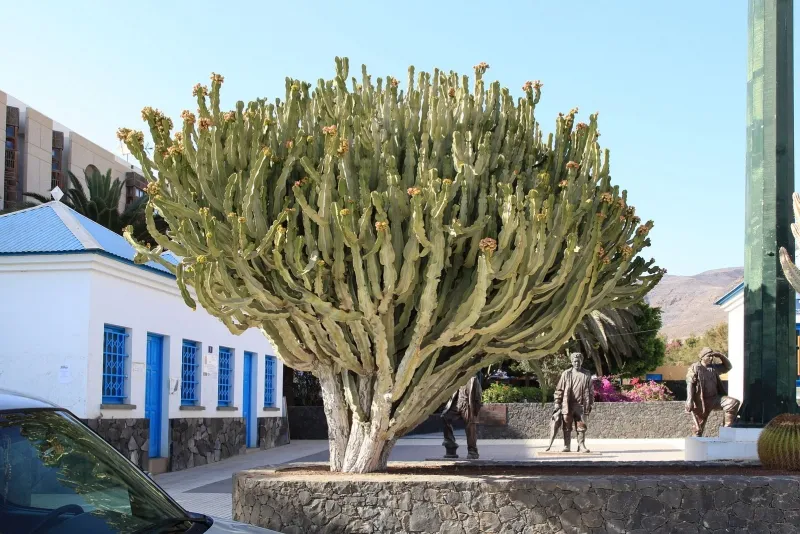
Tree-like euphorbia resembles a cactus with a dense candelabra form. Specimen plant for indoors in high light or in the landscape where adapted.
 Mature size | 10–20ft tall 10–15ft wide |
|---|---|
 Exposure | Part Shade – Full Sun |
 Hardy to | 35°F |
 Sunset zones | 13, 23, 24, H2 |
 Water needs | Low – Moderate Appreciates infrequent, deep watering in the warmer parts of the year for steady growth. |
 Tolerates | Drought, Deer, Gophers, Heat, Pots, Rooftops |
 Plant traits | Sculptural, Succulent, Toxic Sap, Tree |
 Drainage | In Ground: Cactus Mix, In Pots: Cactus Mix, Tolerates Sandy Soil |
 Fertilizing | All Purpose |
 Origin | Ethiopia, Somalia, Sudan, Eritrea |
Growing Notes
Excellent drainage helps this tropical succulent thrive in winter-wet California landscapes. As with all euphorbias, wash off any sap from skin or eyes immediately.
Special Interest
While this species is variable, it consistently has either no trunk or a very short trunk. Branching is typically so dense and consistent that you cannot see through the tree, which has an inverted triangle shape when young, shifting to a more rounded typical tree-like form with great age.
More Info
Photo by Frank Vincentz.
This plant was grown for an outdoor environment, so we do not recommend moving it inside. In general we do not recommend moving plants raised for an outdoor environment indoors.
This plant would make a good houseplant if it had been grown in a controlled greenhouse with houseplant soil. This 'greenhousing' ensures that plants who come home with you are well acclimated to indoor life, and also that they don't have any pests. It is common for outdoor plants to have other passengers as well, such as earthworms or centipides that don't necessarily hurt the plant, but aren't welcome indoors.
If you consider yourself an expert gardener, you can of course attempt to transition this plant indoors. In that case you'll want to strip all the soil from the rootball, wash the roots clean and then spray the entire plant (leaves, undersides of the leaves, all the cracks and roots) with a mix of one tablespoon of rubbing alcohol in a cup of water. Repot the plant in the appropriate sterile soil/pot and take extra care as it transitions to the indoors, especially looking for pests and treating at the first sign of problems. Always consider the risk that any bugs could also affect other houseplants you have nearby.
Links
What we've learned from growing this plant ourselves and in our customers' gardens. We always love to hear more. Tell us
© 2020–2026 Grubb and Nadler. All rights reserved.