
Euphorbia lambii
truffula tree
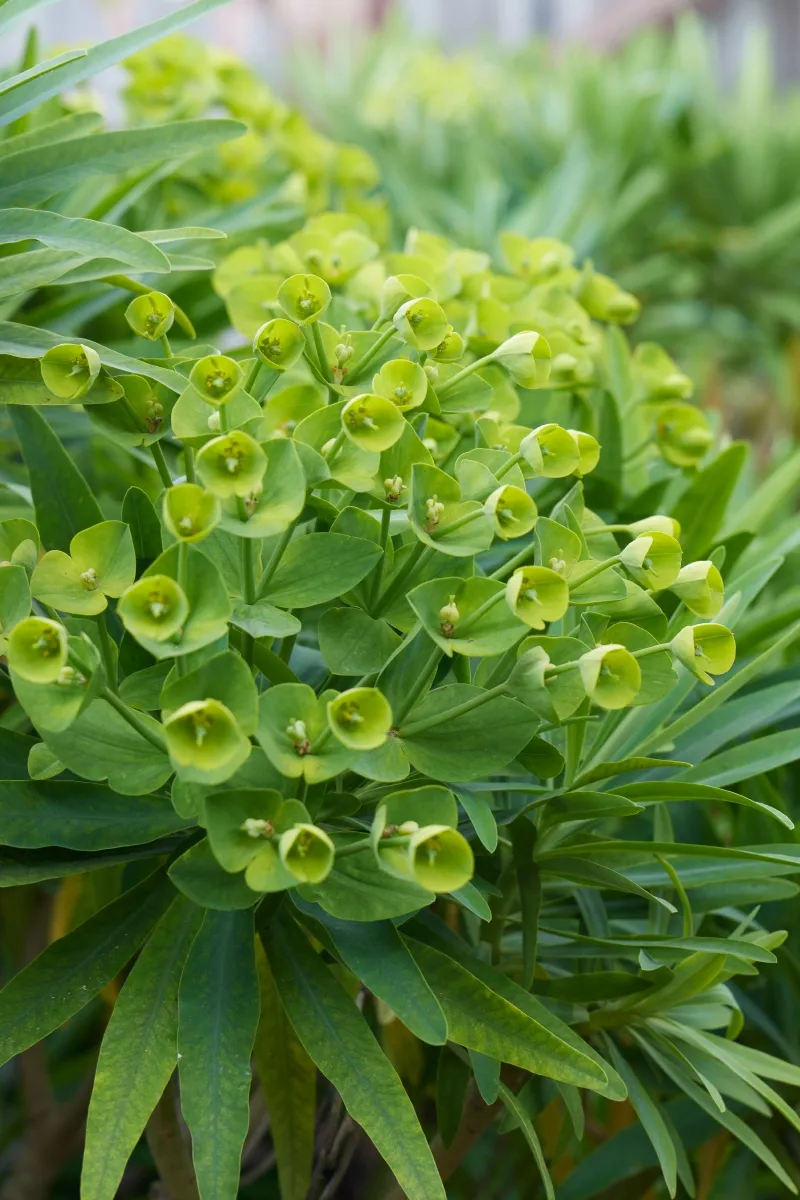
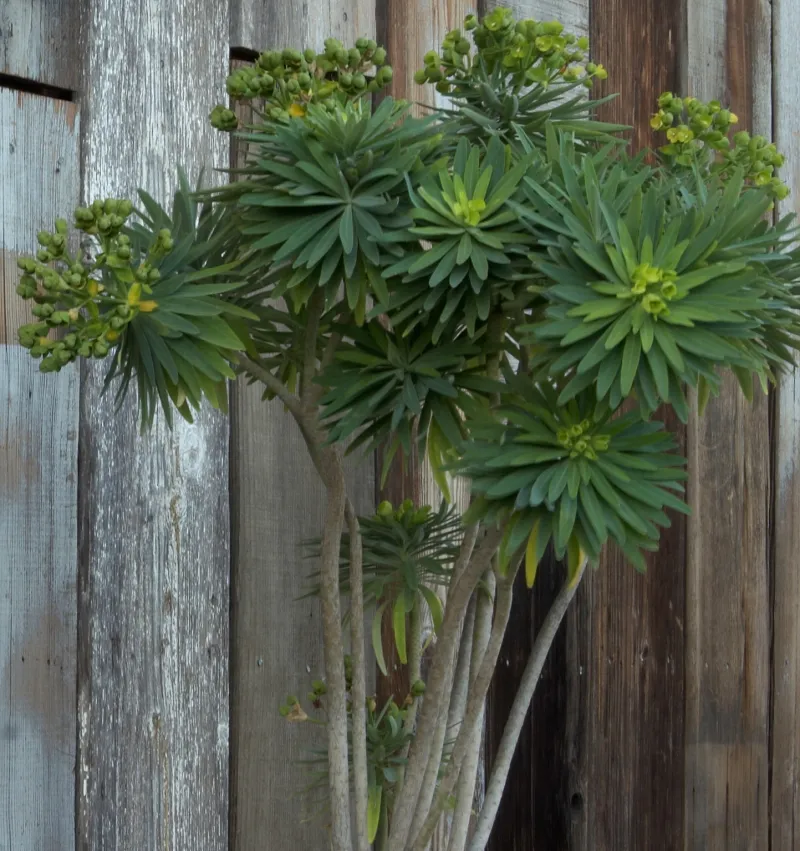
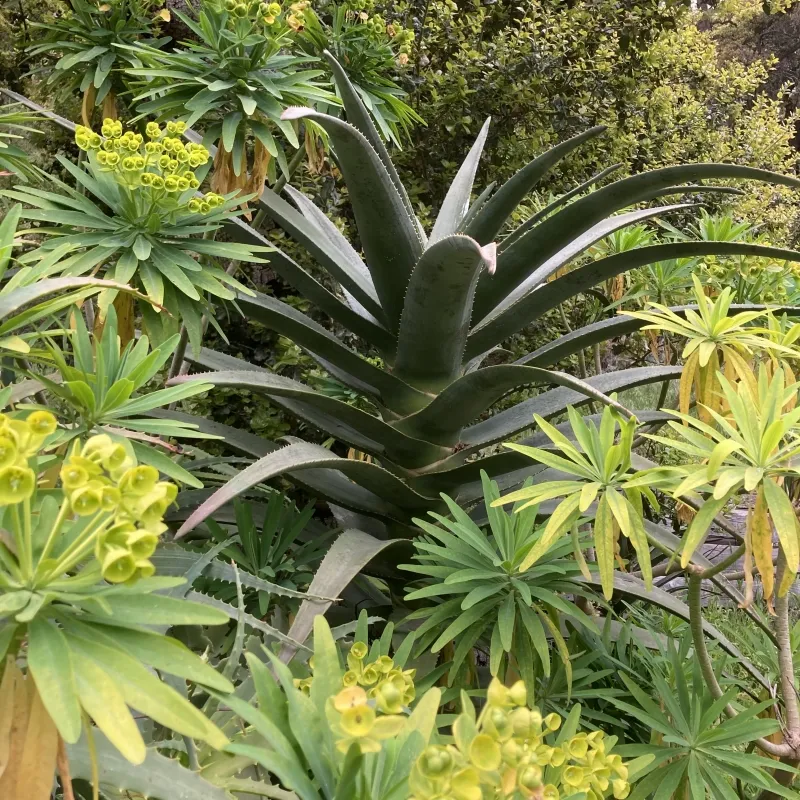
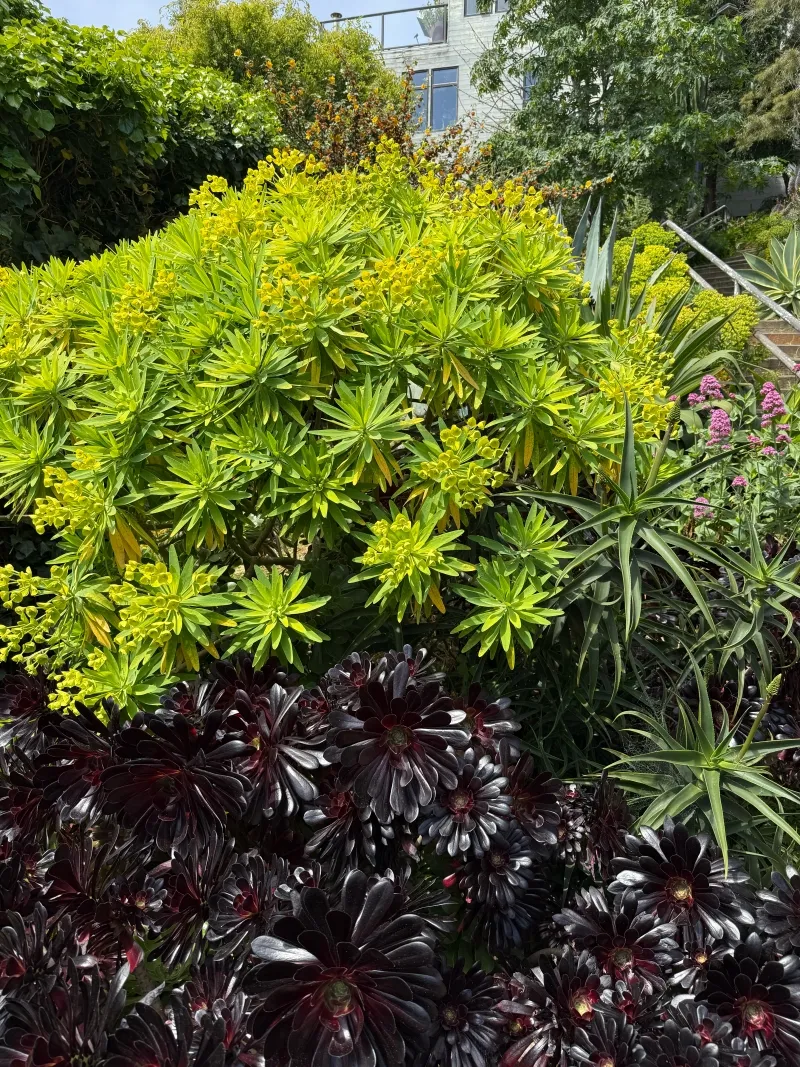
Eye-catching evergreen mini-tree with tufted branches tipped by green disk-shaped blossoms in spring. Perfect potted tree, carefree garden shrub in sun or bright shade.
 Height Height | 7–9ft |
|---|---|
 Width Width | 6–10ft |
 Tolerates Tolerates | Drought, Deer, Gophers, Heat, Pots, Neglect, Wind |
 Water needs Water needs | Low |
Being from the Canary Islands this plant is perfectly adapted to California, often establishing itself over time and needing little or supplemental water along the coast. Water this plant infrequently, when the top two inches or so of soil feel dry. Usually this will mean every week or two in dry weather. If you establish this pattern over several years, then you can cut back to watering every four to six weeks in dry weather. Use drippers, emitters, or a slow stream of water so that it doesn't run off; allow the water to trickle all the way down through the deepest layers of soil. This plant will look more lush if given water every two to four weeks during dry weather once established. In a pot slowly water the entire surface until water comes out of the bottom of your pot. | |
 Hardy to Hardy to | 25°F |
 Exposure Exposure | Part Shade – Full Sun |
 Plant traits Plant traits | Sculptural, Solitary, Toxic Sap, Tree, Trunking |
 Indoor / outdoor Indoor / outdoor | Outdoor |
 Drainage Drainage | In Ground: Cactus Mix, In Pots: Cactus Mix, Tolerates Sandy Soil |
 Fertilizing Fertilizing | All Purpose, Low Needs |
 Origin Origin | Canary Islands |
 California native California native | No |
 Sunset zones Sunset zones | 15–24 |
Growing Notes
Fast growing, especially when young.
Each time this plant blooms it branches with many symmetrical branches. This creates a mesmerizing pattern over time. By thinning out some branches you can create many interesting forms. Take care when pruning, as euphorbias have toxic sap that can cause a skin rash or damage to the eyes (make sure to rinse repeatedly with water if sap gets anywhere near your eyes). This sap also prevents predation from gophers and deer.
Will re-seed lightly around the garden. Let these babies grow if they land in a fortuitous location, but otherwise they are easy enough to pull out.
The above information reflects the observations of Grubb and Nadler and our extended plant community. We always consider input from fellow horticulturists and welcome feedback from those with additional information on the culture of this plant.
© 2020–2026 Grubb and Nadler. All rights reserved.