
Fatsia japonica ‘Variegata’
Japanese aralia
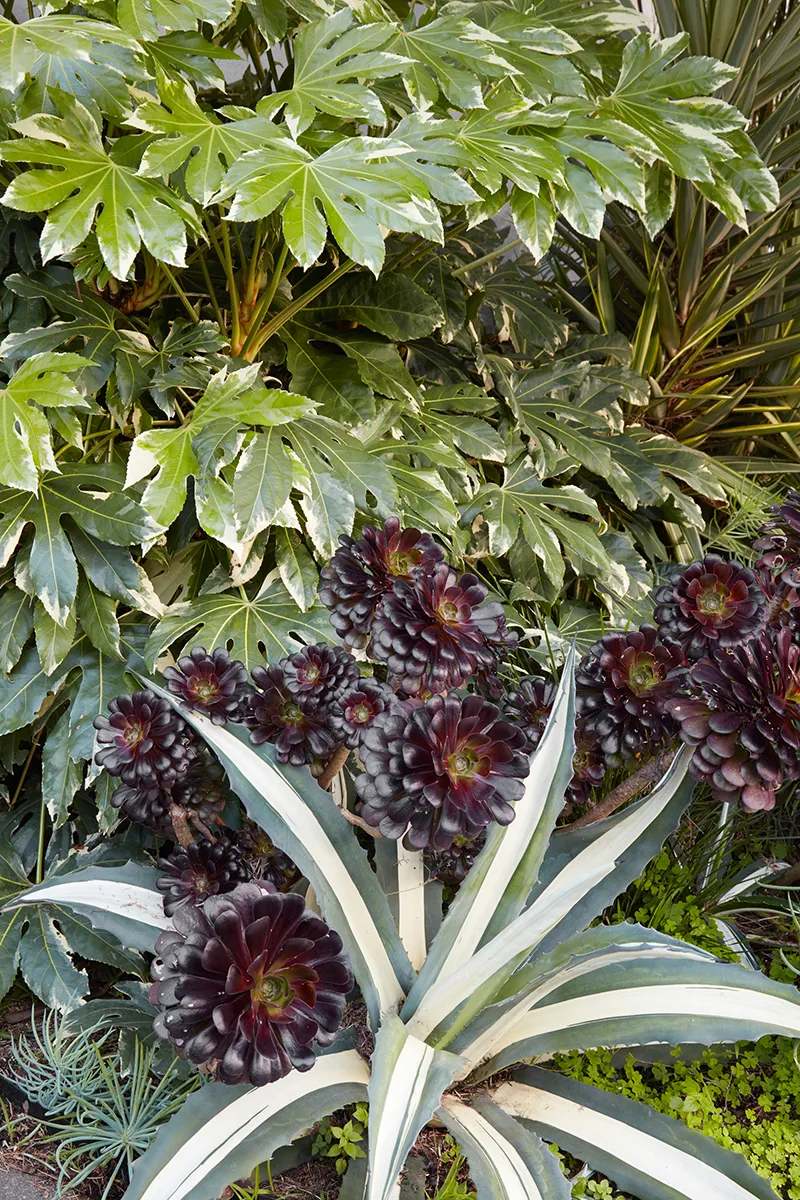
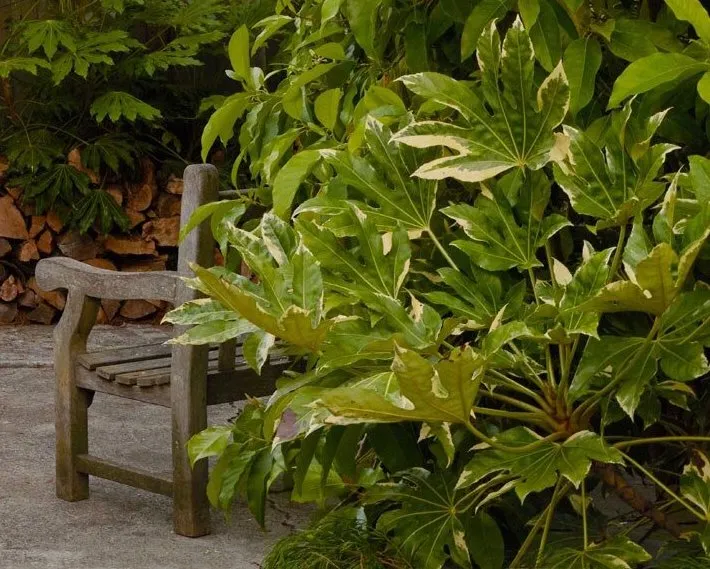
Lush, sparsely branching evergreen shrub has creamy variegation on well displayed shiny leaves. Foliage feature for many years, trunking upright form with time. Container champion.
 Altura Altura | 2–5 pies |
|---|---|
 Ancho Ancho | 3–6 pies |
 Tolera Tolera | Frío, Veranos frescos, Neblina, Macetas |
 Riego Riego | Moderado |
Fatsia prefer regular watering, but if they are grown in full shade, they can be relatively drought tolerant once established, needing water only every couple of weeks. If grown with less water they will grow slowly, if at all. If water isn't plentiful this plant displays with a less full crown, having only a few leaves atop each stem - still quite attractive. | |
 Resiste hasta Resiste hasta | 0 °F |
 Exposición Exposición | Sombra total – Pleno sol |
 Características Características | Follaje vistoso, Barrera visual, Arbusto, Tropical, Forma tronco |
 Interior / exterior Interior / exterior | Exterior |
 Drenaje Drenaje | En el suelo: mezcla para plantar, En maceta: tierra para macetas, Tolera suelo pesado |
 Fertilización Fertilización | Uso general |
 Origen Origen | Japón, Corea, Taiwán |
 Zonas Sunset Zonas Sunset | 4–9, 14–24, H2 |
Notas de cultivo
Fatsia are moderate to slow growers, so be sure to fertilize them and get the most of their momentum, especially if a taller plant is desired.
Older leaves shed cleanly off, leaving a smooth glossy trunk. Shed leaves are easy to clean up, making this a very low-maintenance plant. Occasionally older leaves will yellow and linger on the stem - they will pop off without damaging the trunk to keep a clean looking plant.
Interés especial
Many small white umbels of flowers ripen into purple-black berries. Often it's easier to cut off the berries as they form, than clean them up later.
Fantastic addition to the tropical or Zen garden.
Esta información refleja las observaciones de Grubb and Nadler y de nuestra comunidad de amantes de las plantas. Siempre tomamos en cuenta las aportaciones de otros horticultores y agradecemos los comentarios de quienes tengan más información sobre el cultivo de esta planta.
© 2020–2026 Grubb and Nadler. Todos los derechos reservados.