
Ficus altissima ‘Yellow Gem’
Yellow Gem banyan
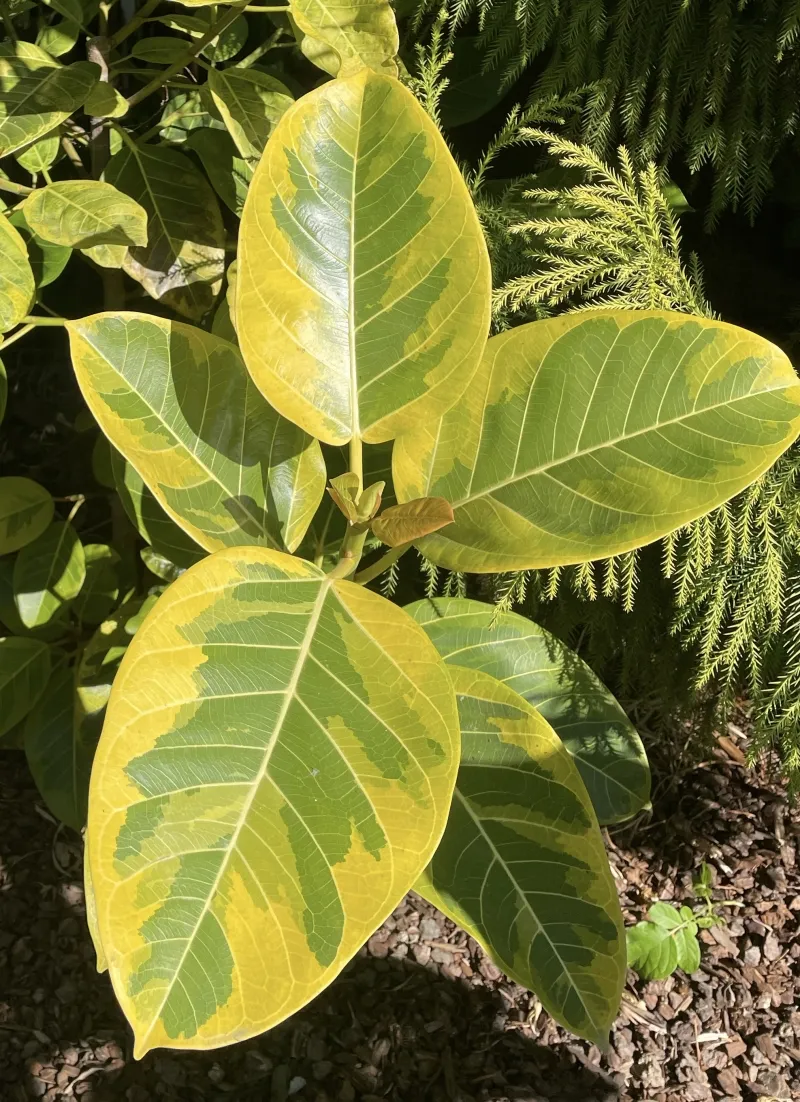
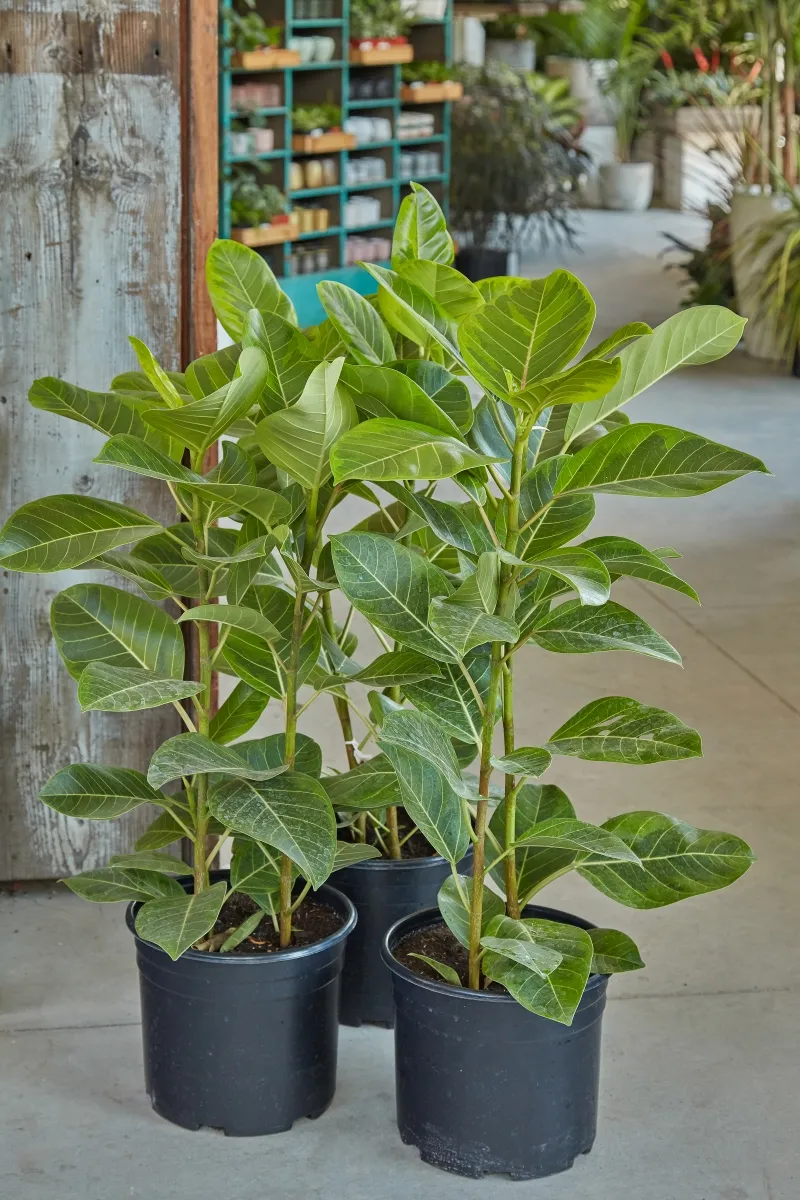
Growing it outdoors
Although it grows very happily outdoors, a plant that has lived indoors may sunburn at first if it's moved straight into the sun. It will recover.
 Height | 10–40ft |
|---|---|
 Width | 8–30ft |
 Tolerates | Heat, Pots |
 Water needs | Moderate |
This tree should be watered deeply and regularly (when the top couple of inches of soil has dried). Usually this will mean once every week or two during dry weather. A few years after the tree has been planted, once it's established, you can likely cut back to deep infrequent waterings. Use drippers, emitters a slow stream of water so that it doesn't run off; allow the water to trickle all the way down through the deepest layers of soil. | |
 Hardy to | 32°F |
 Exposure | Part Shade – Full Sun |
 Plant traits | Foliage Feature, Tree, Tropical |
 Drainage | In Ground: Cactus Mix, In Pots: Cactus Mix, Tolerates Sandy Soil |
 Fertilizing | All Purpose |
 Origin | SE Asia |
 California native | No |
 Sunset zones | 13, 23, 24, H2 |
Growing Notes
Variegation is more dramatic in sun.
All ficus respond well to pruning, allowing even very large ficus to be maintained at a modest size. They do exude white sap, often containing latex, so if you have a latex allergy avoid the sap.
Pruning them consistently and keeping in a smaller pot will make the leaves proportionately smaller. If you'd like to keep your tree very small (six inch to a one gallon size) remove the plant every three to five years and prune back the roots by one third. Repot in fresh potting soil.
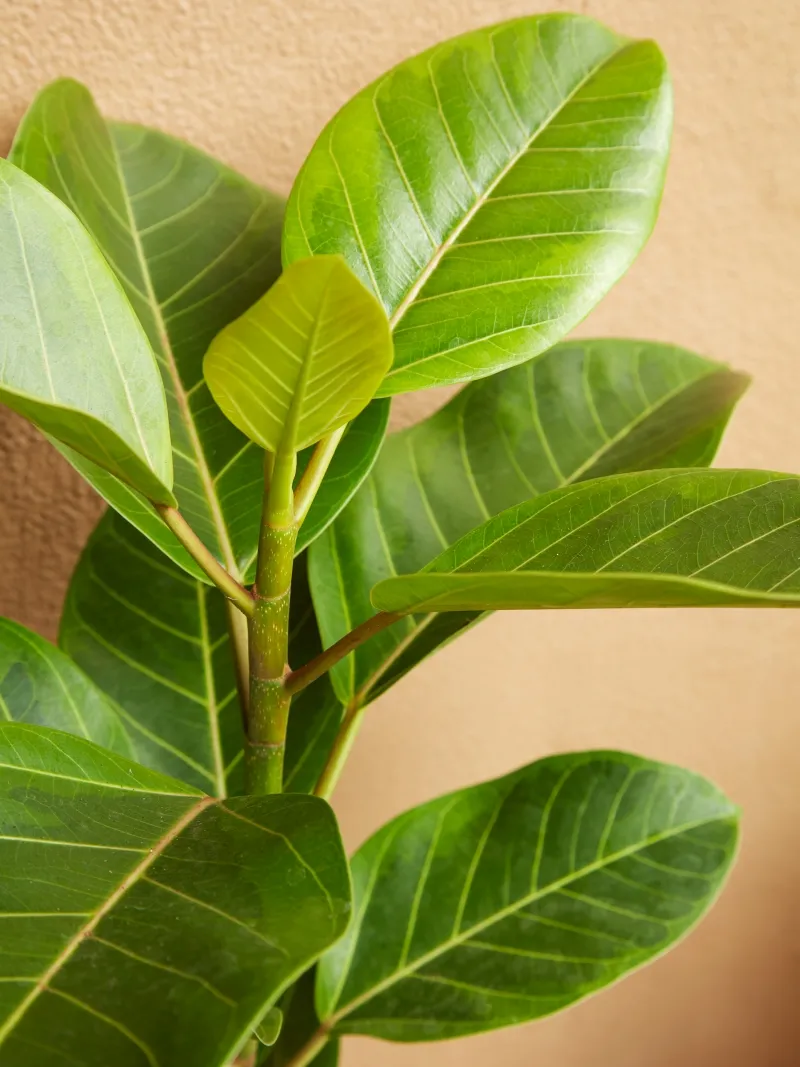
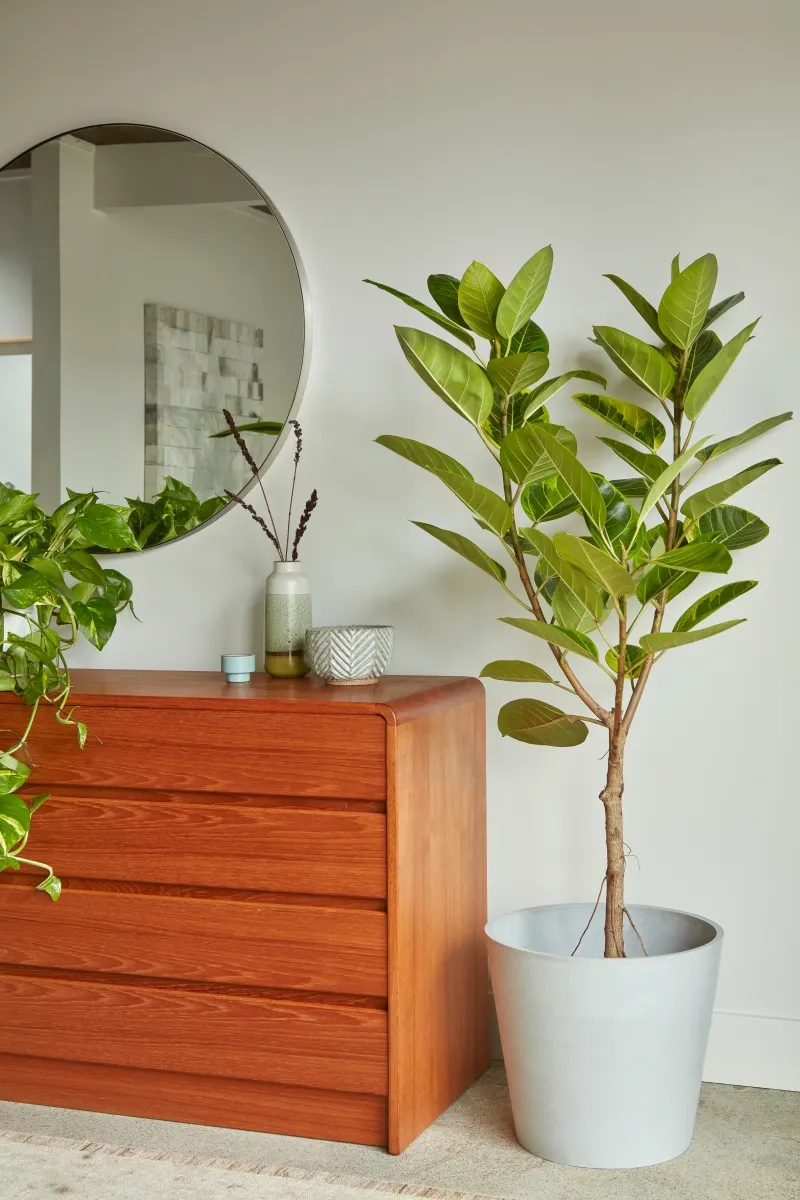
Growing it indoors
Broad evergreen leaves with chartreuse marginal variegation. Vigorous growth. In tropics grows into a large banyan tree, but slower and smaller in California.
| Height | 6–40ft |
|---|---|
| Width | 4–30ft |
| Water needs | When soil surface is dry. |
This plant wants water when the top of the soil is dry, but you can still feel moisture just below the surface. This plant will often fall into a once-a-week watering cycle, but remember that your watering should be based on the moisture left in the soil, which will depend partly on the moisture in the room and the weather outside. The soil surface goes a bit deeper for larger pots; for example, a plant in a 14-inch diameter pot should dry out a couple of inches deep before you water it, while a plant in a 4-inch pot will only want to dry out in the top half inch or so of soil. | |
| Exposure | Bright Indirect – Partial Direct |
| Plant traits | Foliage Feature, Tree, Tropical |
| Drainage | In Pots: Cactus Mix |
| Fertilizing | All Purpose |
| Origin | SE Asia |
Growing Notes
Variegation is more dramatic in brighter light.
All ficus respond well to pruning, allowing even very large ficus to be maintained at a modest size. They do exude white sap, often containing latex, so if you have a latex allergy avoid the sap. Pruning them consistently and keeping in a smaller pot will make the leaves proportionately smaller.
Which store do you shop at?
Special Interest
Ficus make figs, which at first don't seem to be flowers. The trick is that the flowers are on the inside of the fig, which is why many figs are hollow and so unusual inside.
Stories featuring this plant
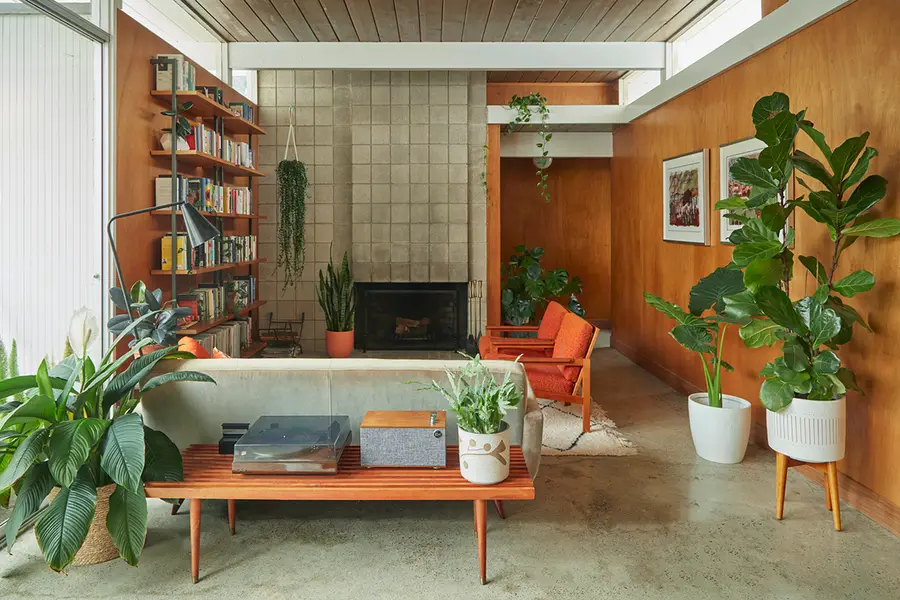 Garden storyPlant-Filled SF Eichler HideawayA mid-century Eichler home in SF, with its warm wood paneling, sleek concrete floors, and flood of light from inner courtyards, is the perfect place to grow a lush indoor garden. Some longtime FGG friends invited us into their home to share their houseplant inspiration.
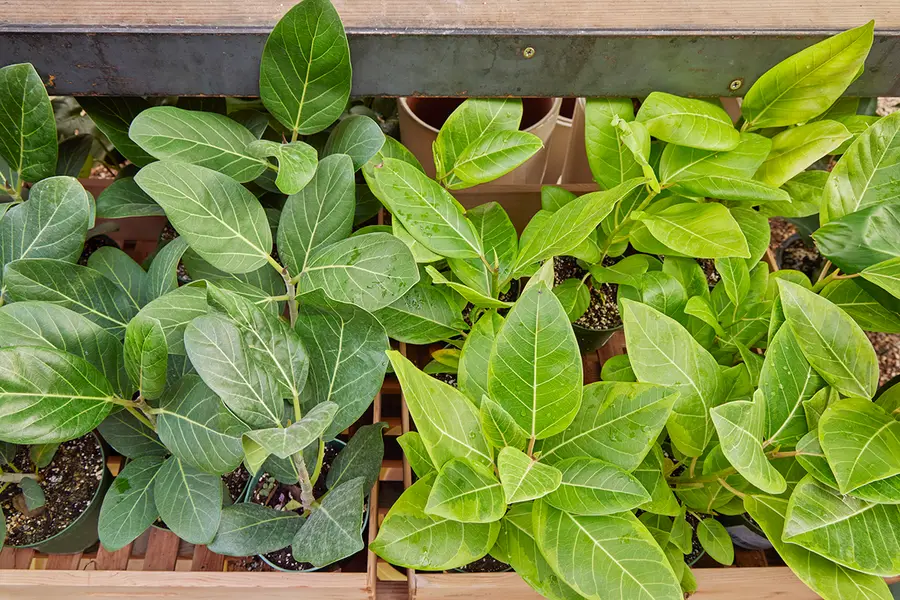 Garden storyOur Favorite Ficus for Your HomeWe carry many varieties of ficus houseplants for your indoor garden. Here are a few of our favorites with some helpful information and fascinating botanical history!
The above information reflects the observations of Grubb and Nadler and our extended plant community. We always consider input from fellow horticulturists and welcome feedback from those with additional information on the culture of this plant.
© 2020–2026 Grubb and Nadler. All rights reserved.