
Ficus petiolaris
rock fig
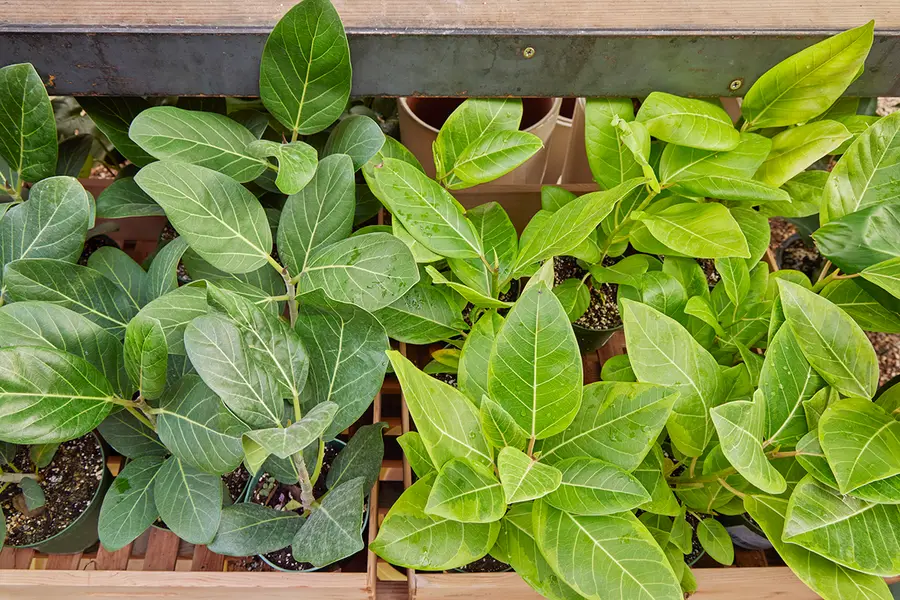
Cut back this tree hard each year to develop the characteristic caudex. Heart shaped leaves are bluish with red veins. Gritty mix. More water in summer. Winter/drought deciduous.
 Synonyms | Ficus palmeri, Ficus brandegeei |
|---|---|
 Height | 10–40ft |
 Width | 15–50ft |
 Tolerates | Drought, Heat, Pots |
 Water needs | Moderate |
This ficus is from a habitat that experiences prolonged drought. That doesn't mean that the fig needs drought, but it will tolerate drying out longer and survive it better than other ficus. Once it goes bone dry it will drop its leaves to conserve moisture; don't worry if all the leaves fall off! Restoring consistent watering will help your ficus leaf back out. This plant wants the top two-thirds of its soil to dry out between waterings, while always having some moisture left deep in the pot. Generally the plant will want water every one to three weeks. | |
 Hardy to | 25°F |
 Exposure | Part Shade – Full Sun |
 Plant traits | Caudiciform, Rock Garden, Solitary, Tree, Trunking |
 Indoor / outdoor | Outdoor |
 Drainage | In Ground: Cactus Mix, In Pots: Cactus Mix |
 Fertilizing | All Purpose |
 Origin | Mexico |
 California native | No |
 Sunset zones | 13, 21–24, H1, H2 |
Growing Notes
Grown in the ground in favorable climates, this species will become a tree ranging from 10 to 40 feet tall.
All ficus respond well to pruning, allowing even very large ficus to be maintained at a modest size. They do exude white sap, often containing latex, so if you have a latex allergy avoid the sap.
If exposed to cold winter weather black spotting on leaves is common.
Special Interest
Great for root-over-rock bonsai or sumo style bonsai.
Ficus make figs, which at first don't seem to be flowers. The trick is that the flowers are on the inside of the fig, which is why many figs are hollow and so unusual inside.
Stories featuring this plant
Links
Which store do you shop at?
The above information reflects the observations of Grubb and Nadler and our extended plant community. We always consider input from fellow horticulturists and welcome feedback from those with additional information on the culture of this plant.
© 2020–2026 Grubb and Nadler. All rights reserved.