
Furcraea parmentieri
weeping furcraea
Fast, neat, neglect-proof soft rosette grows 5-15 years before tall flower stalk forms, producing scores of babies. A giver. Monocarpic.
 Synonyms Synonyms | Furcraea bedinghausii |
|---|---|
 Height Height | 6–12ft |
 Width Width | 3–6ft |
 Tolerates Tolerates | Cold, Drought, Fog, Pots |
 Water needs Water needs | Low |
Water this plant infrequently, when the top two inches or so of soil feel dry. Usually this will mean every week or two in dry weather. If you establish this pattern over several years, then you can cut back to watering every four to six weeks in dry weather. Use drippers, emitters, or a slow stream of water so that it doesn't run off; allow the water to trickle all the way down through the deepest layers of soil. This plant will look more lush if given water every two to four weeks during dry weather once established. In a pot slowly water the entire surface until water comes out of the bottom of your pot. | |
 Hardy to Hardy to | 20°F |
 Exposure Exposure | Full Shade – Full Sun |
 Plant traits Plant traits | Monocarpic, Rosette, Solitary, Trunking |
 Indoor / outdoor Indoor / outdoor | Outdoor |
 Drainage Drainage | In Ground: Cactus Mix, In Pots: Cactus Mix, Tolerates Sandy Soil |
 Fertilizing Fertilizing | All Purpose, Low Needs |
 Origin Origin | Mexico |
 California native California native | No |
 Sunset zones Sunset zones | 8, 9, 12–23 |
Growing Notes
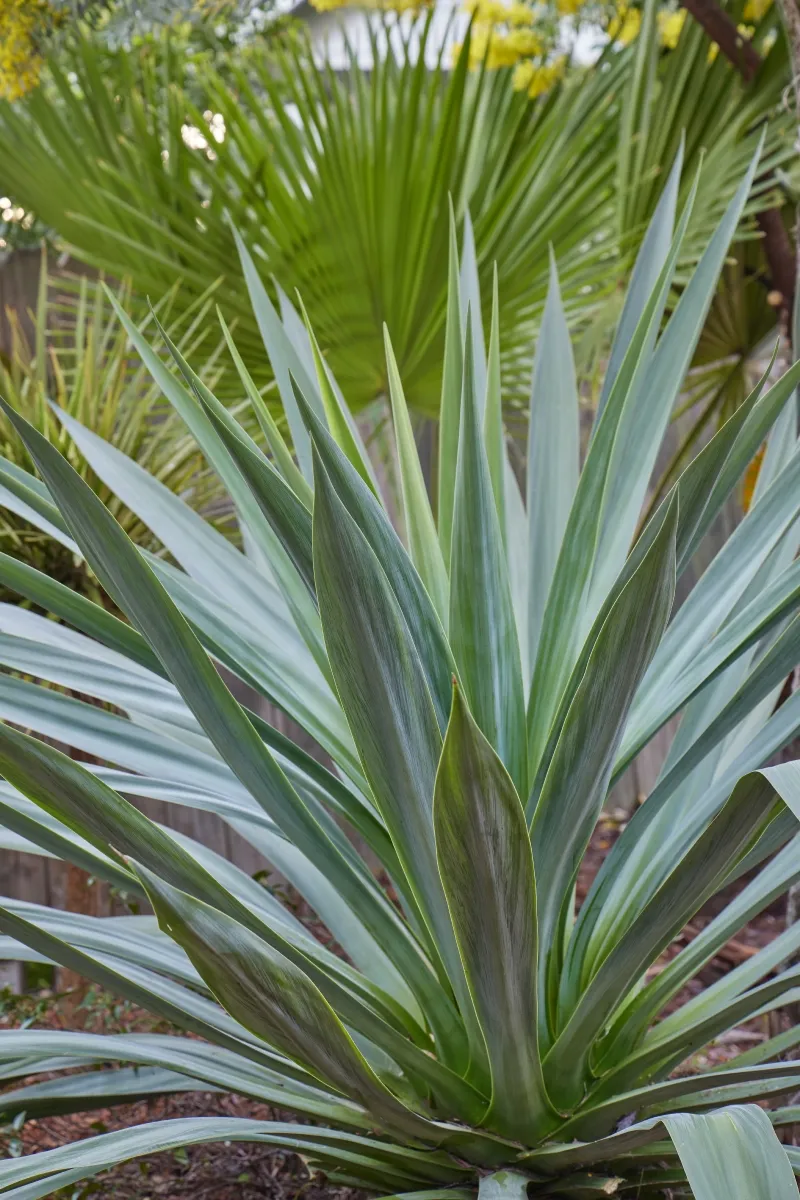
Perfect for a larger garden. As lower leaves turn brown prune them back to the trunk, or let them form a beard. If a more fountain like form is desired prune even more lower leaves so that only angled, upright leaves remain.
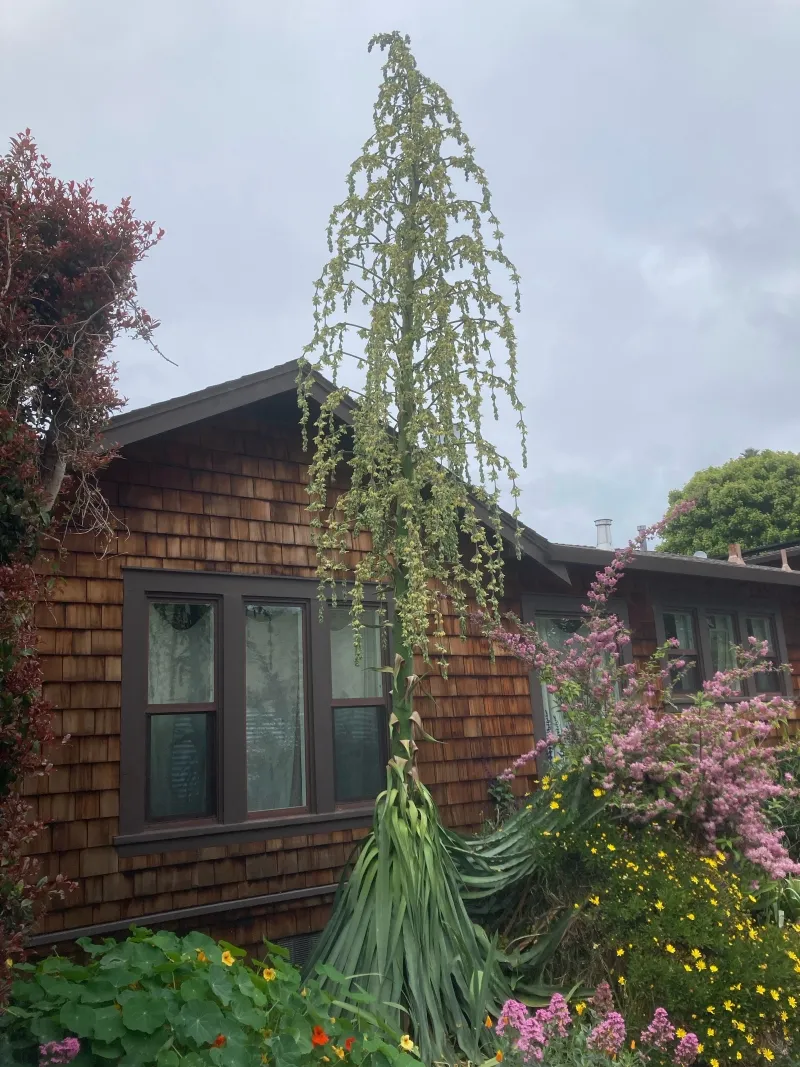
The trunk of this furcraea is generally 6-12 feet before it blooms.The whole bloom process is a pleasure. The long lasting bloom attracts scores of pollinators.
Protect from gophers.
Special Interest
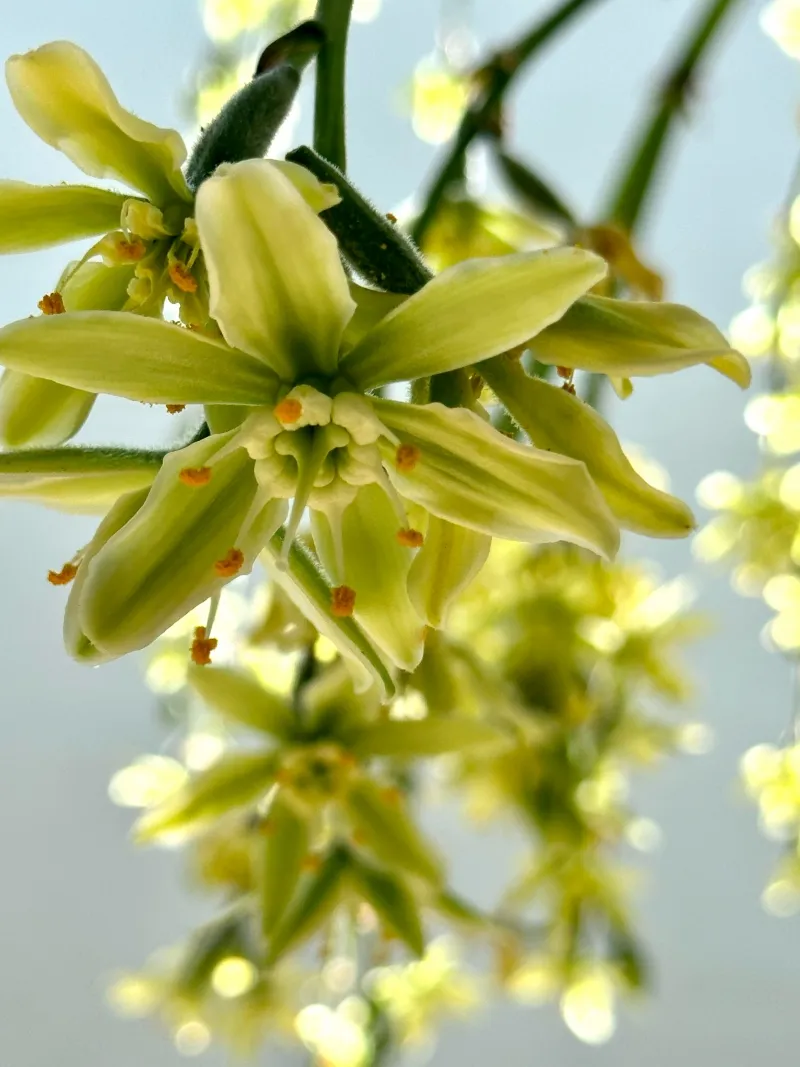
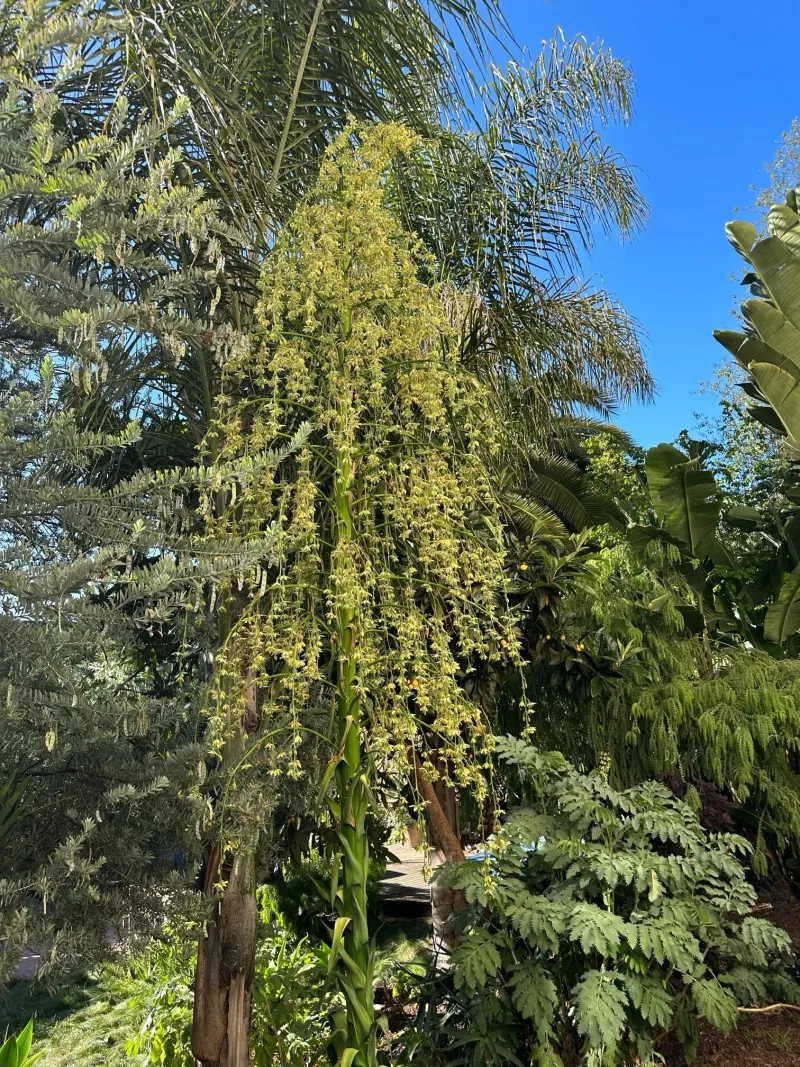
The common name weeping furcraea refers to the 10-15 foot tall flower spike of this plant covered in weeping green-yellow flowers. After flowering the main rosette will die, leaving multitudes of keikis (bulbils) that can be replanted.
The above information reflects the observations of Grubb and Nadler and our extended plant community. We always consider input from fellow horticulturists and welcome feedback from those with additional information on the culture of this plant.
© 2020–2026 Grubb and Nadler. All rights reserved.