
Grewia caffra
cross berry
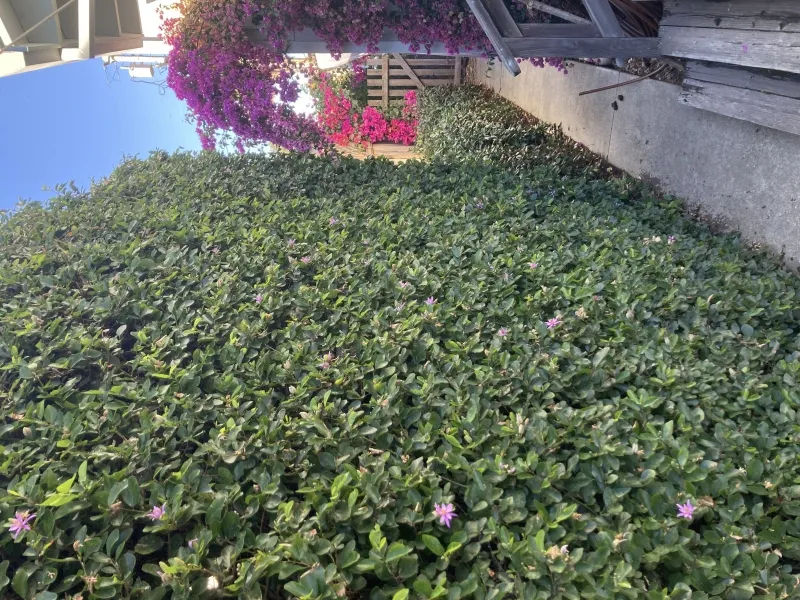
Versatile fast growing shrub. Prune to shape: treelike, screen, hedge or thin espalier. Abundant purple-pink star flowers in summer. Attracts butterflies. Non invasive roots.
 Altura Altura | 6–12 pies |
|---|---|
 Ancho Ancho | 5–9 pies |
 Tolera Tolera | Costa, Veranos frescos, Neblina, Macetas, Sal, Viento |
 Riego Riego | Moderado |
Being from South Africa, this plant is well adapted to our Mediterranean climate. Water it plant regularly, when the top inch or so of soil feels dry. If you establish this pattern over several years, then you can cut back to watering every week or two in dry weather. Use drippers, emitters, or a slow stream of water so that it does not run off; allow the water to trickle all the way down through the deepest layers of soil. In a pot slowly water the entire surface until water comes out of the bottom of your pot. In habitat this plant will defoliate during the dry seas (called estivation) so be careful pushing it too dry. | |
 Resiste hasta Resiste hasta | 20 °F |
 Exposición Exposición | Sol parcial – Pleno sol |
 Características Características | Mariposas, Con flores, Seto, Fruto ornamental, Barrera visual, Arbusto |
 Interior / exterior Interior / exterior | Exterior |
 Drenaje Drenaje | En el suelo: mezcla para plantar, En maceta: tierra para macetas, Tolera suelo pesado, Tolera suelo arenoso |
 Fertilización Fertilización | Uso general |
 Origen Origen | Sudáfrica |
 Nativa de California Nativa de California | No |
 Zonas Sunset Zonas Sunset | 8, 9, 12–24 |
Notas de cultivo
The usefulness of this plant as a thin, flat element can't be overstated. One grower we know has pruned his completely into a thin living railing. It branches in one dimension, making it very easy to espalier or keep on a single plane.
Orange fall berries loved by birds. Curiously each individual berry is grown together in clusters of four berries, giving this plant its common name - cross berry.
This plant makes excellent bonsai candidate (see linked photo below).
Interés especial
In South Africa the fruits of this plant are used in various ways, from drying and eating, to frothing in milk, or even brewing a bush beer!
Enlaces
Esta información refleja las observaciones de Grubb and Nadler y de nuestra comunidad de amantes de las plantas. Siempre tomamos en cuenta las aportaciones de otros horticultores y agradecemos los comentarios de quienes tengan más información sobre el cultivo de esta planta.
© 2020–2026 Grubb and Nadler. Todos los derechos reservados.