
Haemanthus albiflos
white paint brush
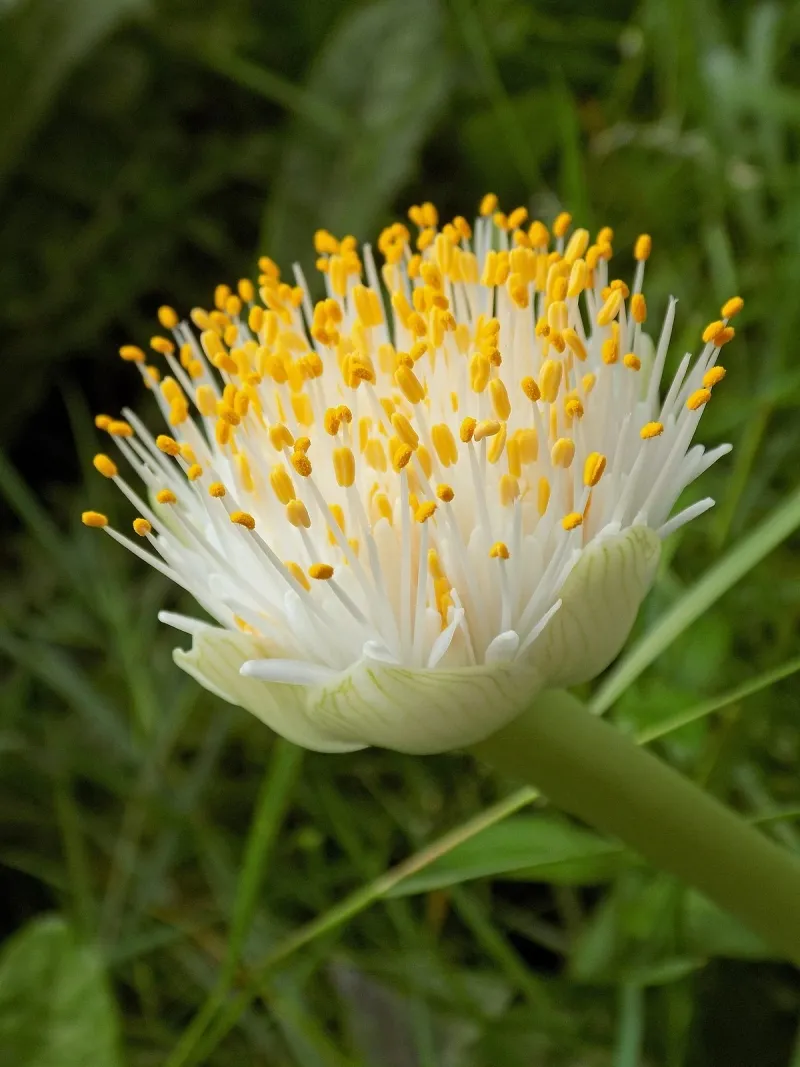
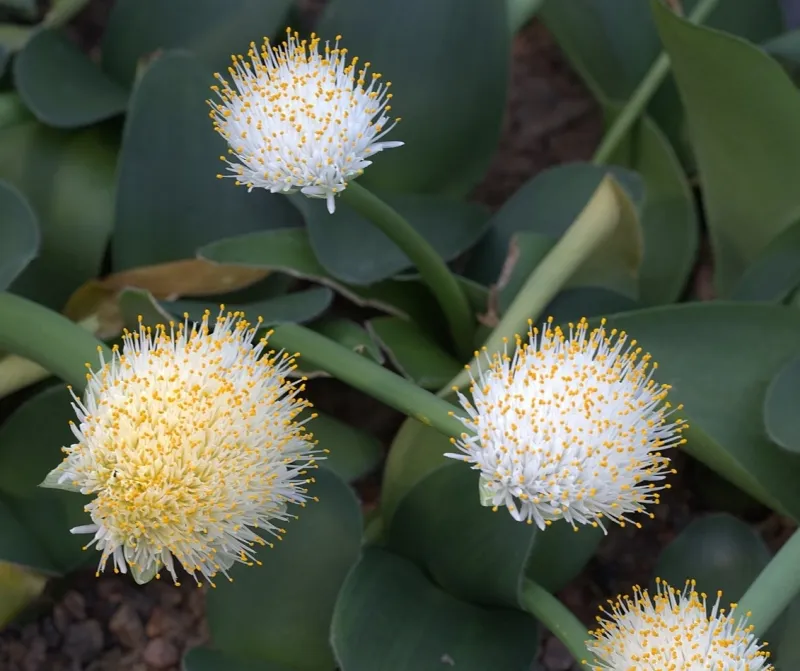
Evergreen bulb creates tight colonies of lush oblong leaves. In late fall many snow-white paintbrush-like flowers emerge, neatly accented with yellow anthers. Great in pots and even indoors.
 Height Height | 6–10in |
|---|---|
 Width Width | 6–20in |
 Tolerates Tolerates | Coast, Cool Summers, Drought, Fog, Gophers, Pots, Neglect, Wind |
 Water needs Water needs | Low |
Of the easiest and most forgiving haemanthus. This plant grows across the summer and winter rainfall regions of South Africa, usually near the coast. As such, this plant prefers wet to dry watering year round, but is adaptable to whatever conditions it receives. When water is withheld entirely this plant sheds its leaves and goes dormant, waiting for the next rain. In coastal California winter rains (or a watering every two weeks if rains fail) are enough to tide this plant over, though you'll retain the nice lush leaves if you water through summer. | |
 Hardy to Hardy to | 26°F |
 Exposure Exposure | Full Shade – Part Sun |
 Plant traits Plant traits | Bees, Bulb, Butterflies, Clumping, Flowering, Rock Garden, Tropical |
 Indoor / outdoor Indoor / outdoor | Indoor or Outdoor |
 Drainage Drainage | In Ground: Cactus Mix, In Pots: Cactus Mix, Tolerates Sandy Soil |
 Fertilizing Fertilizing | All Purpose, Low Needs |
 Origin Origin | South Africa |
 California native California native | No |
 Sunset zones Sunset zones | 9, 14–17, 20–24 |
Growing Notes
If you have experience growing clivias, this plant requires similar cultural requirements.
Gritty soil is essential to keep the fleshy roots of this plant from rotting. Also, do your best not to disturb the roots during planting. When planting this bulb, allow the upper half to remain above ground. Over time the bulb itself becomes a curious stack of succulent layers, where the leaf bases persist.
Individual bulbs of this plant typically grow two opposite leaves, once a year. Each bulb may hold its leaves for years, and plants under ideal conditions may have several years of leaves present. Other times they may have some cosmetic blemishes from storms or other physical damage. One of our staff swears by cutting off the leaves (or withholding water until they shrivel up) during late summer, to be replaced by a new pair of fresh leaves in fall. In areas with hot summer heat this plant will often go deciduous and you should follow its lead, cutting back watering during this time.
While this plant performs well and blooms abundantly when pot-bound, after seven or eight years you may find blooms are diminishing; diving and repotting your bulbs will help produce more abundant blooms. Bulbs are best divided during spring or fall. After division avoid watering your plants for a week or two.
This plant looks best with a couple hours of direct sun near the coast, creating smaller tighter leaves; if grown in full shade the leaves are elongated, stretched, and fragile. Protect from sun in hot inland areas, where this plant is best grown in dappled shade.
If growing this plant indoors give it bright, but indirect light.
Special Interest
White flowers are followed by attractive red berries.
Links
The above information reflects the observations of Grubb and Nadler and our extended plant community. We always consider input from fellow horticulturists and welcome feedback from those with additional information on the culture of this plant.
© 2020–2026 Grubb and Nadler. All rights reserved.