
Hesperoyucca whipplei var. percursa
chaparral yucca
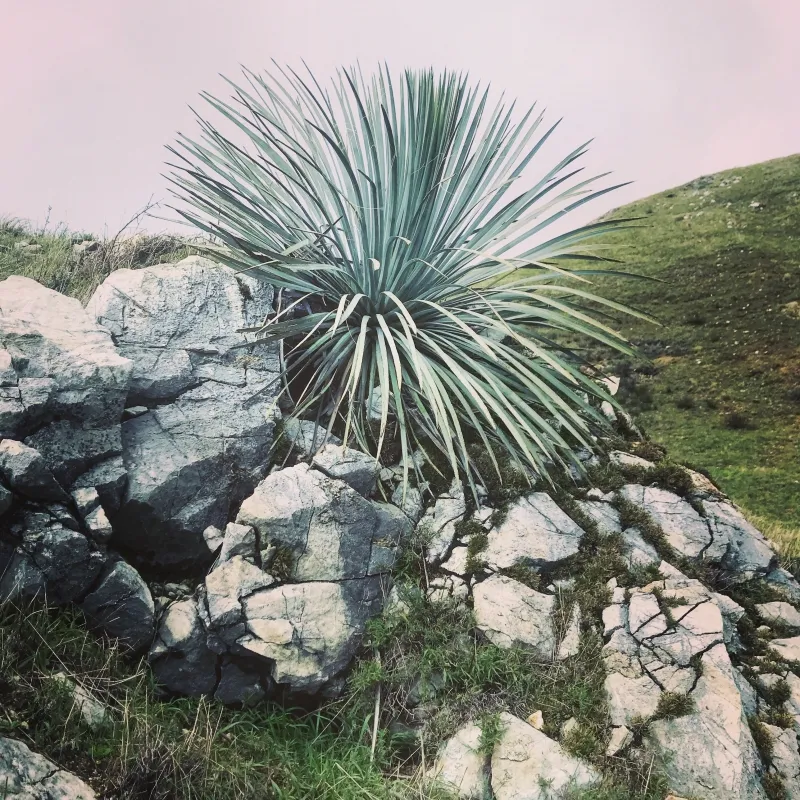
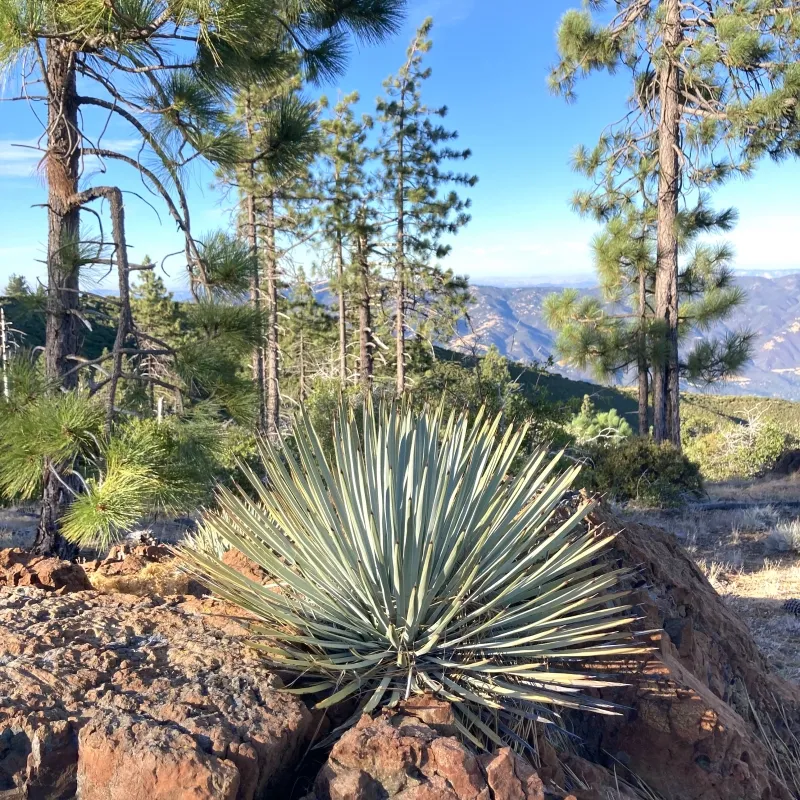
Sputnik-like orb of vicious dagger leaves grows for years, then produces tall fregrant stalk of white flowers from purplish buds as a final act in lifespan. Sunny hot spots if near coast.
 Mature size | 2–5ft tall 2–5ft wide |
|---|---|
 Exposure | Part Shade – Full Sun |
 Hardy to | 10°F |
 Sunset zones | 4–24 |
 Water needs | Lowest Best planted during the fall, where this California native can establish with winter rains (and supplemental water every week or two when totally dry). Taper off watering during early summer and give a dry rest from July - September. If you aren't planting during fall or winter, give this plant additional water during its first summer, when completely dry. After the first year this plant will thrive without additional irrigation. |
 Tolerates | Coast, Cold, Drought, Deer, Heat, Pots, Rooftops, Neglect, Wind |
 Plant traits | Armed, Edible, Flowering, Fragrant Flower, Monocarpic, Rock Garden, Rosette, Solitary |
 Drainage | In Ground: Cactus Mix, In Pots: Cactus Mix, Tolerates Sandy Soil |
 Fertilizing | Low Needs |
 California native | Yes |
Growing Notes
Since this plant is monocarpic (bloom spike ends its lifespan) it's generally not a good idea to fertilize it, as this will only shorten the lifespan of the plant. In fact this plant generally just wants to be left alone.
You can 'pineapple' your yucca by removing the lowest leaves. This is best started while it is out of the nursery can, but before planting, when you can access leaves from the bottom. This gives the plant a short trunk, textured similar to many palms, and allows you to get under the plant for weeding.
Grows well even in small pots where this plant stays in harmonious balance. Sometimes they get very rootbound in a pot, and it can be beneficial to bottom water, setting them in a saucer of water for a day.
Special Interest
The flowers and fruiting stem of this plant are edible, once cooked. The emerging flower stem is very sweet and starchy. All parts of the plant have a subtle soapy flavor.
The flowers are so pungent when in bloom that they will make one cautious if brought indoors, and are best enjoyed outdoors.
The leaves of this plant make an excellent natural soap with a built in loofa! Just cut a leaf, remove the spine at the tip and masticate it in water until sudsy. The fibers within the yucca leaf make the perfect abrading cloth.
The furthest natural range of this plant in California is Big Sur, where they are found on parched, rocky, western slopes.
More Info
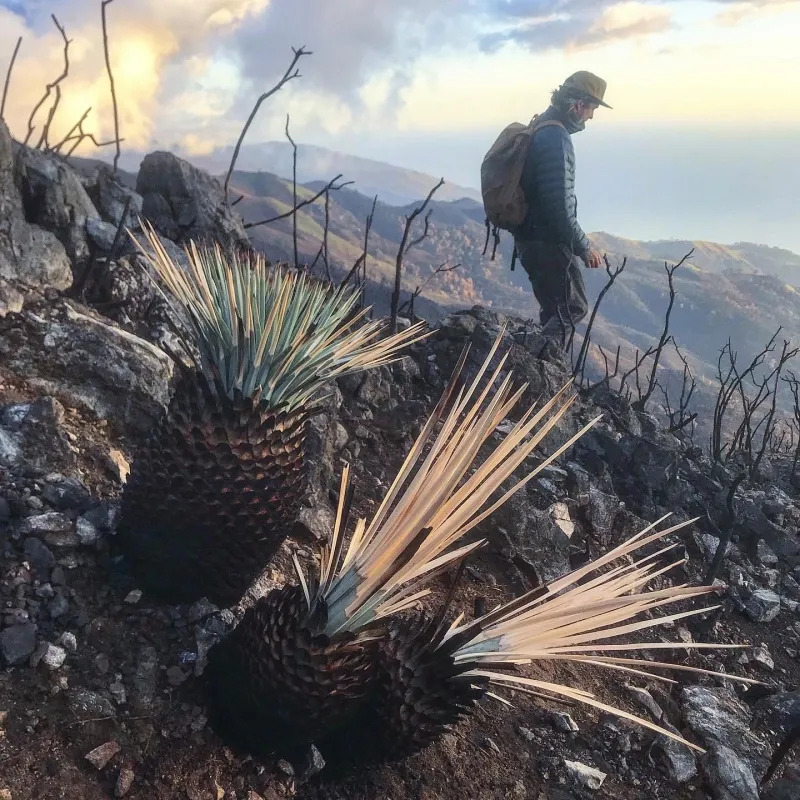
The photo of this plant in habitat was taken by our staff member Tyson Curtis after the Dolan fire in Big Sur. As you can see, after some fall rains these plants were already beginning to regrow, showing their amazing fire resilience.
What we've learned from growing this plant ourselves and in our customers' gardens. We always love to hear more. Tell us
© 2020–2026 Grubb and Nadler. All rights reserved.