
Hibiscus rosa-sinensis ‘Brilliant’
Brilliant hibiscus
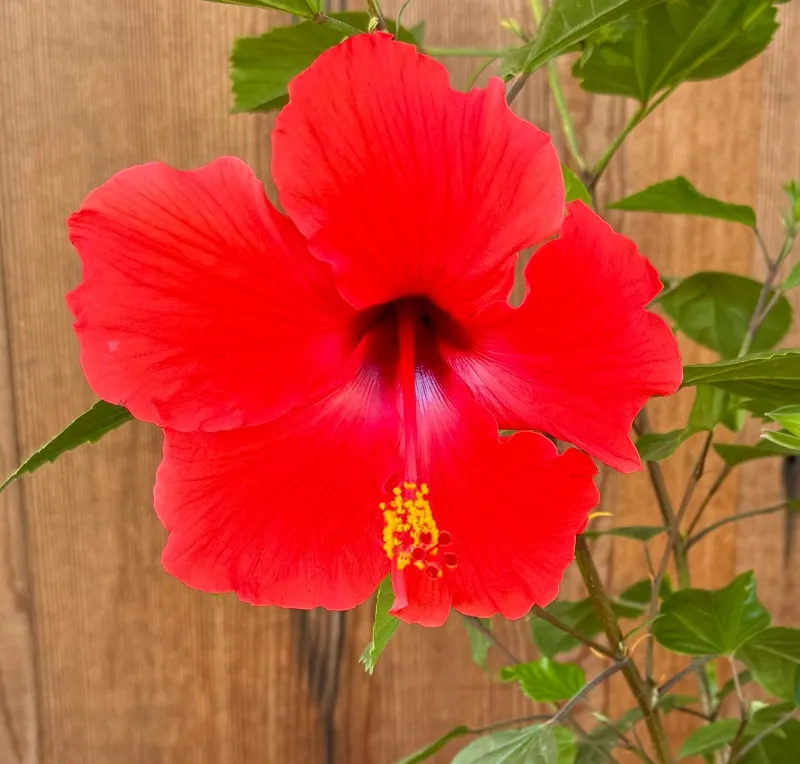
The iconic tropical flower brightens areas with abundant blooms during summer months or longer with warm weather. Prune to shape in early spring. Vivid red flowers.
 Height Height | 3–15ft |
|---|---|
 Width Width | 3–15ft |
 Tolerates Tolerates | Pots |
 Water needs Water needs | Moderate – High |
Water this plant regularly, when the surface of the soil feels dry. Usually this will mean once or twice a week in warm dry weather. Use drippers, emitters, or a slow stream of water so that it does not run off; allow the water to trickle all the way down through to the deepest layers of soil. In a pot slowly water the entire surface until water comes out of the bottom of your pot. | |
 Hardy to Hardy to | 28°F |
 Exposure Exposure | Part Shade – Full Sun |
 Plant traits Plant traits | Flowering |
 Indoor / outdoor Indoor / outdoor | Outdoor |
 Drainage Drainage | In Ground: Planting Mix, In Pots: Potting Soil |
 Fertilizing Fertilizing | Acid |
 Origin Origin | Hybrid, Pacific Islands |
 California native California native | No |
 Sunset zones Sunset zones | 9, 13, 16–24, H1, H2 |
Growing Notes
Responds very well to pruning to keep a dense plant and can even be hedged. Truly one of the most impressive, flamboyant, flowering shrubs in tropical to temperate gardens. While each blossom lasts only a day, they come with rapid abundance through the blooming season. This does create a bit of shedding to be swept up but wow, so worth it!
In tropical climates this shrub can get much larger, unto thirty feet. Can be espaliered and trained along a flat wall or fence. Established plants can resprout from frost damage in warm-summer inland regions.
Not at its best in NorCal's coastal fog belt but satisfactory in banana belts of Sunset Zone 17 like the east side of San Francisco, Santa Cruz, Oakland.
Special Interest
Edible flowers have a zesty flavor, they are also used to make tangy teas, though if you are purchasing hibiscus tea it is usually made from Hibiscus sabdariffa.
Links
The above information reflects the observations of Grubb and Nadler and our extended plant community. We always consider input from fellow horticulturists and welcome feedback from those with additional information on the culture of this plant.
© 2020–2026 Grubb and Nadler. All rights reserved.