
Ficus elastica ‘Ruby’
Ruby rubber plant
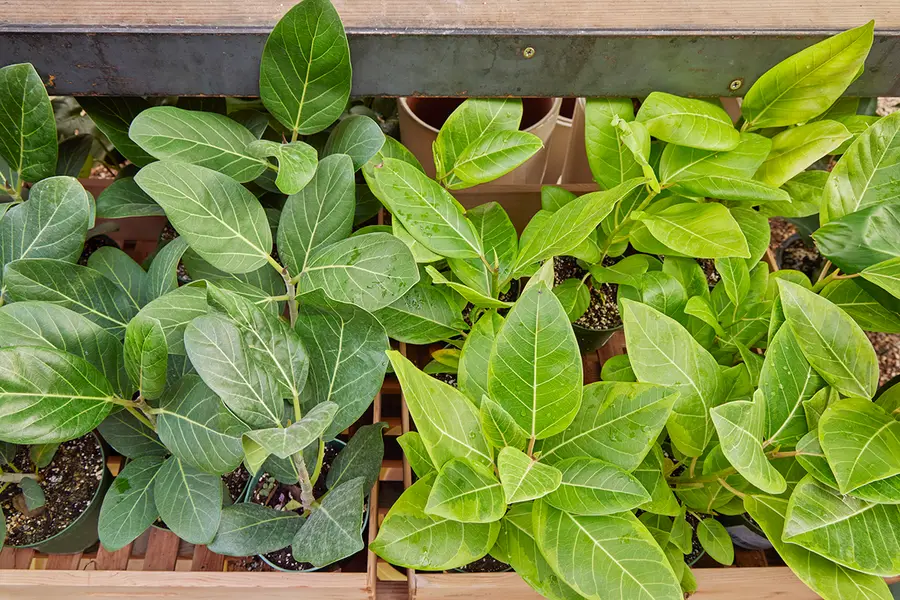
Rubber plant with cream and pink edges and pink midribs. Colorful and easy houseplant; colorful shrub or tree in mild areas.
 Height | 3–35ft |
|---|---|
 Width | 1–35ft |
 Water needs | When soil surface is dry. |
This plant wants water when the top of the soil is dry, but you can still feel moisture just below the surface. This plant will often fall into a once-a-week watering cycle, but remember that your watering should be based on the moisture left in the soil, which will depend partly on the moisture in the room and the weather outside. The soil 'surface'' goes a bit deeper for larger pots; for example, a plant in a 14-inch diameter pot should dry out a couple of inches deep before you water it, while a plant in a 4-inch pot will only want to dry out in the top half-inch or so of soil. | |
 Exposure | Bright Indirect – Partial Direct |
 Plant traits | Foliage Feature, Shrub, Tree, Tropical |
 Drainage | In Pots: Potting Soil |
 Fertilizing | All Purpose |
 Origin | South and Southeast Asia |
Growing Notes
All ficus respond well to pruning, allowing even very large species to be maintained at a modest size. They do exude white sap, often containing latex, so if you have a latex allergy avoid the sap and make sure to protect furnishings and floors during and after pruning. Pruning them consistently and keeping in a smaller pot will make the leaves proportionately smaller and help maintain the size of the plant.
Special Interest
Ficus make figs, which at first don't seem to be flowers. The trick is that the flowers are on the inside of the fig, which is why many figs are hollow and so unusual inside.
Stories featuring this plant
More Info
This plant has been grown as a houseplant, but it also grows outdoors in mild climates. See Sunset zones if you are interested in growing this plant outside. Also note that anytime a houseplant is moved outside, some transitional stresses should be expected, including burning (when a plant that can grow in direct sunlight has not been cultivated in direct sun) and also drooping or leaf drop (usually associated with a shift in temperature or root damage). Planting outdoors during mild weather will help negate these effects, and if the plant is properly cared for, it should rebound with new acclimated growth.
Links
Which store do you shop at?
The above information reflects the observations of Grubb and Nadler and our extended plant community. We always consider input from fellow horticulturists and welcome feedback from those with additional information on the culture of this plant.
© 2020–2026 Grubb and Nadler. All rights reserved.