
Ficus umbellata
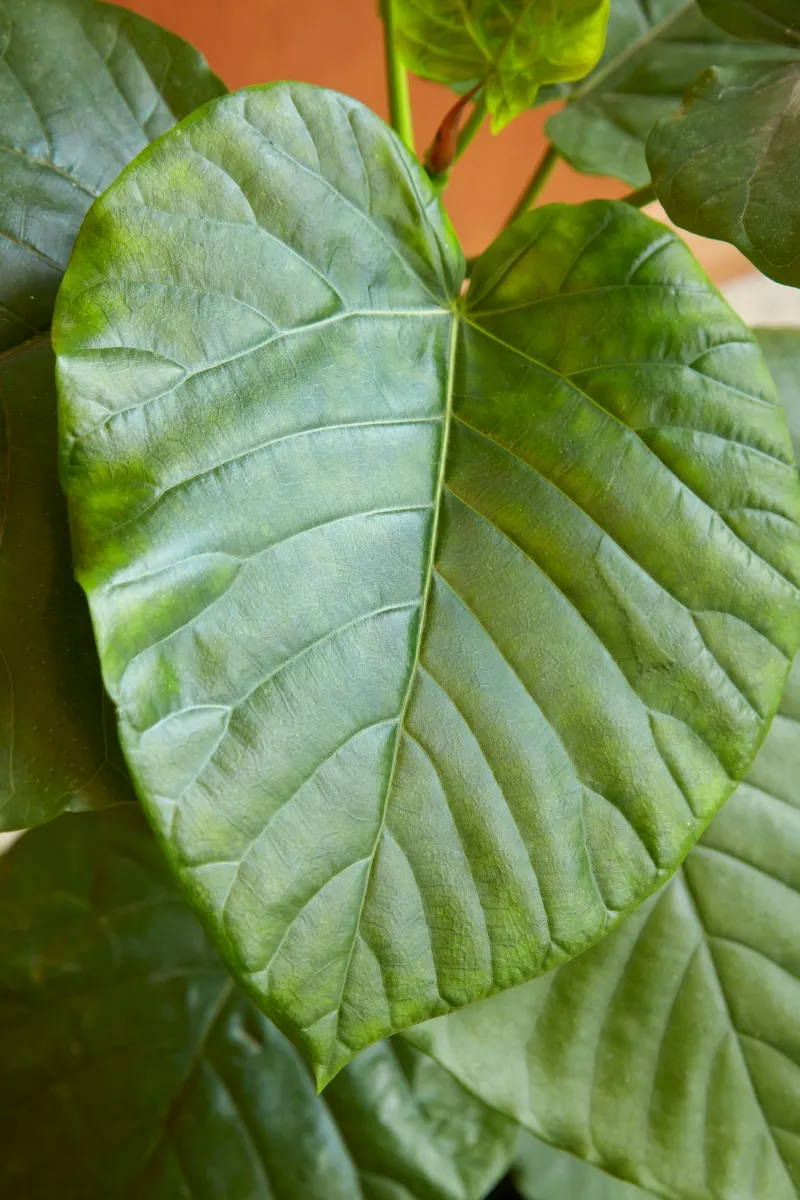
Large heart-shaped leaves draw attention to this fast-growing tropical houseplant. Upright habit when young. Rotate for balanced growth. Prune to maintain desired size.
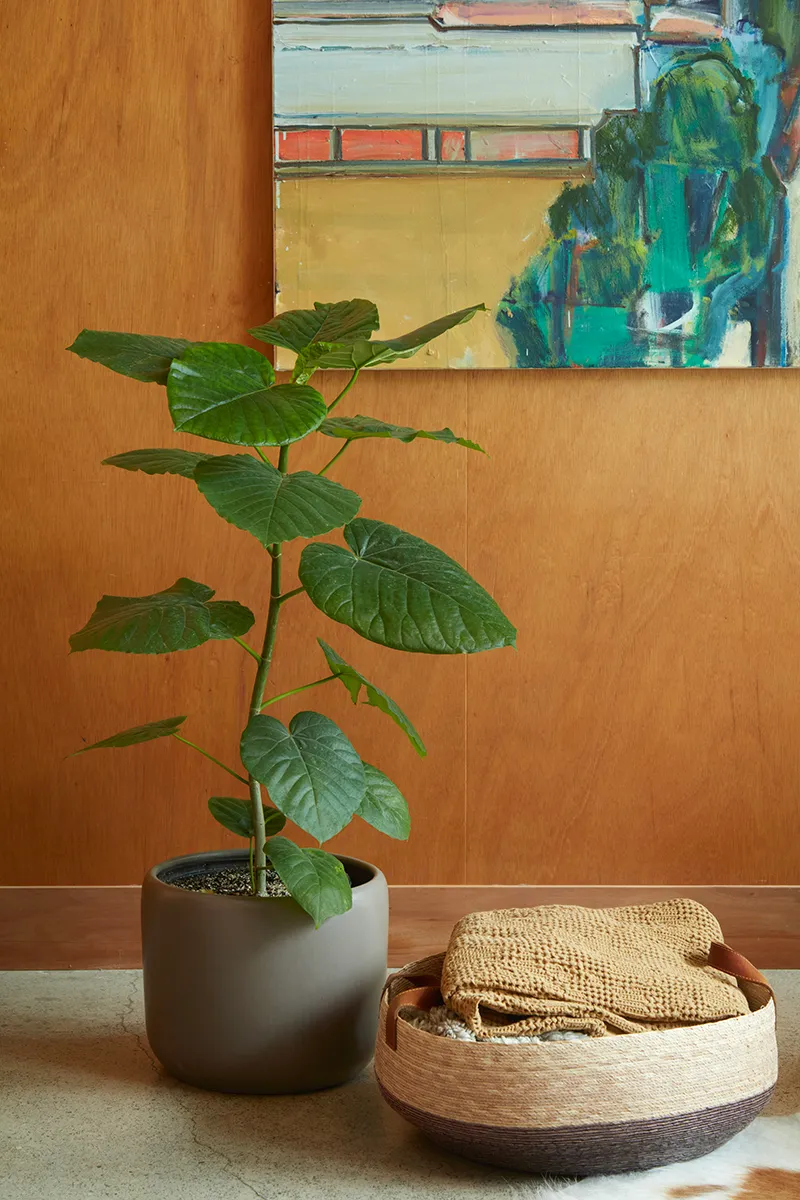
Seen in Plant-Filled SF Eichler Hideaway →
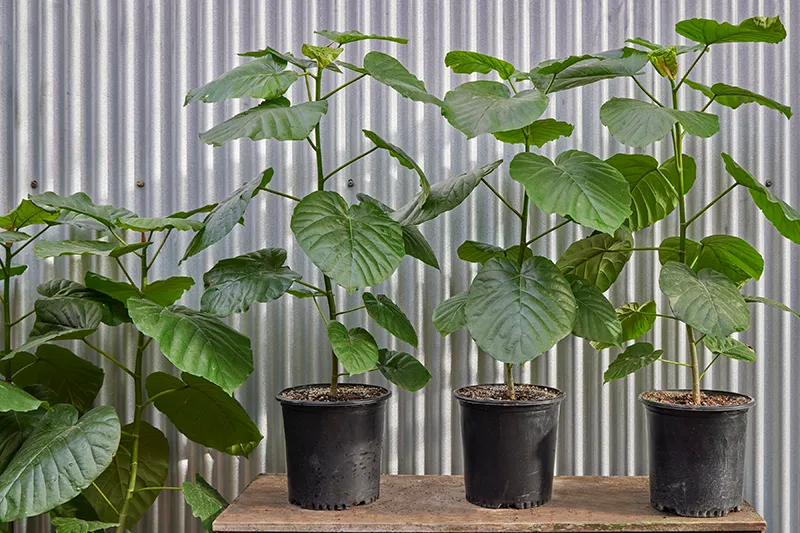
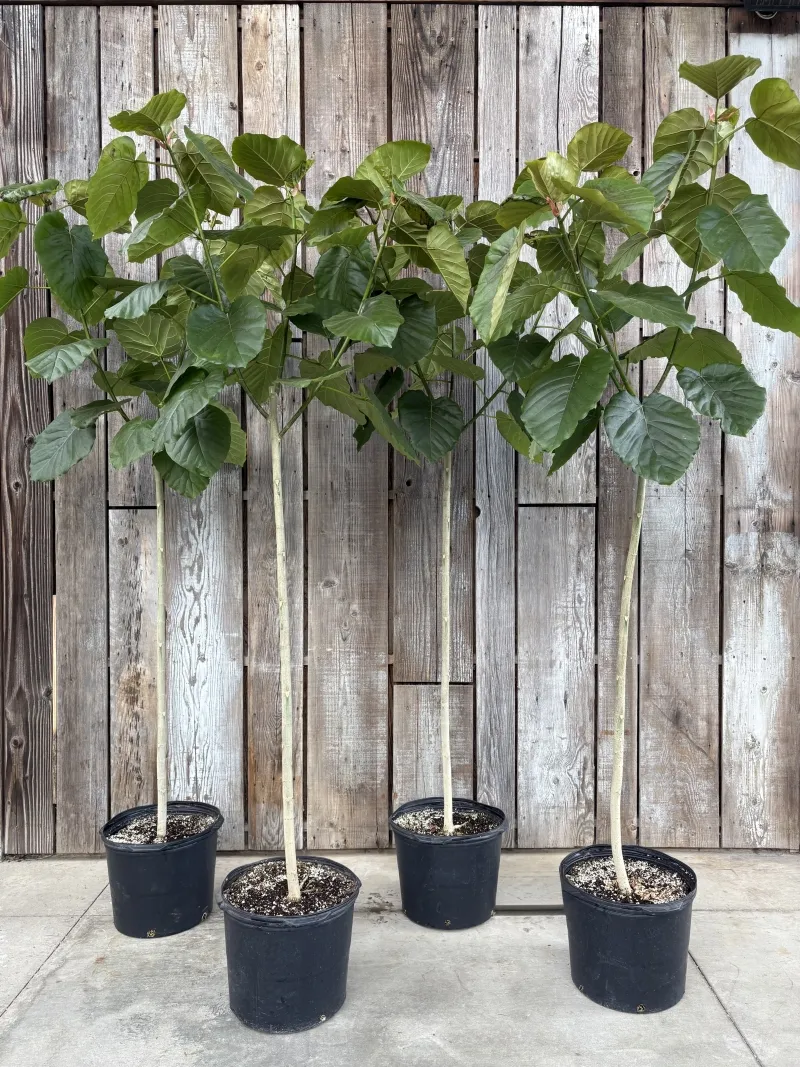
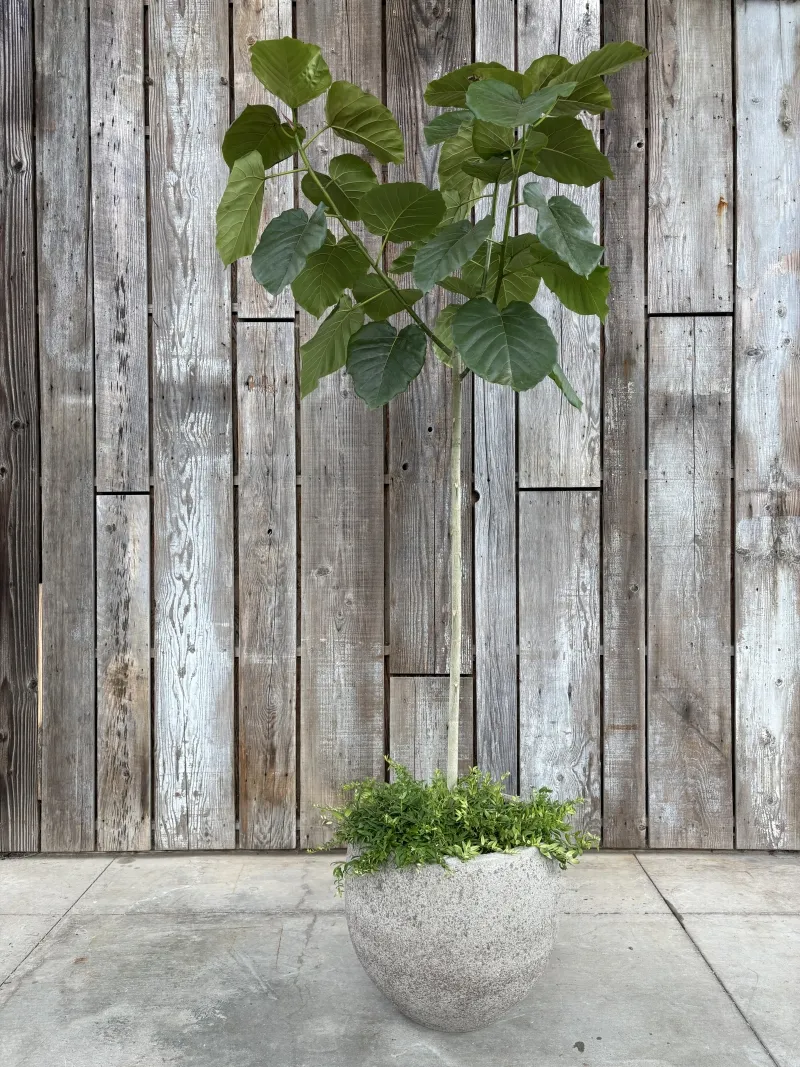
 Height | 5–15ft |
|---|---|
 Width | 3–8ft |
 Water needs | When soil surface is dry. |
This plant wants water when the top of the soil is dry, but you can still feel moisture just below the surface. This plant will often fall into a once-a-week watering cycle, but remember that your watering should be based on the moisture left in the soil, which will depend partly on the moisture in the room and the weather outside. The soil 'surface'' goes a bit deeper for larger pots; for example, a plant in a 14-inch diameter pot should dry out a couple of inches deep before you water it, while a plant in a 4-inch pot will only want to dry out in the top ½ inch or so of soil. | |
 Exposure | Bright Indirect – Partial Direct |
 Plant traits | Foliage Feature, Solitary, Tree |
 Drainage | In Pots: Potting Soil |
 Fertilizing | All Purpose |
 Origin | Senegal, Nigeria, Cameroon, Congo, Angola |
Growing Notes
All ficus respond well to pruning, allowing even very large ficus to be maintained at a modest size. They do exude white sap, often containing latex, so if you have a latex allergy avoid the sap.
Stories featuring this plant
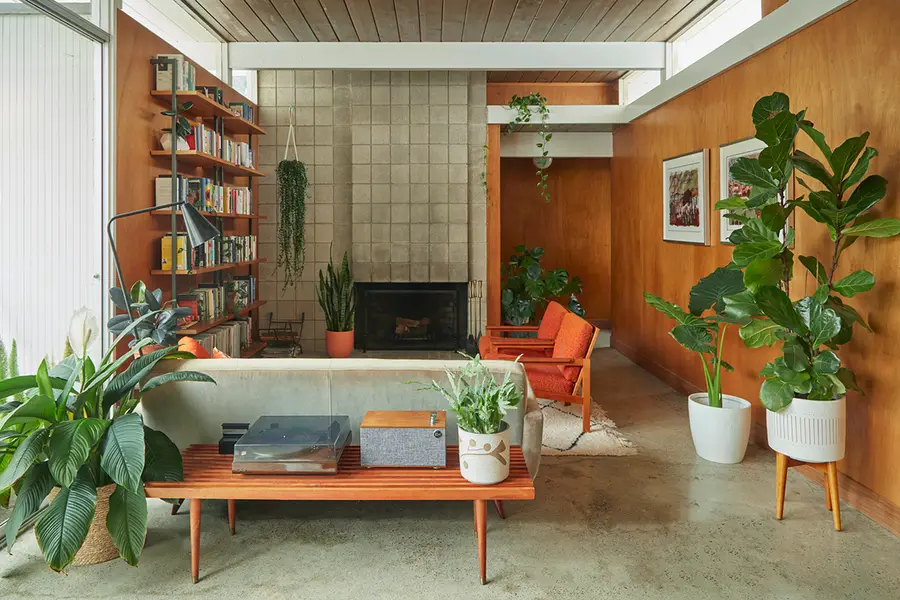 Garden storyPlant-Filled SF Eichler HideawayA mid-century Eichler home in SF, with its warm wood paneling, sleek concrete floors, and flood of light from inner courtyards, is the perfect place to grow a lush indoor garden. Some longtime FGG friends invited us into their home to share their houseplant inspiration.
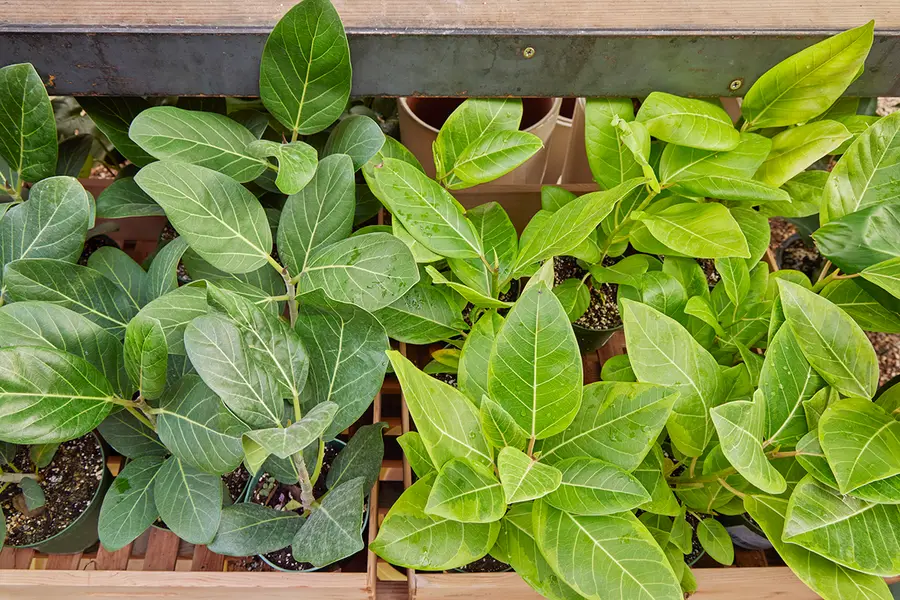 Garden storyOur Favorite Ficus for Your HomeWe carry many varieties of ficus houseplants for your indoor garden. Here are a few of our favorites with some helpful information and fascinating botanical history!
Links
Which store do you shop at?
The above information reflects the observations of Grubb and Nadler and our extended plant community. We always consider input from fellow horticulturists and welcome feedback from those with additional information on the culture of this plant.
© 2020–2026 Grubb and Nadler. All rights reserved.