
Philodendron ‘Birkin’
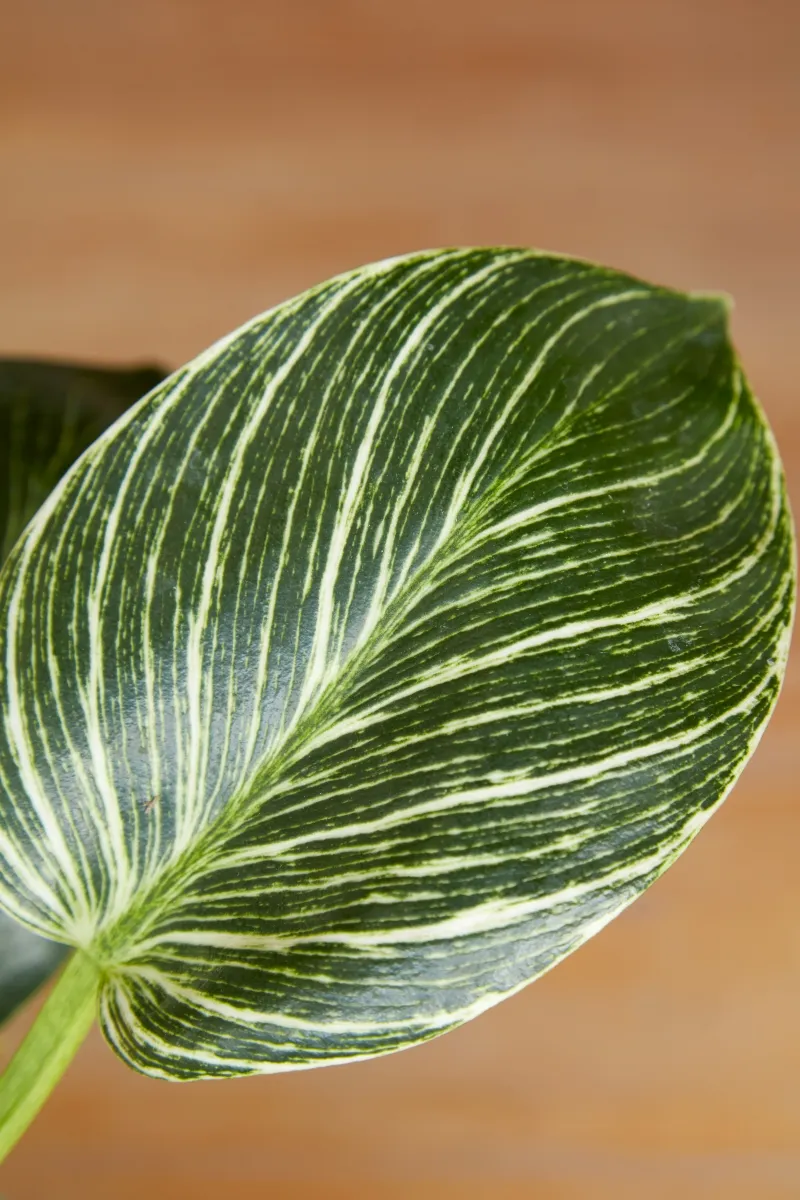
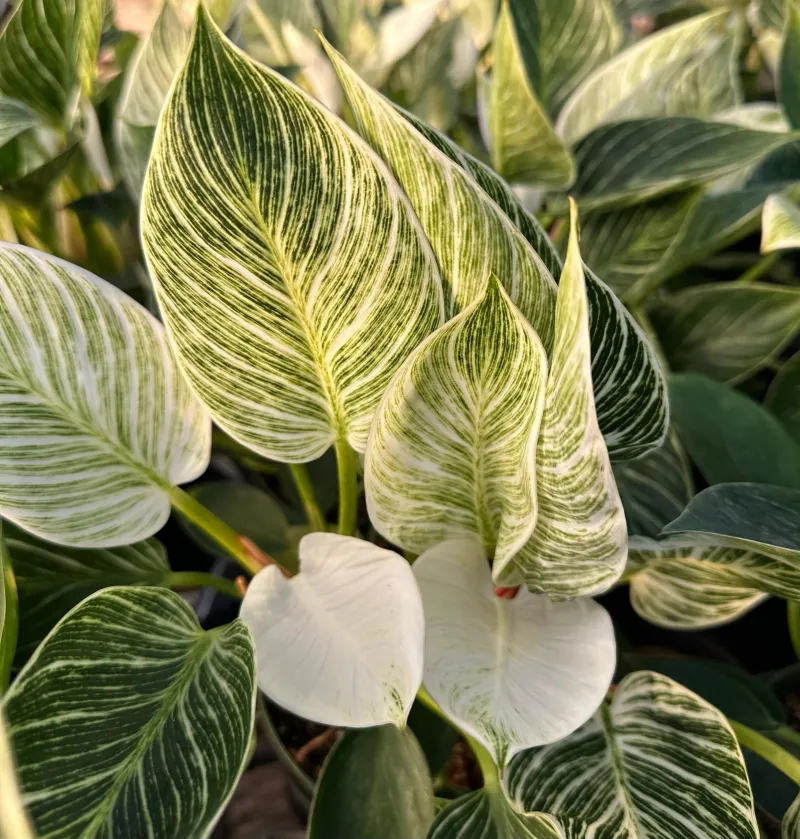
New growth is almost pure cream white, fading to a darker glossy green as leaves mature. Clumping style philosophydendron stays low.
 Altura Altura | 1–2 pies |
|---|---|
 Ancho Ancho | 1–2 pies |
 Tolera Tolera | Calor, Macetas |
 Riego Riego | Cuando la superficie de la tierra esté seca. |
This plant wants water when the top of the soil is dry, but you can still feel moisture just below the surface. This plant will often fall into a once-a-week watering cycle, but remember that your watering should be based on the moisture left in the soil, which will depend partly on the moisture in the room and the weather outside. The soil "surface"' goes a bit deeper for larger pots; for example, a plant in a 14-inch diameter pot should dry out a couple of inches deep before you water it, while a plant in a 4-inch pot will only want to dry out in the top ½ inch or so of soil. Drooping leaves, crisp brown tips, or a small crown with dwarfed leaves are signs of underwatering. Yellowing or soggy brown leaf tips are signs of under watering (or possibly not enough light in the case of browning leaves.) | |
 Resiste hasta Resiste hasta | 45 °F |
 Exposición Exposición | Luz indirecta brillante – Luz directa parcial |
 Características Características | Epífita, Follaje vistoso, Tropical |
 Interior / exterior Interior / exterior | Interior |
 Fertilización Fertilización | Uso general |
 Origen Origen | Híbrido |
 Nativa de California Nativa de California | No |
 Zonas Sunset Zonas Sunset | H2 |
Notas de cultivo
Philodendron leaves will cleanly shed fron the trunk once they are no longer of use to the plant. They also make papery leaf sheaths around the base of each leaf that can be plucked off once dry.
Many philodendrons, including this one, have aerial roots that help them attach to structures in nature, and they add an interesting element to the plant, but they can also be removed without disturbing the plant in the least. If you want, you can lean the plant against a plank, tree or wall and watch it attach itself.
Generally philodendrons are thought of as shade plants, but they can also tolerate a splash of direct sunlight, especially if they are back from a window.
Enlaces
Esta información refleja las observaciones de Grubb and Nadler y de nuestra comunidad de amantes de las plantas. Siempre tomamos en cuenta las aportaciones de otros horticultores y agradecemos los comentarios de quienes tengan más información sobre el cultivo de esta planta.
© 2020–2026 Grubb and Nadler. Todos los derechos reservados.