
Kalanchoe prolifera
jurrasic kale
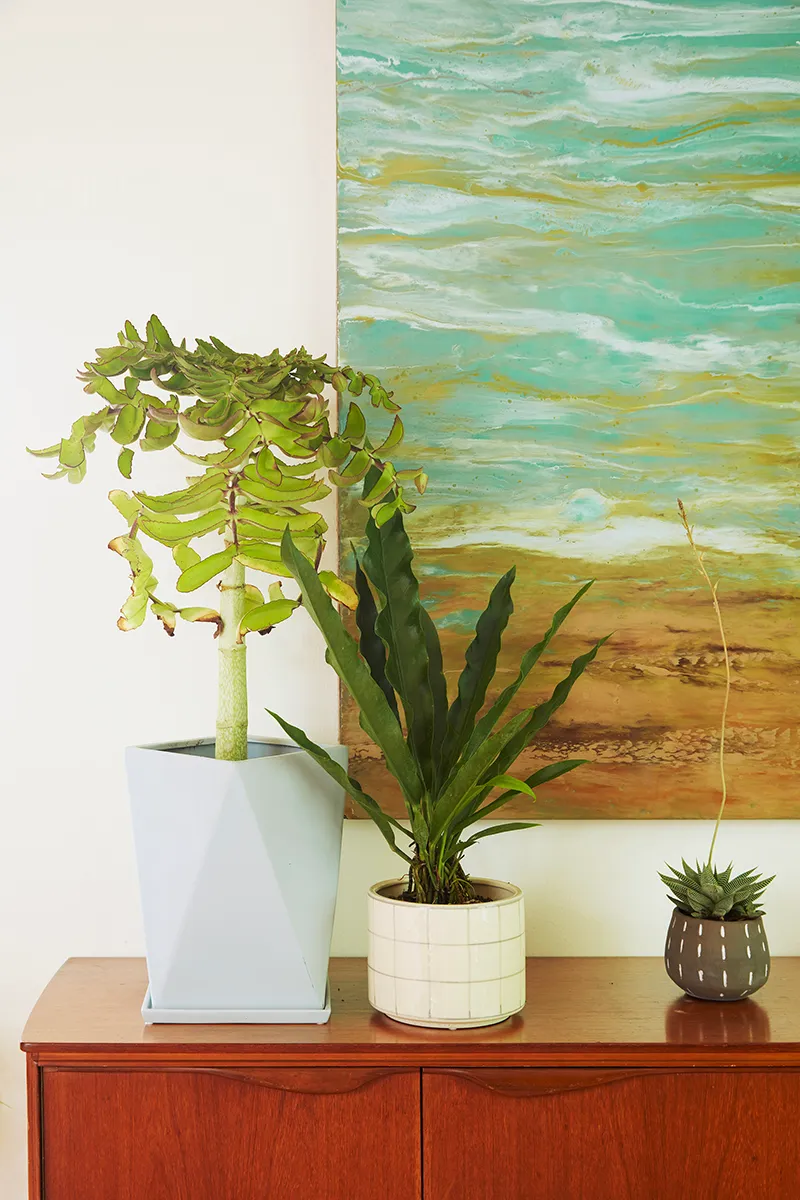
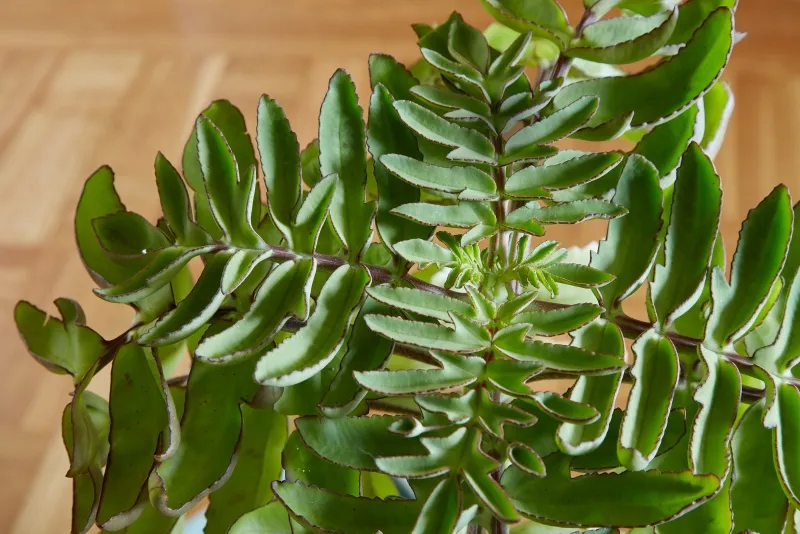
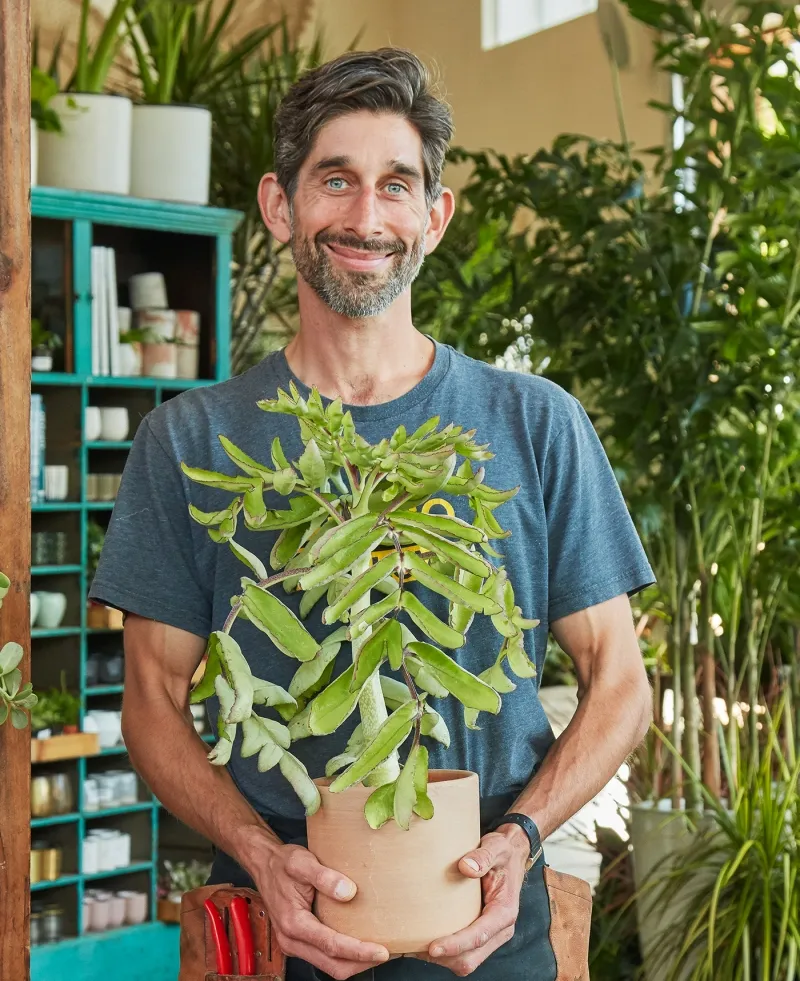
Fleshy yet ferny leaves on a thick stem. Culminates in panicle of green-orange box-shaped flowers. Fast. Fragile but easily to reroot from cuttings.
 Altura Altura | 1–2 pies |
|---|---|
 Ancho Ancho | 3–8 pies |
 Tolera Tolera | Sequía, Neblina, Calor, Macetas |
 Riego Riego | Moderado |
This succulent is from arid areas of Madagascar and as such likes to go dry between waterings, making it very low-maintenance. To get good healthy growth your plant doesn't want to sit around totally dried out during its growing season. Once it is dry, water it. This plant comes from an area with summer rainfall and is actively growing during that time, when it is forgiving of overwatering errors and in fact will grow more quickly and be happy being watered before becoming completely dry, as long as the soil drainage is good. Dry, shriveled brown lower leaves without new growth is a sign of under watering. Remember that if kept in a small pot your plant will want more frequent watering. | |
 Resiste hasta Resiste hasta | 28 °F |
 Exposición Exposición | Sol parcial – Pleno sol |
 Características Características | Escultural, Suculenta, Produce hijuelos, Tropical, Forma tronco |
 Interior / exterior Interior / exterior | Exterior |
 Drenaje Drenaje | En el suelo: mezcla para cactus, En maceta: mezcla para cactus, Tolera suelo arenoso |
 Fertilización Fertilización | Uso general |
 Origen Origen | Madagascar |
 Nativa de California Nativa de California | No |
 Zonas Sunset Zonas Sunset | 13, 17, 21–24, H2 |
Notas de cultivo
Easily roots, even from a single leaf. Cutting the trunk will induce branching and the top can easily be rooted to create a new plant.
This plant transitions effortlessly indoors, where it likes a bright warm room with Direct to Bright Indirect light.
Interés especial
In areas with just the right moisture and temperature this plant can make large colonies by just falling over, rooting and replicating. One of our team saw vast colonies in India, but lucky for us this plant isn't considered aggressive anywhere in California. It's likely that this growth habit is where the species name 'prolifera' comes from.
Esta información refleja las observaciones de Grubb and Nadler y de nuestra comunidad de amantes de las plantas. Siempre tomamos en cuenta las aportaciones de otros horticultores y agradecemos los comentarios de quienes tengan más información sobre el cultivo de esta planta.
© 2020–2026 Grubb and Nadler. Todos los derechos reservados.