
Leucadendron ‘Jester’
conebush
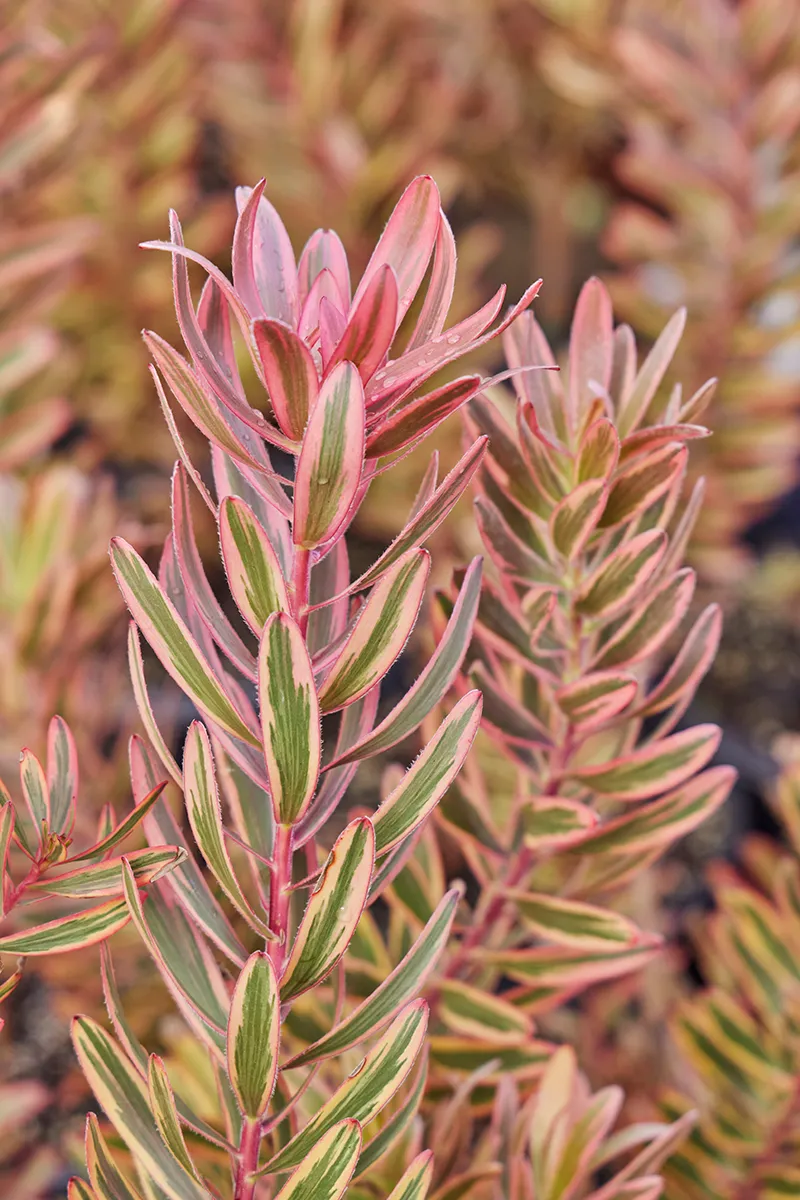
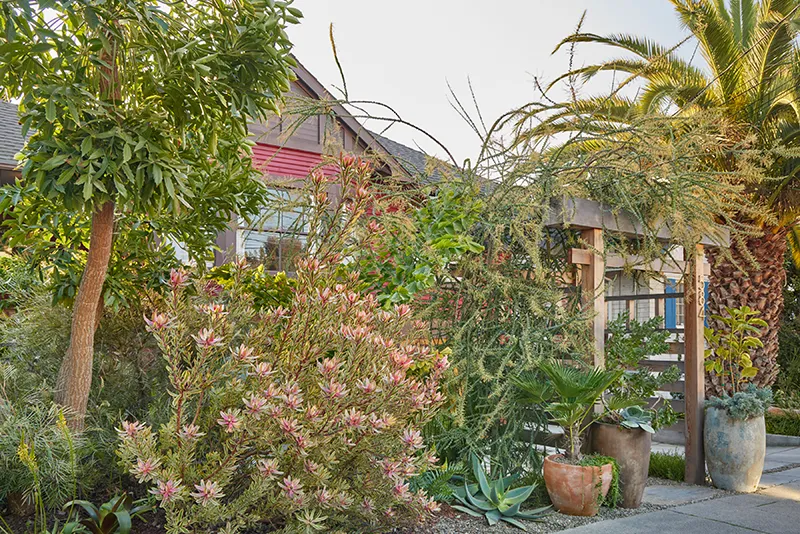
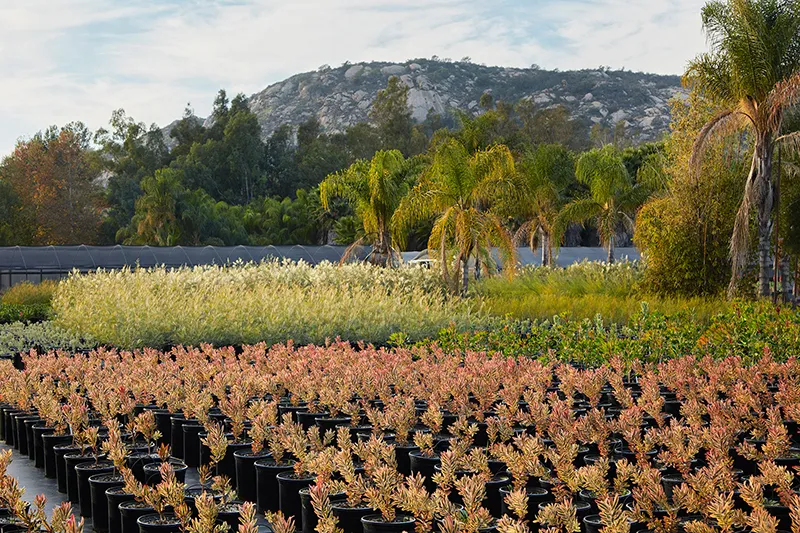
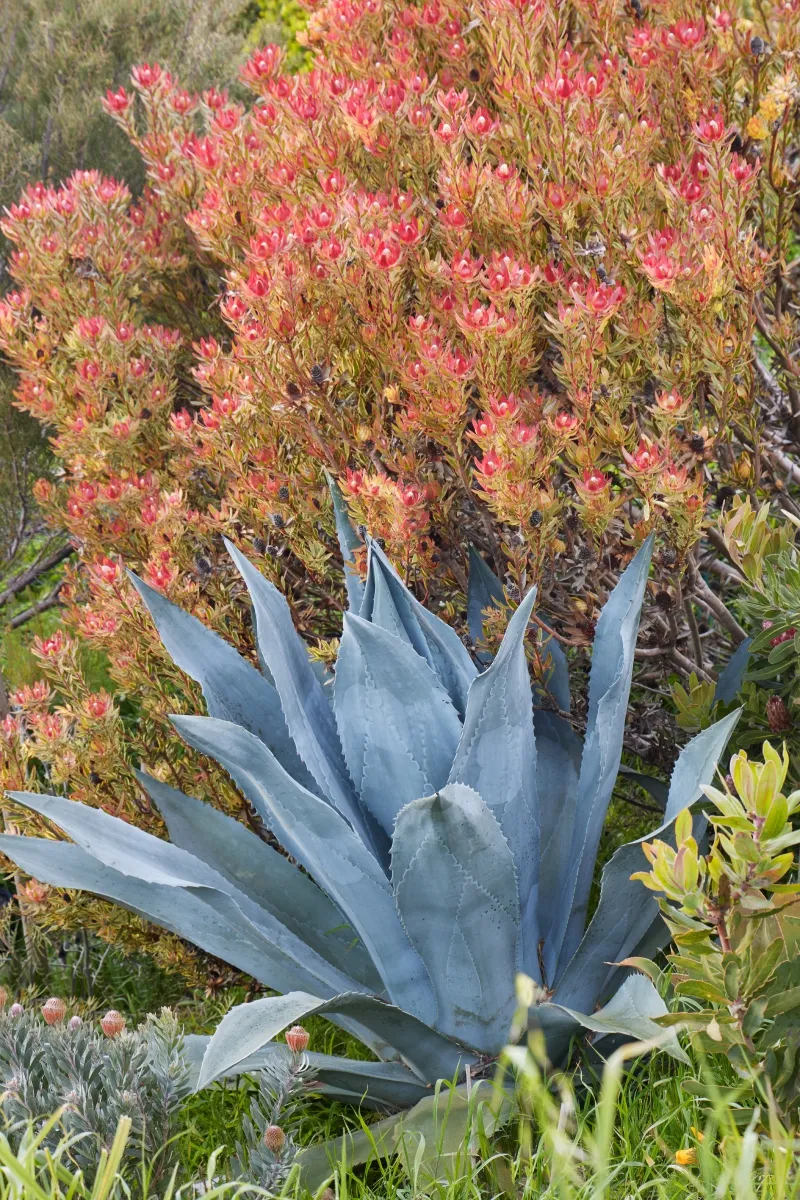
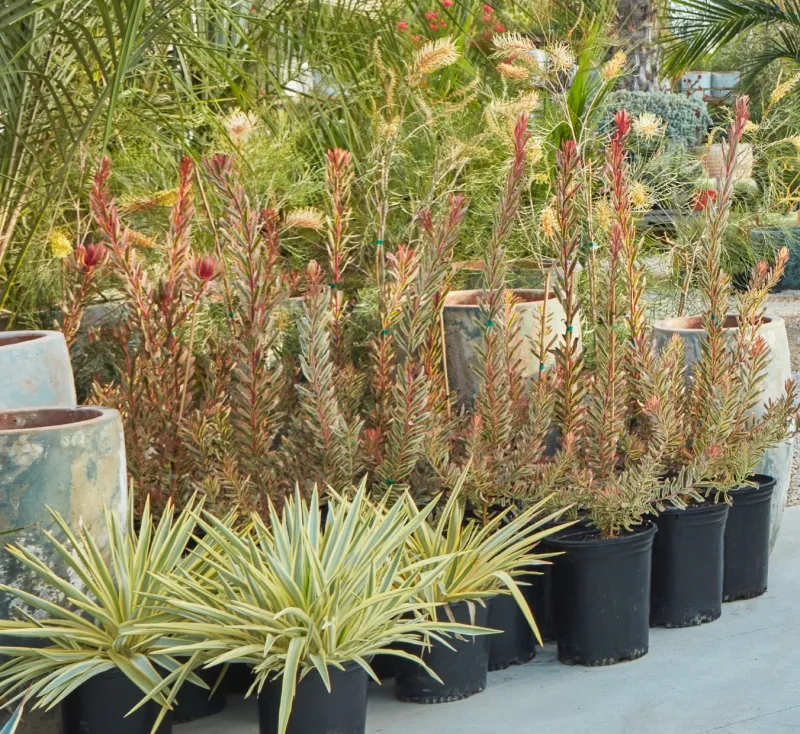
Cream & pink variegated foliage on upright shrub gets brighter with late-winter bloom. No phosphorus. Excellent in coastal gardens, containers.
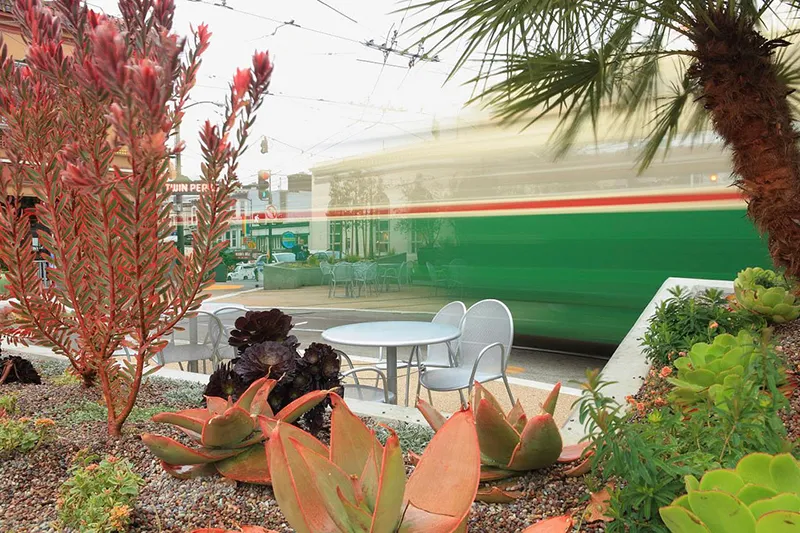
Seen in An Oakland Artist's Glorious Garden →
 Height | 5–12 |
|---|---|
 Width | 6–10ft |
 Tolerates | Coast, Drought, Fog, Wind |
 Water needs | Low |
Leucadendrons are from Mediterranean areas of South Africa, so they're right at home in coastal California. Once established they are quite drought tolerant, but they will grow and look their best with deep watering every two or three weeks during summer. These plants prefer well-drained soil, but most leucadendrons are fairly adaptable. If you have heavier soil be careful not to oversaturate your plant, and water very infrequently during summer, once established. | |
 Hardy to | 22°F |
 Exposure | Full Sun |
 Plant traits | Foliage Feature, Hedge, Screen, Shrub |
 Indoor / outdoor | Outdoor |
 Drainage | In Ground: Cactus Mix, In Pots: Cactus Mix |
 Fertilizing | Bloodmeal, Fish Emulsion, No Phosphorus |
 Origin | Hybrid, South Africa |
 California native | No |
 Sunset zones | 14–17, 19–24 |
Growing Notes
Leucadendrons, even bushy ones, have a clean upright form. They can be pruned to either be bushier, by trimming back the crown, or more upright, by pruning on the sides. It is best not to prune on growth that is more than two years old (where the branches become woody and leafless), or you risk your leucadendron not bushing back from that area. Prune up lower branches to make a tree-like form or hedge them to make a dense privacy screen.
All purpose fertilizer will kill this plant! Fertilizer is generally not necessary, though Leucadendrons prefer slightly acidic soil. Treat with cottonseed meal, iron, or other mild (low in phosphorus and potassium) acidifying fertilizer if you have basic soil. They also respond well to nitrogen, either in the form of fish emulsion or blood meal. Never give your leucadendron phosphorus, which will poison the plant and avoid potassium.
Special Interest
Leucadendrons don't have typical flowers, but instead they have brightly colored cones held at the branch tips. Leaves holding these cones also brighten when cones are present. These plants are dioecious, meaning that some plants are male and others female, and the cones vary slightly by sex.
These cones and also the foliage make great cut items for flower arrangements.
Stories featuring this plant
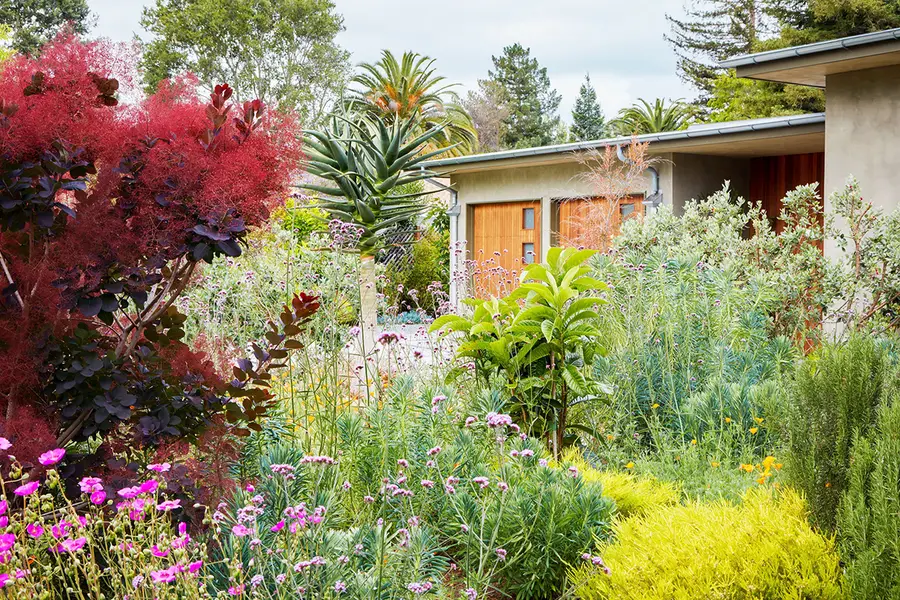
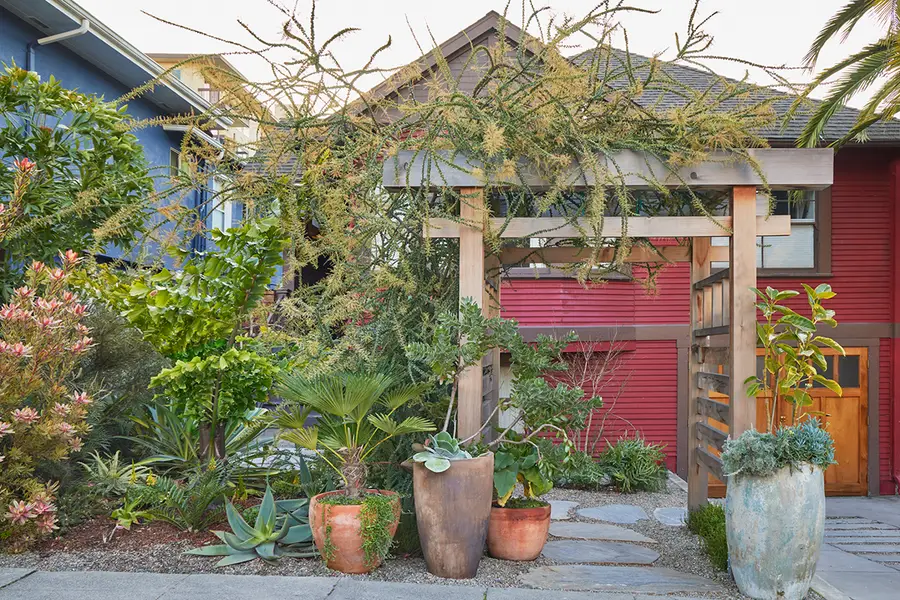 Garden storyAn Oakland Artist's Glorious GardenOne of Flora's favorite things is to help dear friends with their gardens, and this glorious front garden is close to her heart. It's the home of Oakland artist Terri Loewenthal, and together they've built a wild and vibrant collection of plants that shelters Terri's house and welcomes visitors.
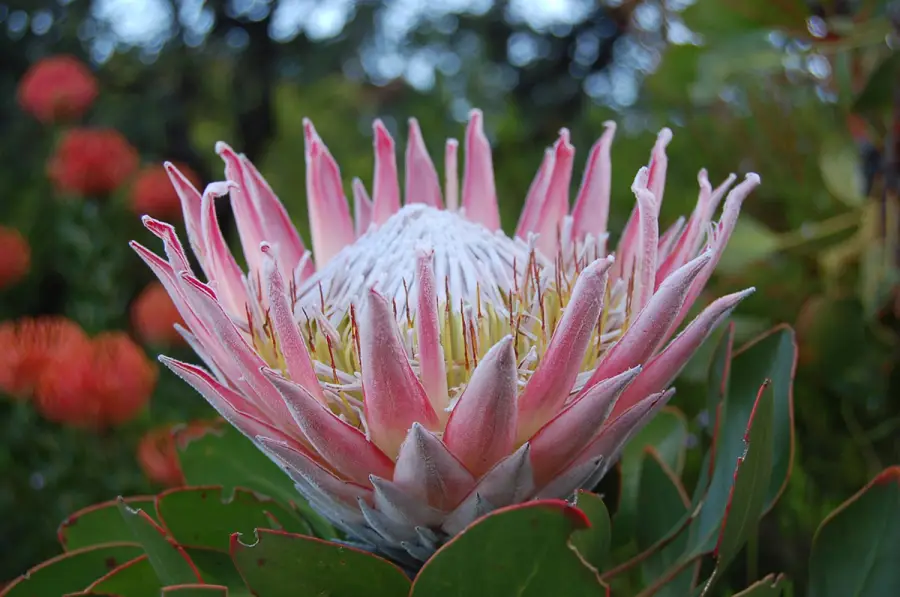 Garden storyThe Beautiful and Varied Blooms of the Protea FamilyAmong the proteaceae there is a vast variety of exotic flowers, and many of these plants have a long blooming season, especially here in coastal California, where the weather mimics their native South African and Australian coastal landscapes.
 Garden storyInspiration From Pine House Edible GardensAll over the Bay Area, Pine House Edible Gardens creates immersive gardens that are beautiful and productive, but that are also about community, connection, and building deep meaning into our lives. Get inspired by their beautiful designs!
Links
In stock today in Los Angeles
| 5 gallon | 34 available | $49 |
The above information reflects the observations of Grubb and Nadler and our extended plant community. We always consider input from fellow horticulturists and welcome feedback from those with additional information on the culture of this plant.
© 2020–2026 Grubb and Nadler. All rights reserved.