
Mammillaria matudae
thumb cactus
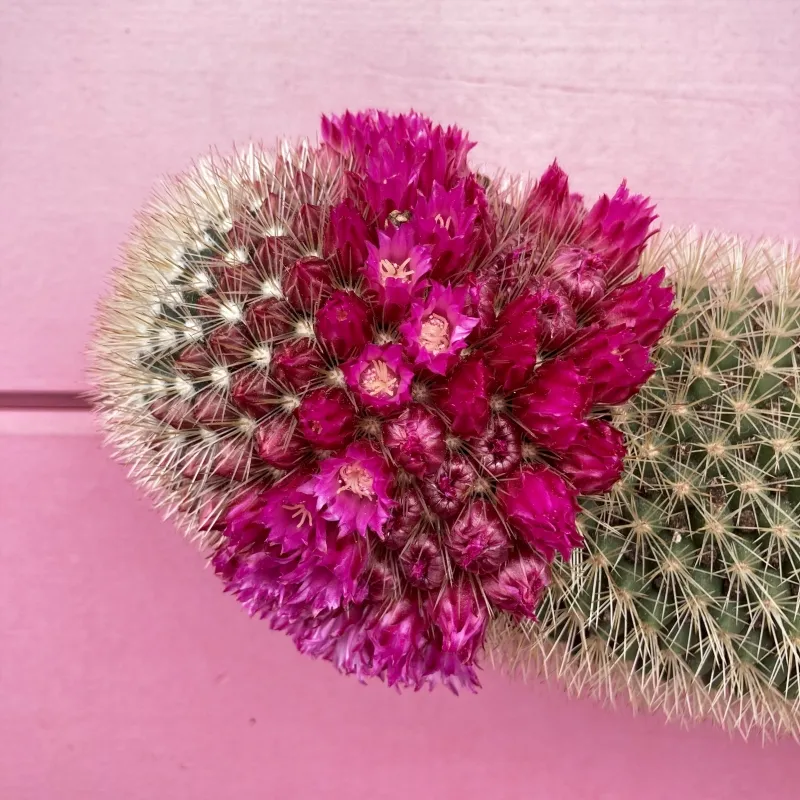
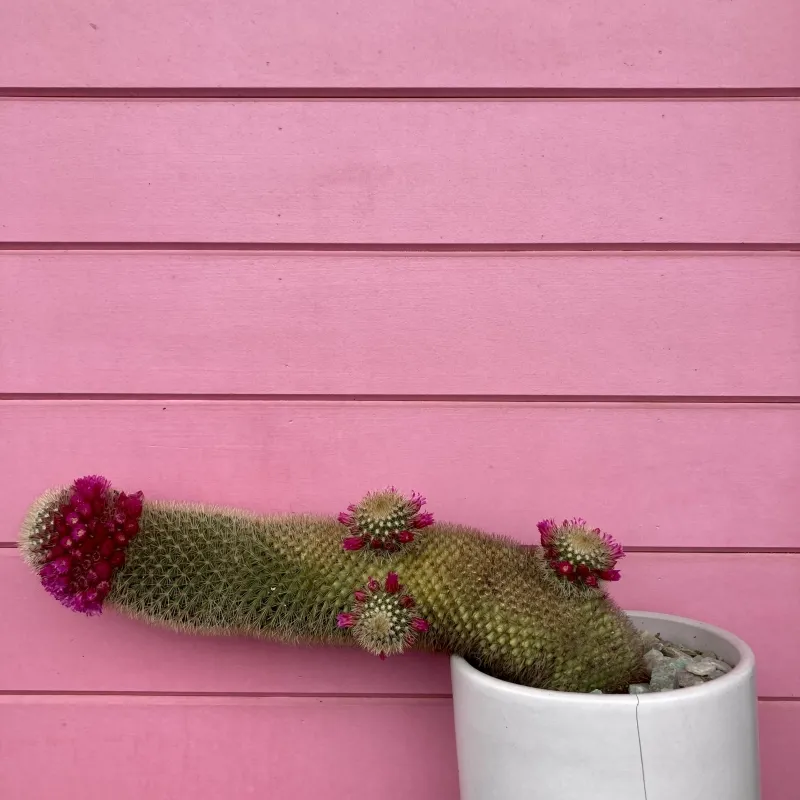
Globose when young, becomes columnar and wandering with great age. Eventually branches along trunk. Stunning crowns of small magenta flowers in spring. Fun hanging plant.
 Height | 4–8 |
|---|---|
 Width | 2–3in |
 Tolerates | Drought, Heat, Pots |
 Water needs | Low |
Mammillaria are from the deserts of the world and as such like to go totally bone dry between waterings, making them very low-maintenance. If you see your cactus begin to shrivel or lose firmness, your cactus is likely totally dry and should be watered. To get good healthy growth your plant doesn't want to sit around totally dried out during it's growing season. Once it is dry, water it. This cactus comes from an area with summer rainfall and is actively growing during that time, when it is forgiving of overwatering errors. During winter dormancy it should be kept extra dry and won't tolerate overwatering. Remember that if kept in a small pot your plant will want more frequent watering. | |
 Hardy to | 25°F |
 Exposure | Part Shade – Full Sun |
 Plant traits | Cactus, Flowering, Hanging, Rock Garden |
 Indoor / outdoor | Outdoor |
 Fertilizing | All Purpose |
 Origin | SE Mexico |
 California native | No |
 Sunset zones | 13–24, H2 |
Growing Notes
When planting cactus it's often best to avoid the spines entirely. This can be done by cutting down each side of the nursery can and then peeling it open to expose the roots. This way you can hold the root ball while planting and you never need to touch the cactus. If the plant is tall and top-heavy, this often isn't an option. Wrapping such cactus in cardboard makes them more manageable.
While your cactus is out of the nursery can, but before it is planted, is the easiest time to weed right up near the lowest spines. Be sure to pull weeds early with heavily spined cactus, as once they are established they can be difficult to remove. Forceps can be helpful for this task.
This plants stunning flowers are more consistent and dramatic with good fertilization.
Stays solitary for many years before growing additional columns.
Special Interest
Some collectors plant these coming out of the BOTTOM of a hanging planter (best planted when small), which creates an amusing talking point over time and plays well to their natural tendency to grow sideways or down.
Links
Which store do you shop at?
The above information reflects the observations of Grubb and Nadler and our extended plant community. We always consider input from fellow horticulturists and welcome feedback from those with additional information on the culture of this plant.
© 2020–2026 Grubb and Nadler. All rights reserved.