
Mammillaria spinosissima ‘Un Pico’
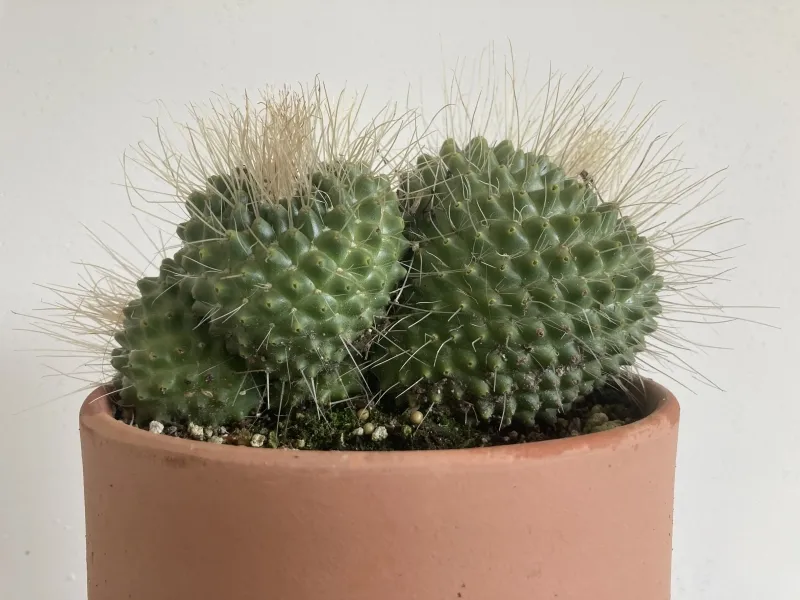
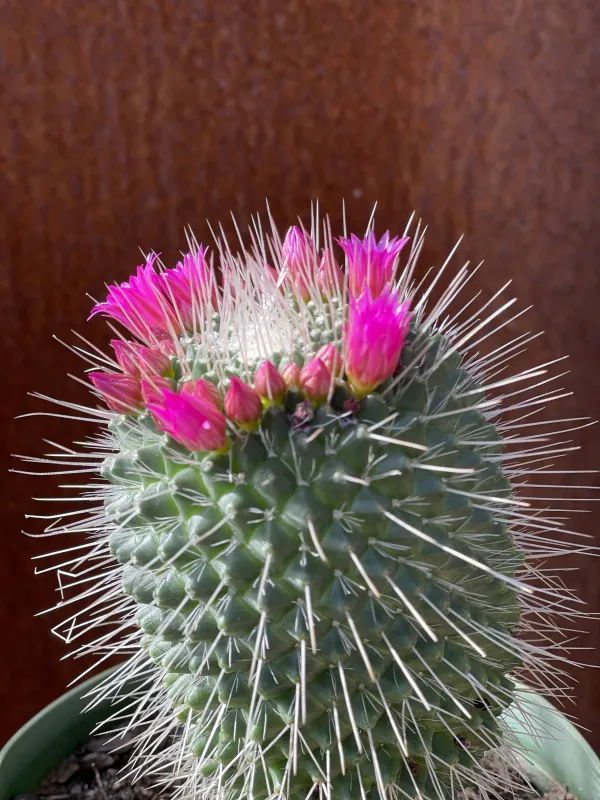
Long thin spines on easy, fast growing, globose cactus. Crown of magenta flowers appears in winter amidst copper spines. Small cactus nice in containers.
 Height Height | 6–14in |
|---|---|
 Width Width | 3–5in |
 Tolerates Tolerates | Drought, Deer, Heat, Pots |
 Water needs Water needs | Low |
Most cactus are from the deserts of the world and as such like to go totally bone dry between waterings, making them very low-maintenance. If you see your cactus begin to shrivel or lose firmness, your cactus is likely totally dry and should be watered. To get good healthy growth your plant does not want to sit around totally dried out during its growing season. Once it is dry, water it. This cactus comes from an area with summer rainfall and is actively growing during that time, when it is forgiving of overwatering errors. During winter dormancy it should be kept on the dry side and won't appreciate overwatering, though this cactus is considered easy and isn't particularly touchy about winter rains. Remember that if kept in a small pot your plant will want more frequent watering. | |
 Hardy to Hardy to | 20°F |
 Exposure Exposure | Part Shade – Full Sun |
 Plant traits Plant traits | Armed, Cactus, Flowering, Rock Garden |
 Indoor / outdoor Indoor / outdoor | Outdoor |
 Drainage Drainage | In Ground: Cactus Mix, In Pots: Cactus Mix, Tolerates Sandy Soil |
 Fertilizing Fertilizing | All Purpose |
 Origin Origin | SE Mexico |
 California native California native | No |
 Sunset zones Sunset zones | 8, 9, 12–24 |
Growing Notes
This species has variable spines and the selection 'Un Poco' is one of the most interesting. Spines are more dramatic in more sun. A single long spine grows from each petiole, giving the cactus tons of character. Looks furry and tolerates light touching, but pet it too hard and it'll poke you!
Typically solitary, but occasionally develops multiple heads.
The above information reflects the observations of Grubb and Nadler and our extended plant community. We always consider input from fellow horticulturists and welcome feedback from those with additional information on the culture of this plant.
© 2020–2026 Grubb and Nadler. All rights reserved.