
Monstera deliciosa
split-leaf philodendron
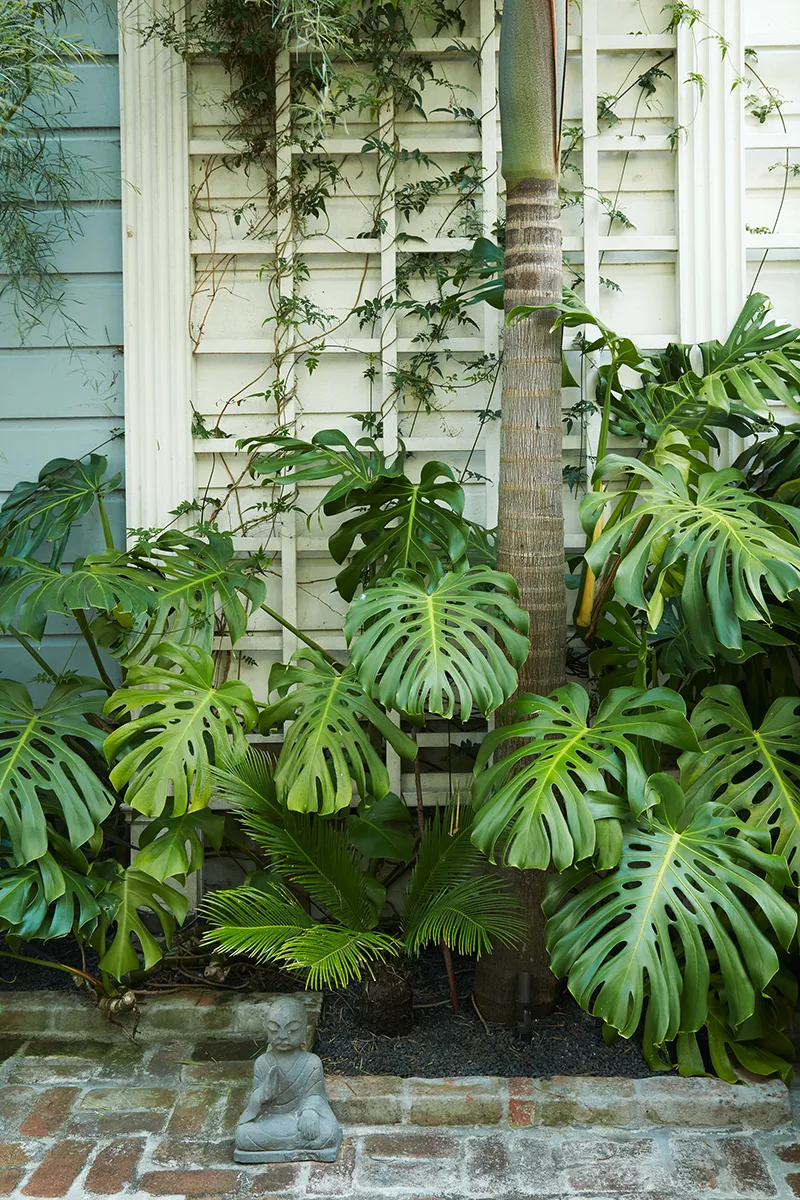
Growing it outdoors
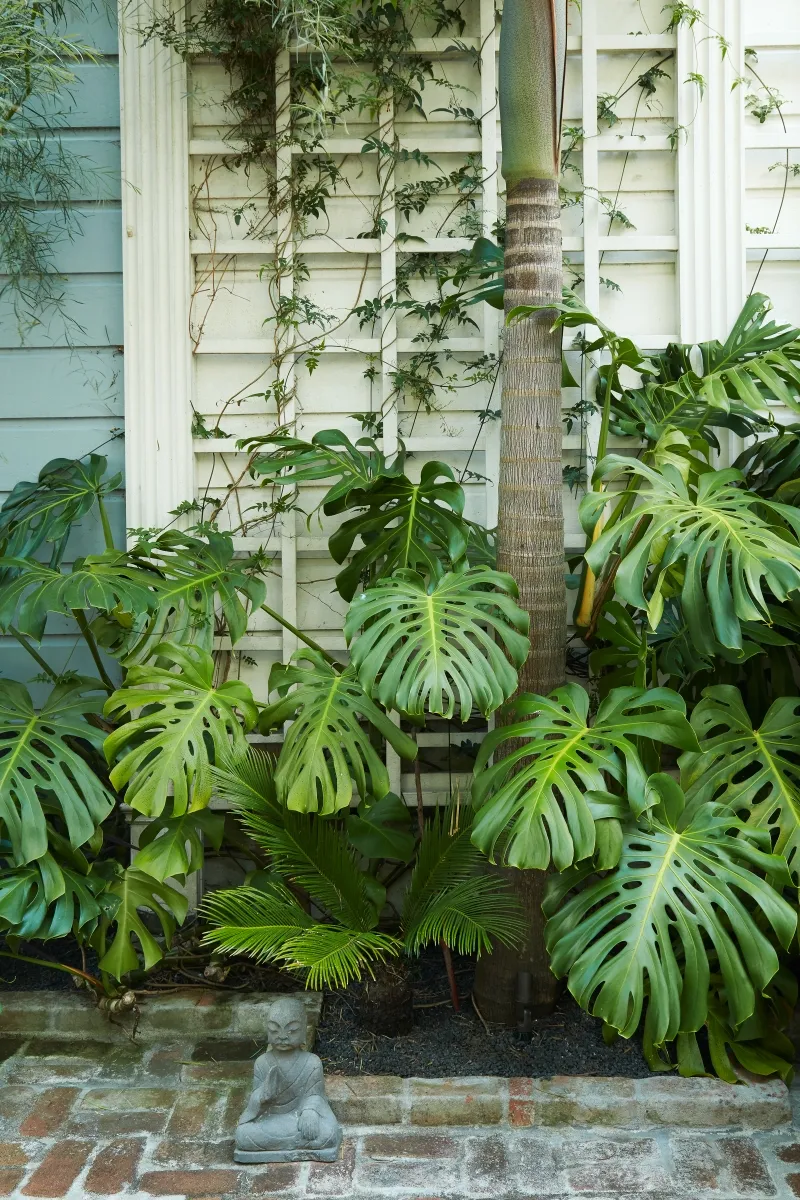
Tropical foliage feature gets 3ft split leaves with oval windows. Climbs on thick stem with ropy aerial roots. Shade champ. Luxe groundcover.
 Height | 2–10 |
|---|---|
 Width | 3–8ft |
 Tolerates | Coast, Cool Summers, Fog, Heat, Pots |
 Water needs | Moderate |
Monsteras are more drought tolerant than you would think, looking at their tropical foliage. Still, that means they want an average amount of water, preferring to be deeply every week to two weeks once established. Much of that will depend on how much shade they are grown in. Monsteras are adaptive to a wide range of soil conditions. | |
 Hardy to | 28°F |
 Exposure | Full Shade – Part Shade |
 Plant traits | Edible, Epiphyte, Foliage Feature, Hanging, Sculptural, Tropical, Vertical Gardening, Vine - Self Clinging |
 Drainage | In Ground: Planting Mix, In Pots: Potting Soil |
 Fertilizing | All Purpose |
 Origin | Central America |
 California native | No |
 Sunset zones | 16, 17, 21–24 |
Growing Notes
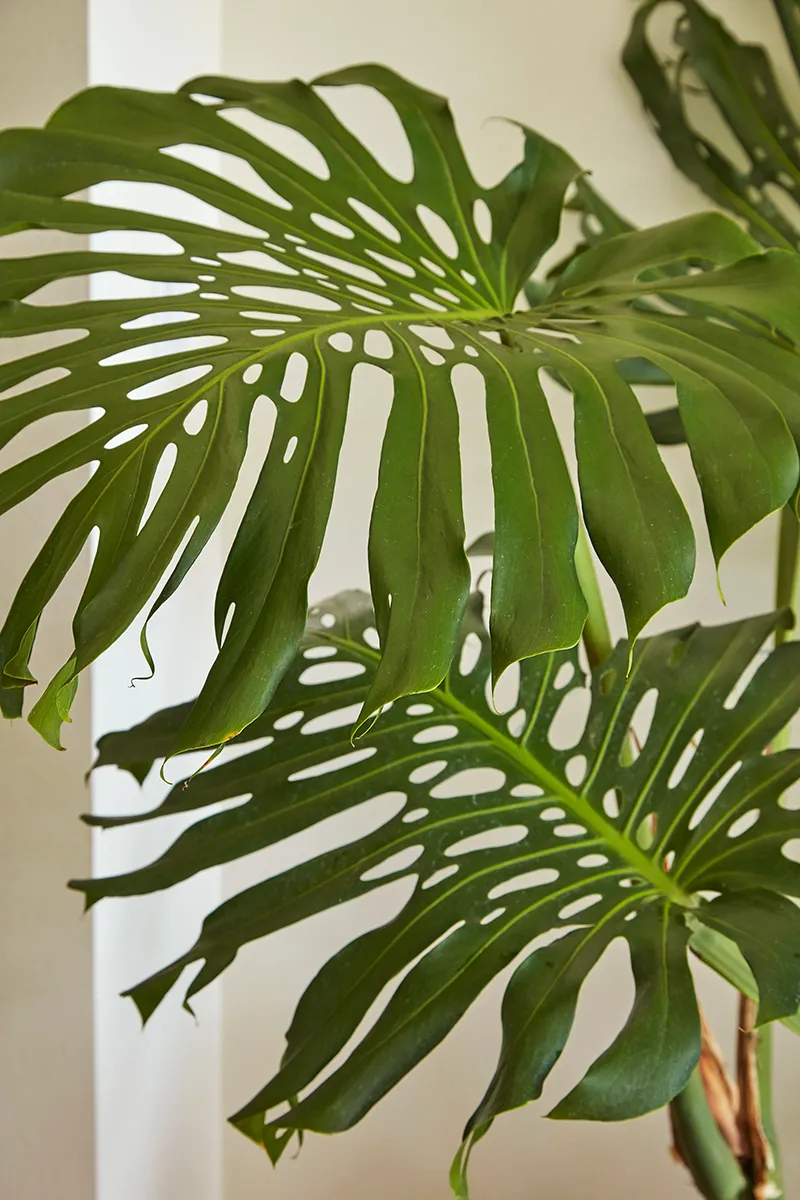
Monsteras are bushy when young, becoming a large heavy vine with great age. Leaves of small Monstera will be heart shaped, and without splits or holes. As the plant matures it will start to have split leaves, and then later holes develop within the leaves.
Plant will grow in direct sun, but often will get yellowing on the leaves.
Responds well to pruning, with a new 'branch' coming out wherever you cut the plant back. The pruned top is easy to root by either placing it in water or adding rooting hormone and planting it in a fast draining mix.
Monstera can be mounted or trained up a tree, and have aerial roots that will attach to a plank (or your wall.) If you don't like the aerial roots they can be removed without hurting the plant.
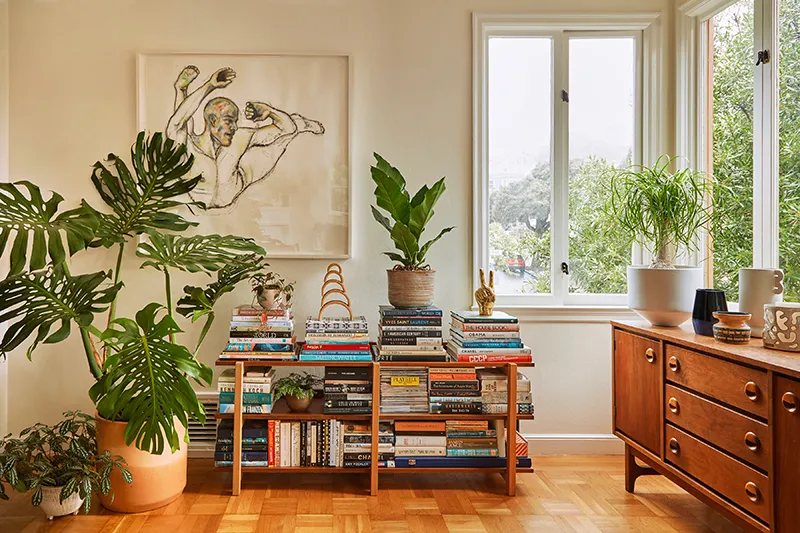
Growing it indoors
| Height | 2–10ft |
|---|---|
| Width | 3–8ft |
| Water needs | When soil surface is dry. |
Indoor monstera will want average houseplant watering, being fully saturated when the surface is dry in small pots, the top inch is dry in medium pots, or the top two inches is dry in large pots. | |
| Exposure | Bright Indirect |
| Plant traits | Edible, Epiphyte, Foliage Feature, Hanging, Sculptural, Tropical, Vertical Gardening, Vine - Self Clinging |
| Drainage | In Pots: Potting Soil |
| Fertilizing | All Purpose |
| Origin | Central America |
Growing Notes
Monstera make an easy going houseplant for mid-range lit ares of your home. They tolerate a splash of direct sun deeper in a room or passing sun during the day, but too much direct sun will yellow, or worse burn the leaves.
Wipe the dust from the leaves every month or so to keep them looking fresh and prevent pests.
Aerial roots can be removed without hurting the plant.
Which store do you shop at?
Special Interest
Makes edible fruit, thus the specific epithet deliciosa! Unfortunately these fruit tend to ripen poorly in the Bay Area.
Stories featuring this plant
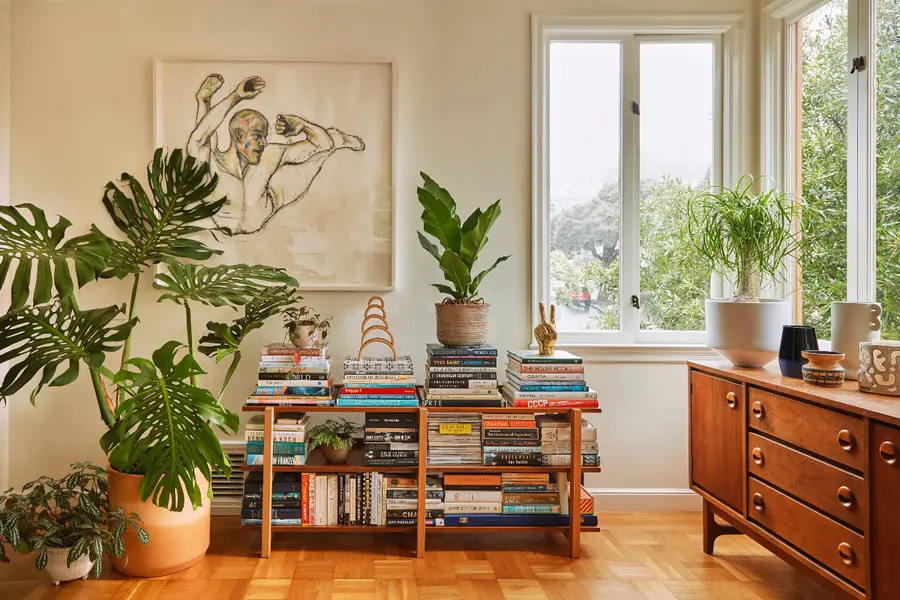 Garden storyPeek Inside a Super Stylish, Plant-Filled SF HomeHouseplant dreams are just what you need for a cozy weekend. Here's a peek inside a plant-filled SF house to inspire your indoor garden plans.
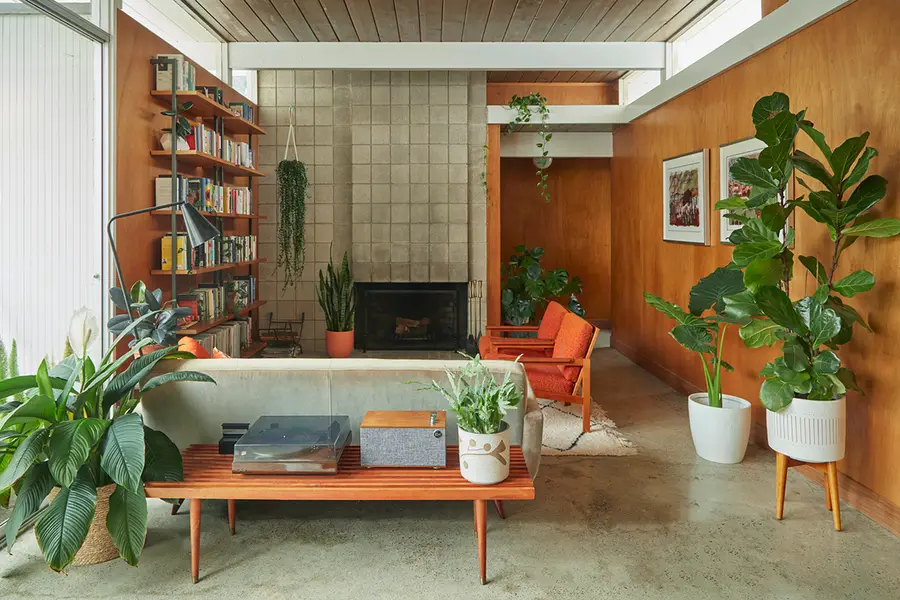 Garden storyPlant-Filled SF Eichler HideawayA mid-century Eichler home in SF, with its warm wood paneling, sleek concrete floors, and flood of light from inner courtyards, is the perfect place to grow a lush indoor garden. Some longtime FGG friends invited us into their home to share their houseplant inspiration.
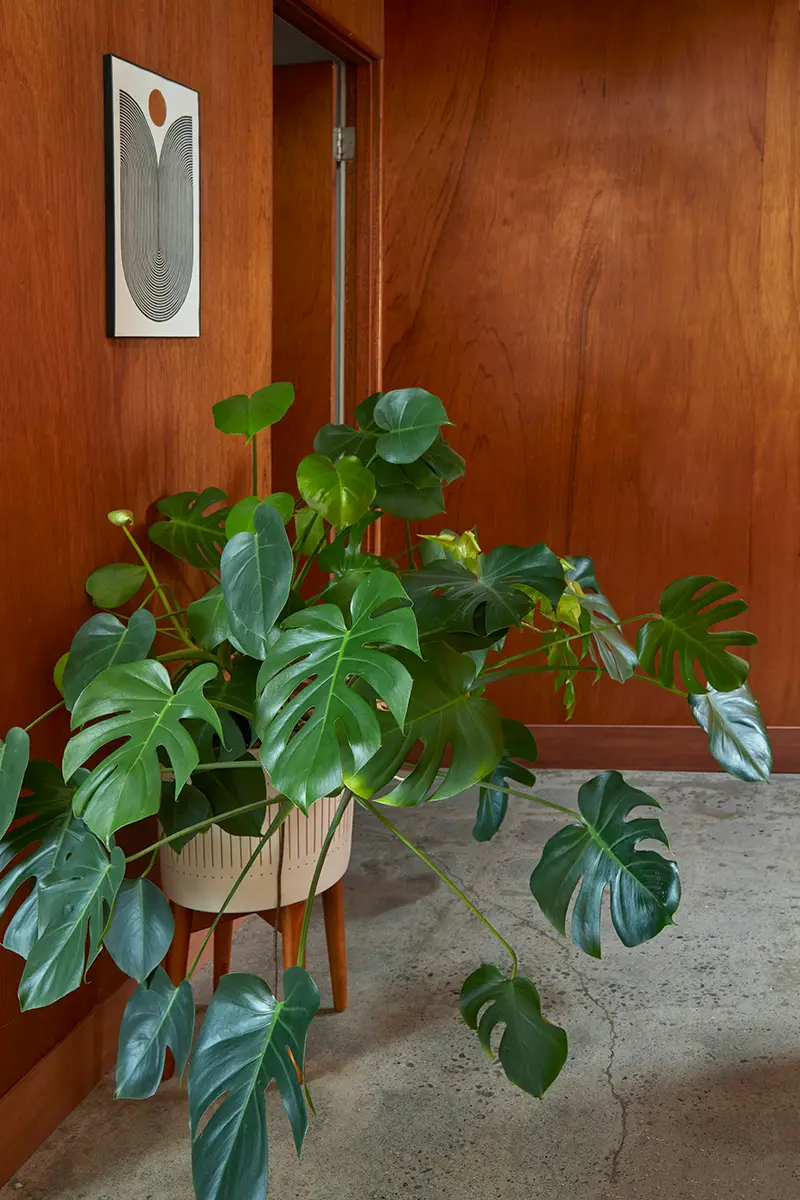 Garden storyMagnificent Monstera deliciosa: Everything You Need to KnowWe all love this plant for the masterfully sculpted leaves. When young, the leaves are simple and heart-shaped, without the characteristic splits and holes. Each leaf emerges larger than the last, and with more character, until they are three feet across, with deeply lobed margins and dozens of inner holes.
More Info
This plant was grown for an outdoor environment, so we do not recommend moving it inside. In general we do not recommend moving plants raised for an outdoor environment indoors.
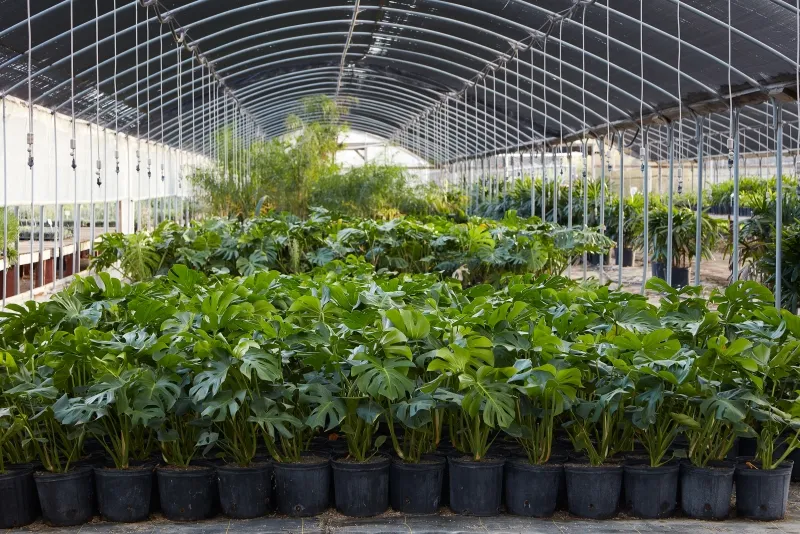
This plant would make a good houseplant if it had been grown in a controlled greenhouse with houseplant soil. This 'greenhousing' ensures that plants who come home with you are well acclimated to indoor life, and also that they don't have any pests. It is common for outdoor plants to have other passengers as well, such as earthworms or centipides that don't necessarily hurt the plant, but aren't welcome indoors.
If you consider yourself an expert gardener, you can of course attempt to transition this plant indoors. In that case you'll want to strip all the soil from the rootball, wash the roots clean and then spray the entire plant (leaves, undersides of the leaves, all the cracks and roots) with a mix of one tablespoon of rubbing alcohol in a cup of water. Repot the plant in the appropriate sterile soil/pot and take extra care as it transitions to the indoors, especially looking for pests and treating at the first sign of problems. Always consider the risk that any bugs could also affect other houseplants you have nearby.
For some plants, we sell two versions: outdoor-grown and greenhouse-grown. If you're looking to grow this plant indoors, feel free to ask our staff if we have a greenhouse-grown version in stock!
Links
The above information reflects the observations of Grubb and Nadler and our extended plant community. We always consider input from fellow horticulturists and welcome feedback from those with additional information on the culture of this plant.
© 2020–2026 Grubb and Nadler. All rights reserved.