
Oscularia (Lampranthus) caulescens
dassievygie
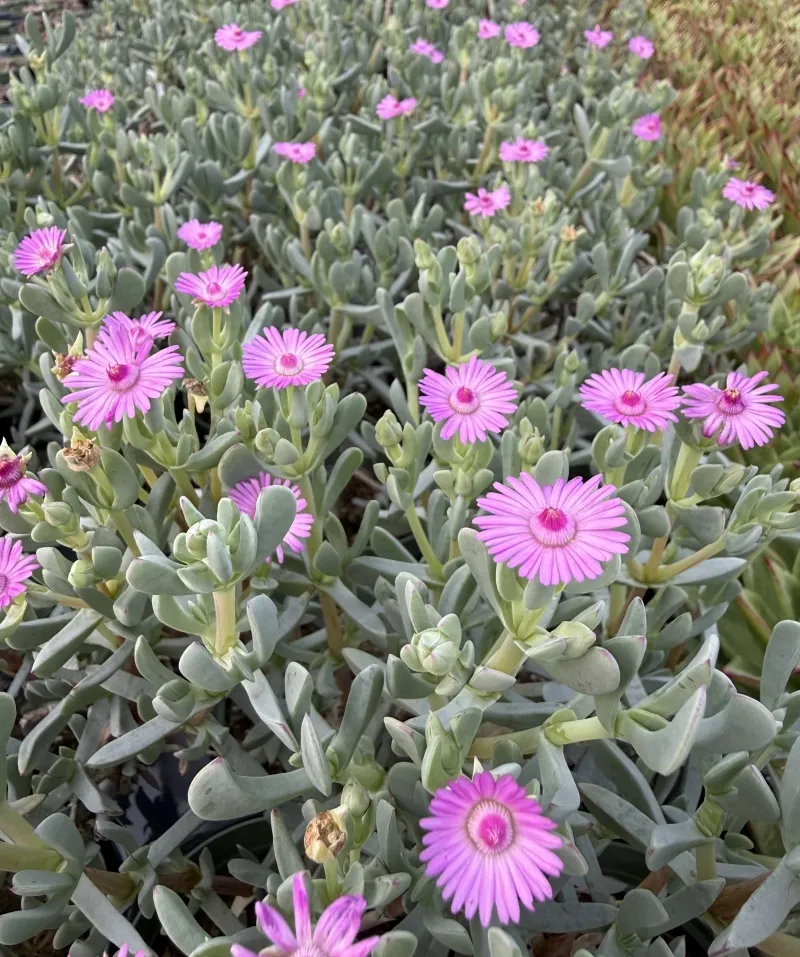
Succulent groundcover produces pink ray flowers in spring. Cascades. Leaves are gray polygons contrasting with deep-pink stems.
 Sinónimos Sinónimos | Lampranthus caulescens |
|---|---|
 Altura Altura | 8–12 |
 Ancho Ancho | 3–6 |
 Tolera Tolera | Costa, Veranos frescos, Sequía, Neblina, Macetas, Sal, Viento |
 Riego Riego | Bajo |
Being from coastal South Africa this plant is super tough in California and may not needing any water after a couple years if it is grown in marine layer influence areas. It likes more water during winter and less during summer. This succulent likes to be fully saturated and then go totally dry before the next watering; you risk rotting the roots if you water while there is significant moisture in the soil. Keep an eye on the leaves, if they begin to shrivel the plant is ready for water. If the plant is in a small pot it will be heavy when well watered and lighter when it's ready for a drink. Remember your watering schedule will depend on the size of the pot (smaller pots needing more frequent watering) and environmental factors such as the season, weather, humidity and exposure. Don't leave succulents in standing water, such as a saucer, for more than a day. | |
 Resiste hasta Resiste hasta | 22 °F |
 Exposición Exposición | Sombra parcial – Pleno sol |
 Características Características | Con flores, Flor fragante, Cubresuelos, Suculenta |
 Interior / exterior Interior / exterior | Exterior |
 Drenaje Drenaje | En el suelo: mezcla para cactus, En maceta: mezcla para cactus, Tolera suelo arenoso |
 Fertilización Fertilización | Uso general, Necesita poco |
 Origen Origen | Suroeste de Sudáfrica |
 Nativa de California Nativa de California | No |
 Zonas Sunset Zonas Sunset | 8, 9, 12–23 |
Notas de cultivo
This plant will grown in some shade, but stretches out. It looks best in a full day of sun where it grows into a dense mound. Will show some summer stress if water is withheld inland, with the leaves having reddish hues.
Easily pruned to shape and the cuttings are easily propagated.
Esta información refleja las observaciones de Grubb and Nadler y de nuestra comunidad de amantes de las plantas. Siempre tomamos en cuenta las aportaciones de otros horticultores y agradecemos los comentarios de quienes tengan más información sobre el cultivo de esta planta.
© 2020–2026 Grubb and Nadler. Todos los derechos reservados.