
Oxalis vulcanicola ‘Velvet Sunset’
Sunset Velvet oxalis
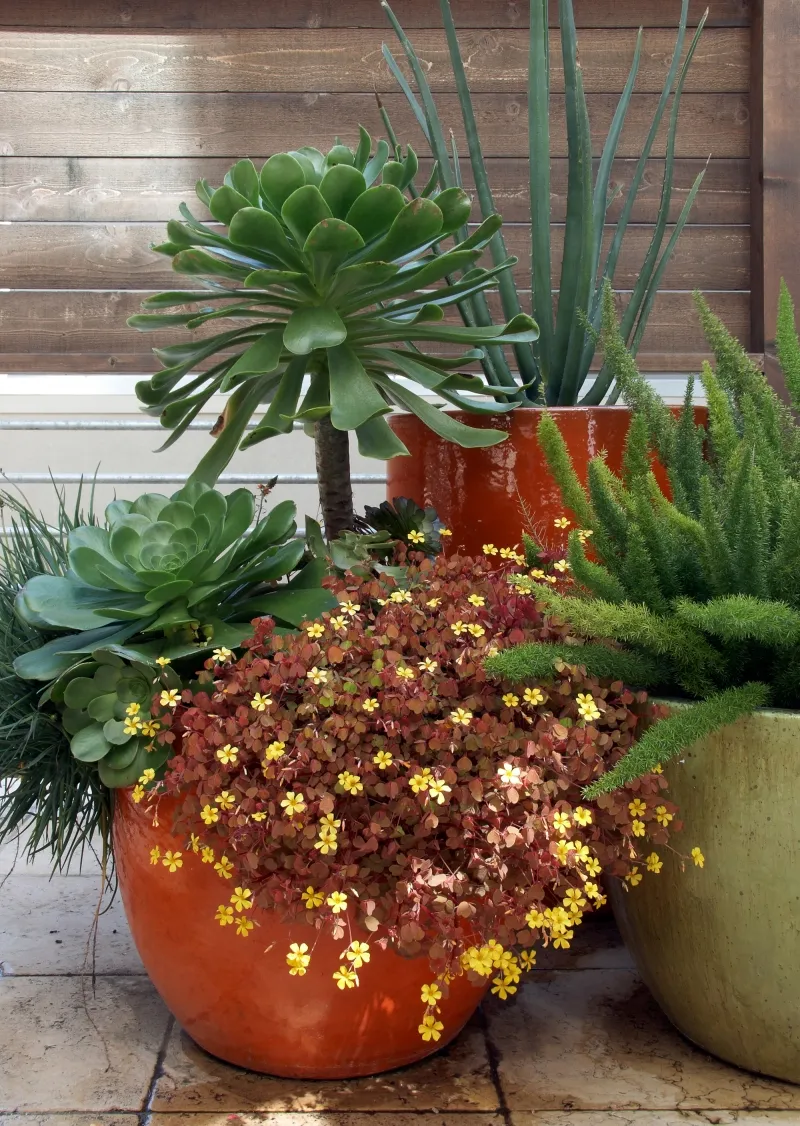
Fast-growing evergreen ground cover with colorful, coppery foliage and golden flowers. Non-invasive. Greener in summer, more vivid in winter. Hangs nicely.
 Sinónimos Sinónimos | Oxalis spiralis ssp. vulcanicola |
|---|---|
 Altura Altura | 3–12 pulg. |
 Ancho Ancho | 2–6 pies |
 Tolera Tolera | Costa, Veranos frescos, Neblina, Macetas, Viento |
 Riego Riego | Moderado |
Water your Sunset Velvet oxalis regularly, when the top inch or so of soil feels dry. If you establish this pattern over several years, then you can cut back to watering every week or two in dry weather. Use drippers, emitters, or a slow stream of water so that it doesn't run off; allow the water to trickle all the way down through the deepest layers of soil. In a pot slowly water the entire surface until water comes out of the bottom of your pot. Can recover quickly from dry spells thanks to its succulent stems. | |
 Resiste hasta Resiste hasta | 25 °F |
 Exposición Exposición | Sombra total – Sombra parcial |
 Características Características | Con flores, Follaje vistoso, Cubresuelos, Colgante, Tropical, Jardín vertical |
 Interior / exterior Interior / exterior | Exterior |
 Drenaje Drenaje | En el suelo: mezcla para plantar, En maceta: tierra para macetas, Tolera suelo arenoso |
 Fertilización Fertilización | Uso general a media concentración |
 Origen Origen | Centroamérica |
 Nativa de California Nativa de California | No |
 Zonas Sunset Zonas Sunset | 15–17, 20–24, H1 |
Notas de cultivo
Grows denser and more colorful in sun. Excellent in pots. Good as an annual in colder areas. Flowering occurs almost all year near the coast. Complements a wide range of colors. Nice small to medium groundcover. Good in vertical gardens. Not at its best in dry heat. Not fussy about soil but best where drainage is good.
Interés especial
Native to mountain forests in Central America, this species offers several colorful cultivars, of which Sunset Velvet may be the most versatile and popular.
Can recover from 20F but stays evergreen above 27F.
Enlaces
Esta información refleja las observaciones de Grubb and Nadler y de nuestra comunidad de amantes de las plantas. Siempre tomamos en cuenta las aportaciones de otros horticultores y agradecemos los comentarios de quienes tengan más información sobre el cultivo de esta planta.
© 2020–2026 Grubb and Nadler. Todos los derechos reservados.