
Parajubaea cocoides
Quito coconut palm
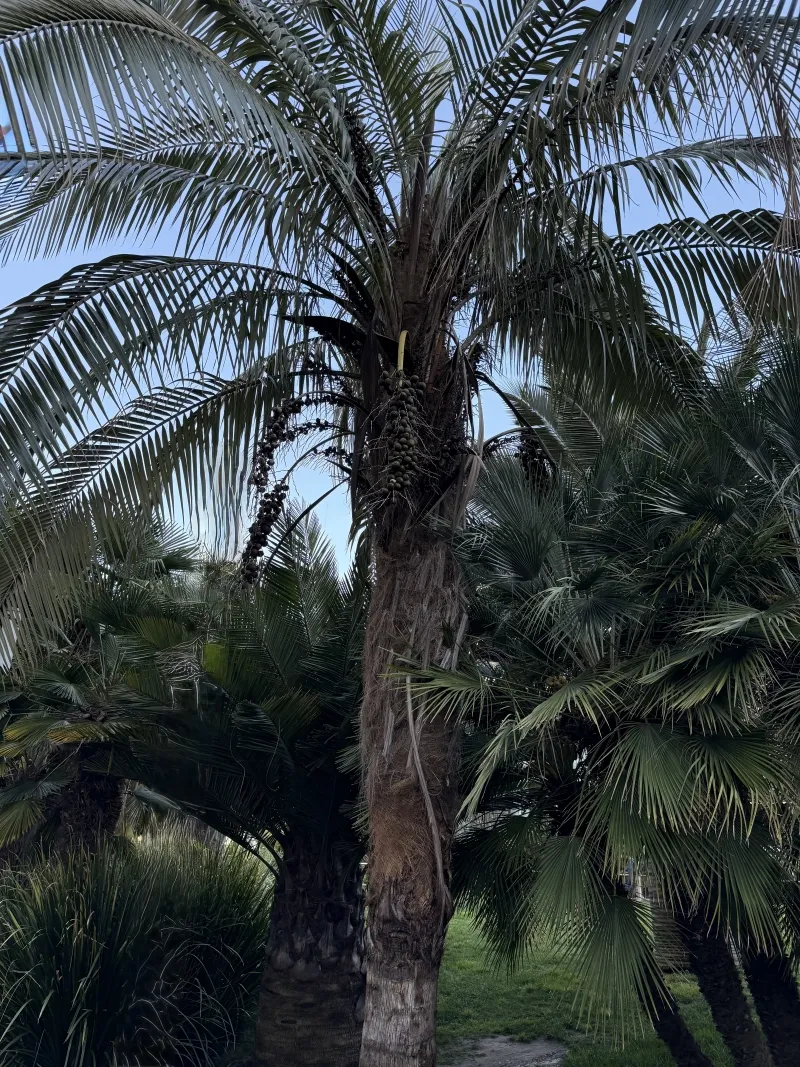
Fast-growing palm resembles the coconut (& produces edible nuts!) but thrives in chilly fog-belt gardens. Luscious & graceful.
 Altura Altura | 30–50 |
|---|---|
 Ancho Ancho | 15–20 |
 Tolera Tolera | Costa, Veranos frescos, Neblina, Viento |
 Riego Riego | Moderado |
This palm should be watered deeply every week or two once it's established. It doesn't want to ever dry out completely. | |
 Resiste hasta Resiste hasta | 27 °F |
 Exposición Exposición | Pleno sol |
 Características Características | Comestible, Palma, Solitaria, Tropical |
 Interior / exterior Interior / exterior | Exterior |
 Drenaje Drenaje | En el suelo: mezcla para cactus, En maceta: mezcla para cactus |
 Fertilización Fertilización | Fertilizante para palmas |
 Origen Origen | Noroeste de Sudamérica |
 Nativa de California Nativa de California | No |
 Zonas Sunset Zonas Sunset | 15–17, 22–24 |
Notas de cultivo
This tree does not perform well in areas of dry or wet heat. Cool weather and marine influence seem to be key to its success, though it does grow well outside of the foggiest areas of the Bay Area, such as the many specimens growing in the Berkeley Botanical Garden.
This species is considered the most temperamental of the genus, probably because of its issues with dry heat.
Palms are generally heavy feeders, so if you want them growing quickly and looking their best, they should be fertilized at least three times a year. Fertilizing at spring equinox, summer solstice and fall equinox will allow for a winter rest. Be sure to feed your palm with a fertilizer that contains micronutrients (especially including magnesium), especially if you see yellowing leaves or yellow spots on the leaves.
This solitary palm will grow only one trunk during its lifetime. If you have a pot with multiple trunks in it, that's because multiple separate palm trees were germinated in the pot. The good news is that you won't need to thin out suckers over time to maintain the number of trunks you started out with.
With leaves growing in a single plane along most of the rachis, the feather palm has an elegant look to it.
Interés especial
This plant is only known in cultivation; commonly around Quito in Equador, but also within California for many years.
As the name suggests, this plant makes small edible coconuts once mature!
Enlaces
Esta información refleja las observaciones de Grubb and Nadler y de nuestra comunidad de amantes de las plantas. Siempre tomamos en cuenta las aportaciones de otros horticultores y agradecemos los comentarios de quienes tengan más información sobre el cultivo de esta planta.
© 2020–2026 Grubb and Nadler. Todos los derechos reservados.