
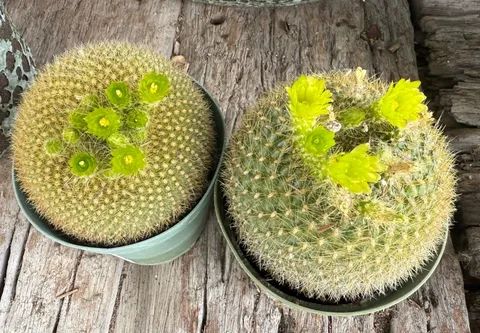
Parodia mueller-melchersii (rutilans)
Brazilian ball cactus
Solitary globular cactus has glowing flowers that range from cream yellow to lavender. Summer blooming and perfect in a pot. Avoid midday sun in hot months; also resents cold winter rains.
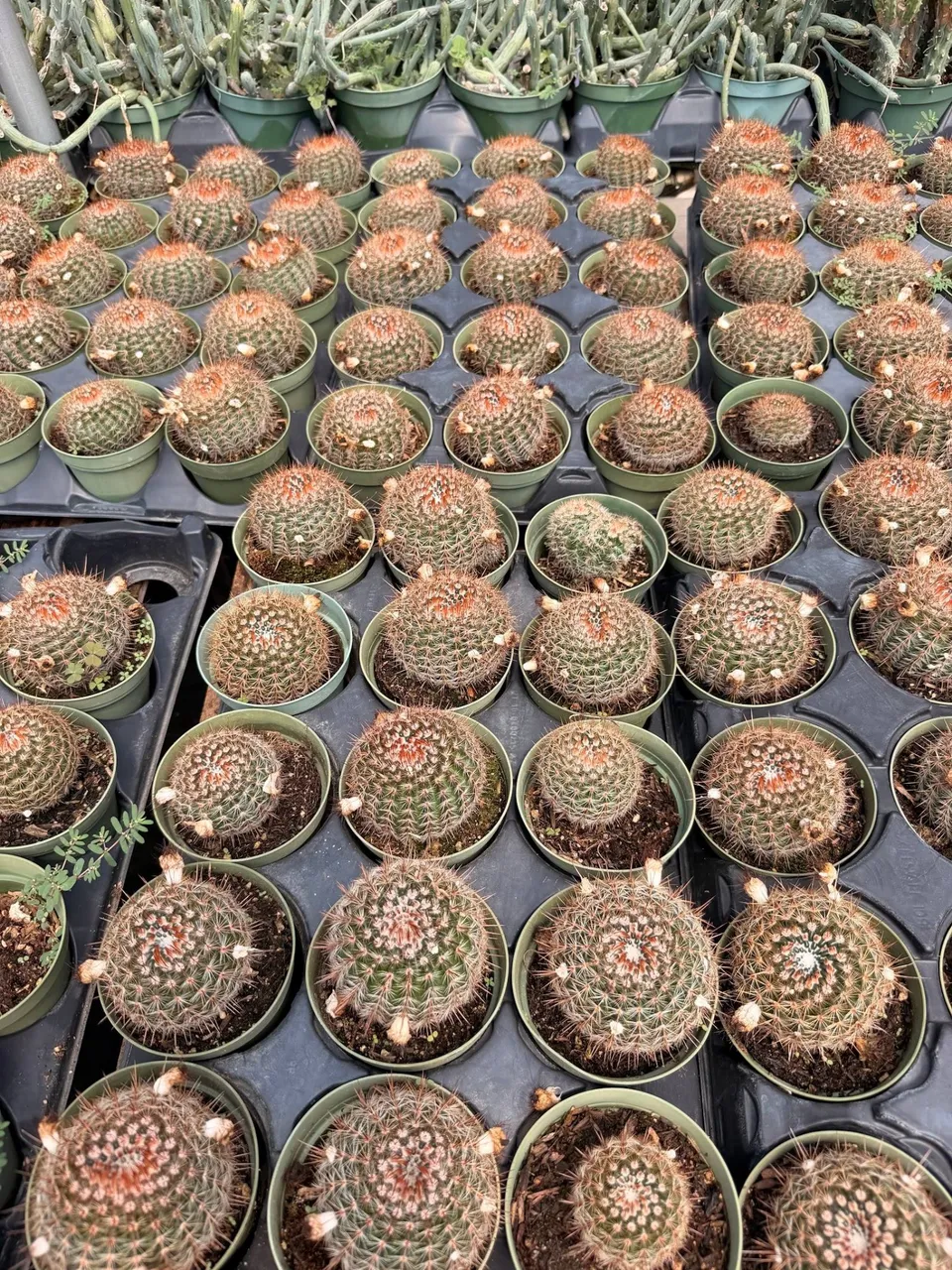
In stock in San Francisco and Los Angeles
from $5.95
 Mature size | 2–5in tall 2–4in wide |
|---|---|
 Exposure | Part Sun – Part Shade |
 Hardy to | 25°F |
 Sunset zones | 16, 19–24, H1, H2 |
 Water needs | Low Most cactus are from the deserts of the New World and as such like to go totally bone dry between waterings, making them very low-maintenance. If you see your cactus begin to shrivel or lose firmness, your cactus is likely totally dry and should be watered. To get good healthy growth your plant does not want to sit around totally dried out during its growing season. Once it is dry, water it. This cactus comes from an area with summer rainfall and is actively growing during that time, when it is forgiving of overwatering errors. During winter dormancy it should be kept extra dry and won't tolerate overwatering. Remember that if kept in a small pot your plant will want more frequent watering. |
 Tolerates | Drought, Heat, Pots |
 Plant traits | Cactus, Flowering, Solitary |
 Drainage | In Ground: Cactus Mix, In Pots: Cactus Mix |
 Fertilizing | All Purpose |
 Origin | Uruguay, S Brazil |
 Synonyms | Notocactus mueller-melchersii Parodia rutilans |
Similar plants
Growing Notes
This cactus should be sheltered from winter rains, easily rotting in cold wet weather. If kept dry, such as in a greenhouse or under a porch, it is noted to withstand short temps down to 23F.
While this plant is typically solitary, damaging the growth point will result in a plant with multiple heads.
This plant is typically grown in a pot, as it is likely to rot if planted in the ground. That said, in an exceedingly well drained rockery it is possible to grow this plant in an appropriate climate.
In habitat this cactus grows in sheltered grasslands, and as such it prefers protection from hot summer sun, which can burn it.
Special Interest
Spines can vary from hey colored to dark brown. In the past the various forms of this plant were thought to be separate species, but further investigation has found intermediate populations, tying together the various forms into what is now considered a single species.
More Info
This cactus is native to Uruguay and Rio Grande do Sul, Brazil's southernmost state, where a mild, temperate climate prevails, with plentiful rain year-round. Its habitat is rocky and well-drained.
What we've learned from growing this plant ourselves and in our customers' gardens. We always love to hear more. Tell us
© 2020–2026 Grubb and Nadler. All rights reserved.