
Phlebodium pseudoaureum
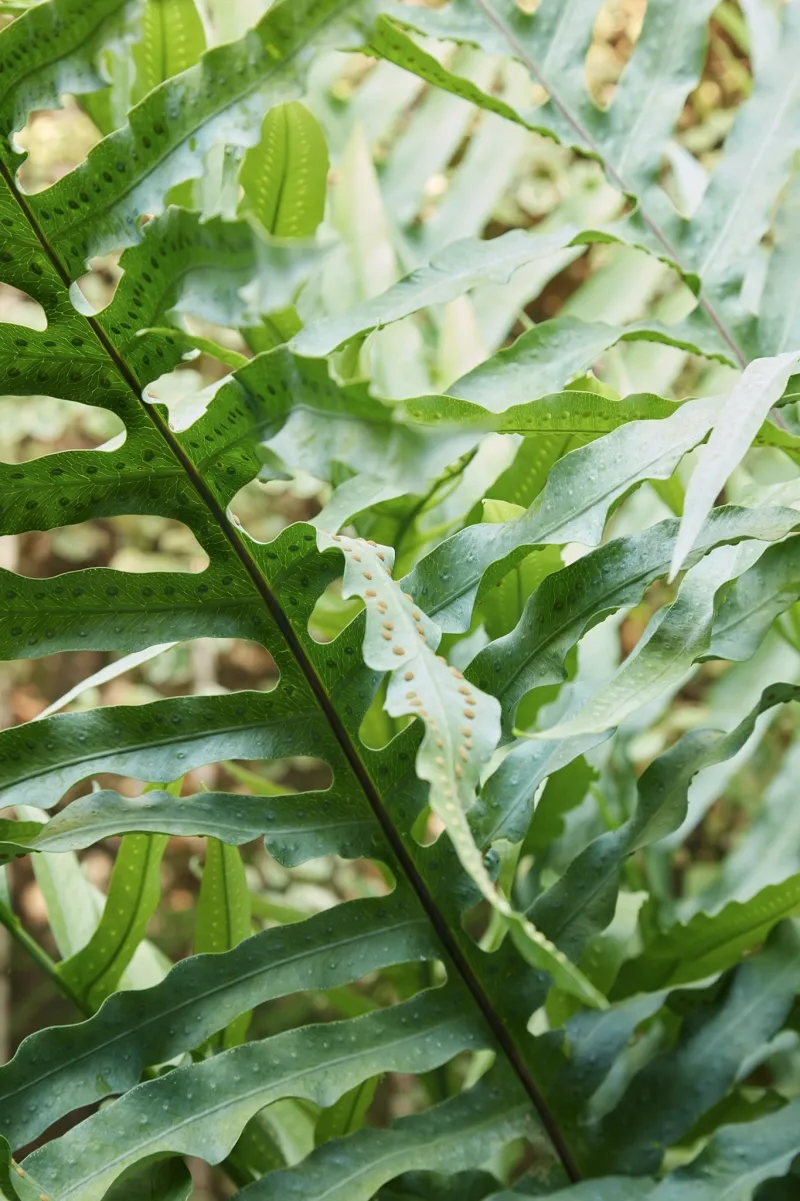
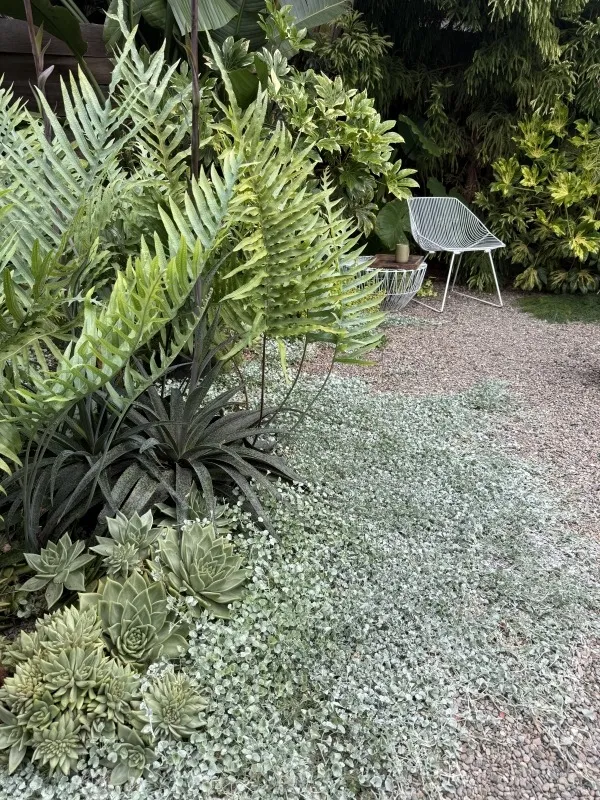
Graceful glaucous blue leaves, upright, wavy and with much character. Brightens up a shady spot. Slowly spreads into small colony.
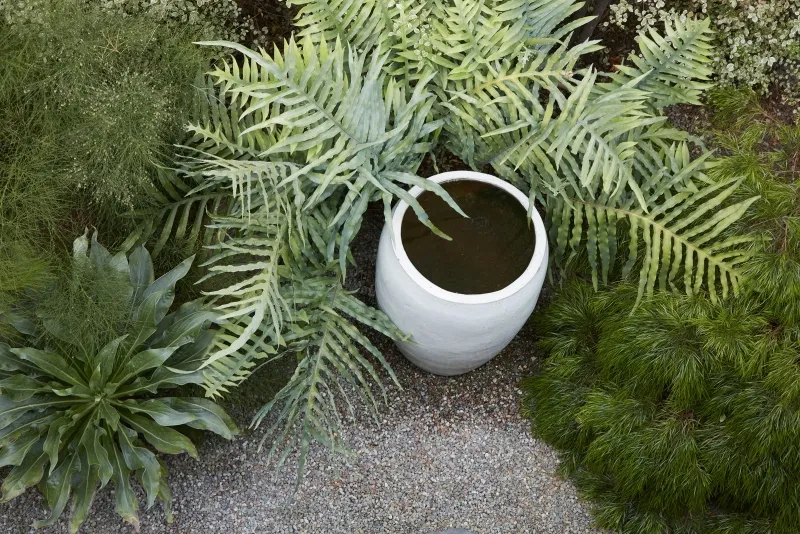
Seen in Flora Grubb’s New Home Garden →
 Height | 2–3ft |
|---|---|
 Width | 3–5ft |
 Tolerates | Cool Summers, Pots |
 Water needs | Moderate – High |
Make sure to water this plant when soil dries out in the top inch or so. If it dries out too much, it may drop fronds; however, it can regrow once it's irrigated again if the dry spell doesn't last too long. The lighter the medium, the more irrigation it can tolerate. Avoid soils that remain saturated. | |
 Hardy to | 26°F |
 Exposure | Full Shade – Full Sun |
 Plant traits | Epiphyte, Foliage Feature, Spreading, Tropical, Vertical Gardening |
 Indoor / outdoor | Outdoor |
 Drainage | In Ground: Cactus Mix, In Pots: Cactus Mix, In Pots: Potting Soil, Tolerates Sandy Soil |
 Fertilizing | Acid 1/2 Strength |
 Origin | New World Tropics |
 Sunset zones | 14–17, 19–24, H1, H2 |
Growing Notes
This fern can be grown in a hanging basket or vertical garden as well as in the ground. In habitat it often grows as an epiphyte—on the trunks and branches of trees and in the cracks of rocks.
If fronds freeze, they are likely to regrow with the onset of warmer weather, as long as sufficient moisture is available.
Special Interest
This species resembles Phlebodium aureum but gets bigger and grows more vigorously in cool climates.
Stories featuring this plant
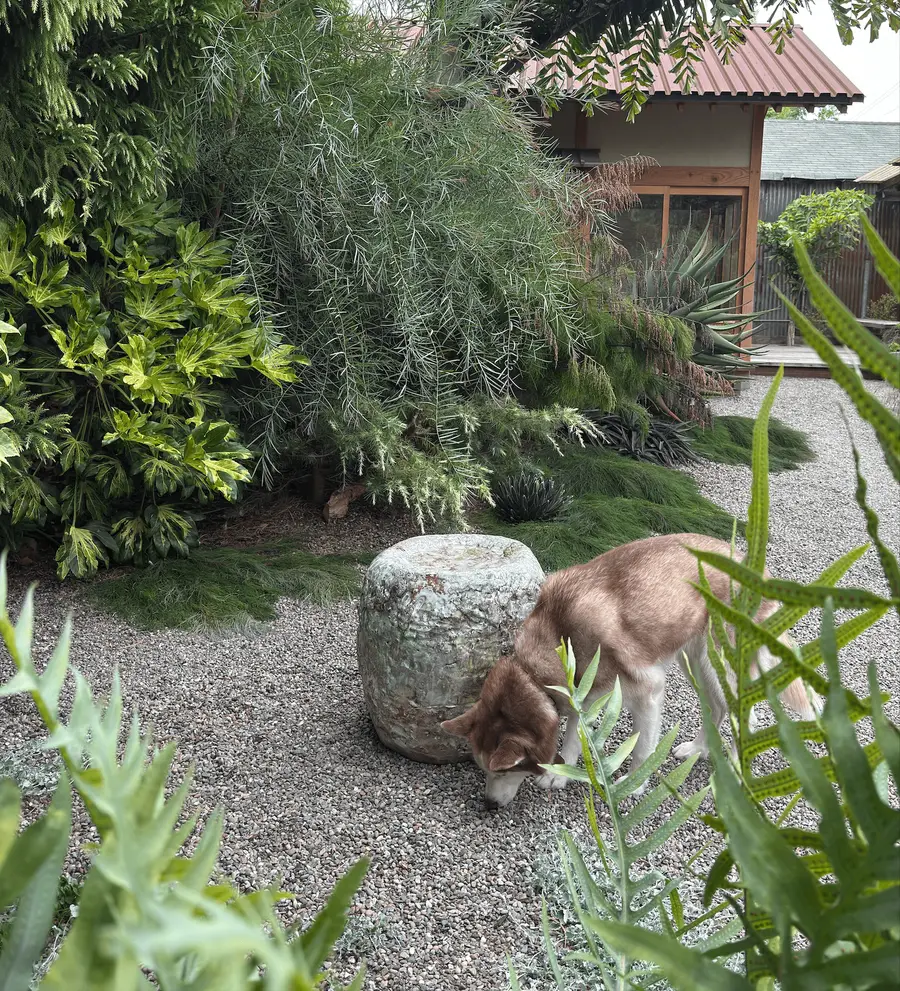
In stock today in San Francisco
| 3 gallon | 4 available | $129 |
The above information reflects the observations of Grubb and Nadler and our extended plant community. We always consider input from fellow horticulturists and welcome feedback from those with additional information on the culture of this plant.
© 2020–2026 Grubb and Nadler. All rights reserved.