
Protea ‘Lady Pearl’
Lady Pearl protea
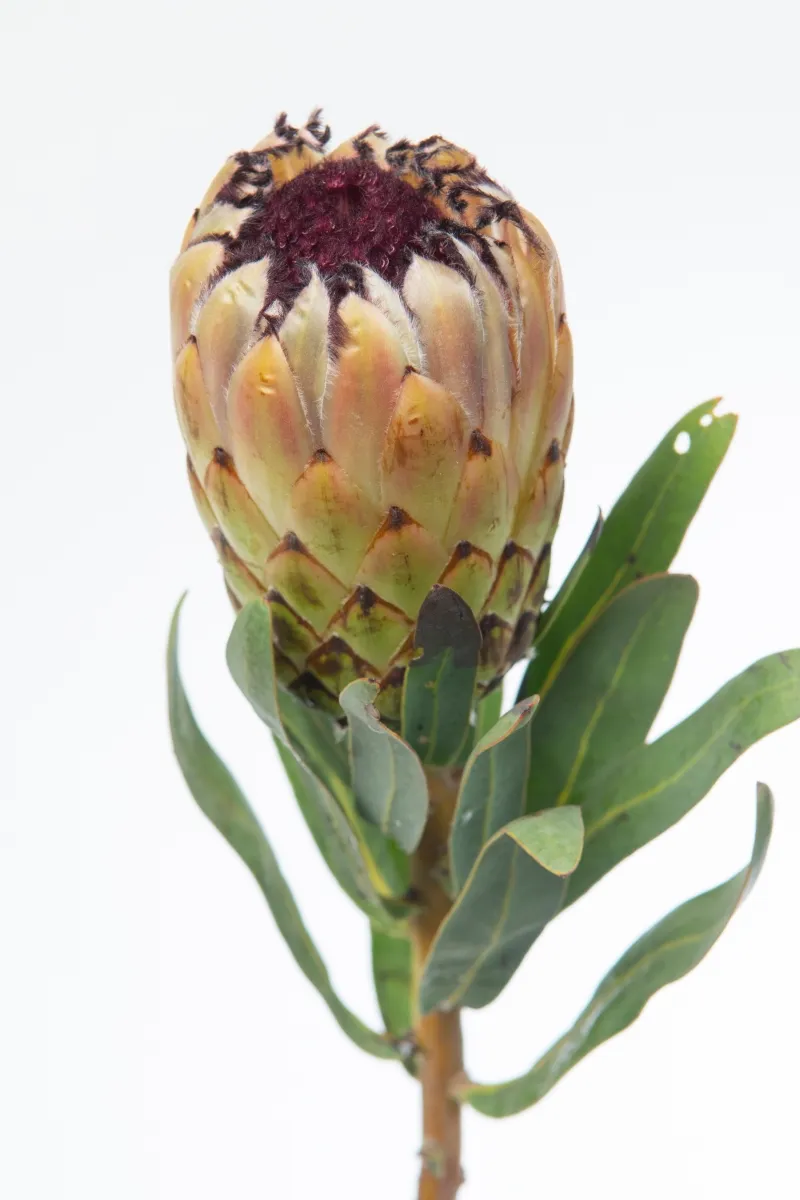
Stunning evergreen shrub features large ivory blossoms tipped in ebony and covered in silky hairs. Loves pots, minimal summer water, wind, and poor, well-drained soil.
 Height | 4–8ft |
|---|---|
 Width | 4–8ft |
 Tolerates | Coast, Cool Summers, Drought, Fog, Neglect, Wind |
 Water needs | Low |
Proteas are well adapted to our Mediterranean climate, making them carefree plants with bountiful rewards. After a few years, when your protea is established, it will want deep watering every couple weeks, though it will tolerate more if the drainage is excellent. Protea respond very poorly to clay soils, especially if they are overwatered. If you just have to plant one in your clay garden, mounding or planting on a slope can help. Also amending with liberal minerals such as lava or pumice helps. | |
 Hardy to | 27°F |
 Exposure | Part Shade – Full Sun |
 Plant traits | Flowering, Shrub |
 Indoor / outdoor | Outdoor |
 Drainage | In Ground: Cactus Mix, In Pots: Cactus Mix |
 Fertilizing | Low Needs |
 Origin | Hybrid, South Africa |
 California native | No |
 Sunset zones | 16, 17, 19–24, H1 |
Growing Notes
Proteas can be kept smaller by pruning, but don't prune more than two years of growth where stems become woody and lack foliage. Proteas can even be espaliered.
By tip-pinching buds early on (each time they have grown a few leaves), you can force your protea to become more dense. Since they bloom on the terminal buds, this will delay flowering.
Proteas have evolved to live in very poor soils, and so they should never have phosphorus fertilizer, which many a grower has learned the hard way. If you give your protea all-purpose fertilizer, it'll likely be completely dead within a couple of weeks. They do respond well to light acidic fertilizer, such as cottonseed meal, or nitrogen fertilizers such as blood meal and fish emulsion.
Special Interest
One of the most coveted flowers in the gardening world.
The above information reflects the observations of Grubb and Nadler and our extended plant community. We always consider input from fellow horticulturists and welcome feedback from those with additional information on the culture of this plant.
© 2020–2026 Grubb and Nadler. All rights reserved.