
Protea longifolia
long-leaf sugarbush
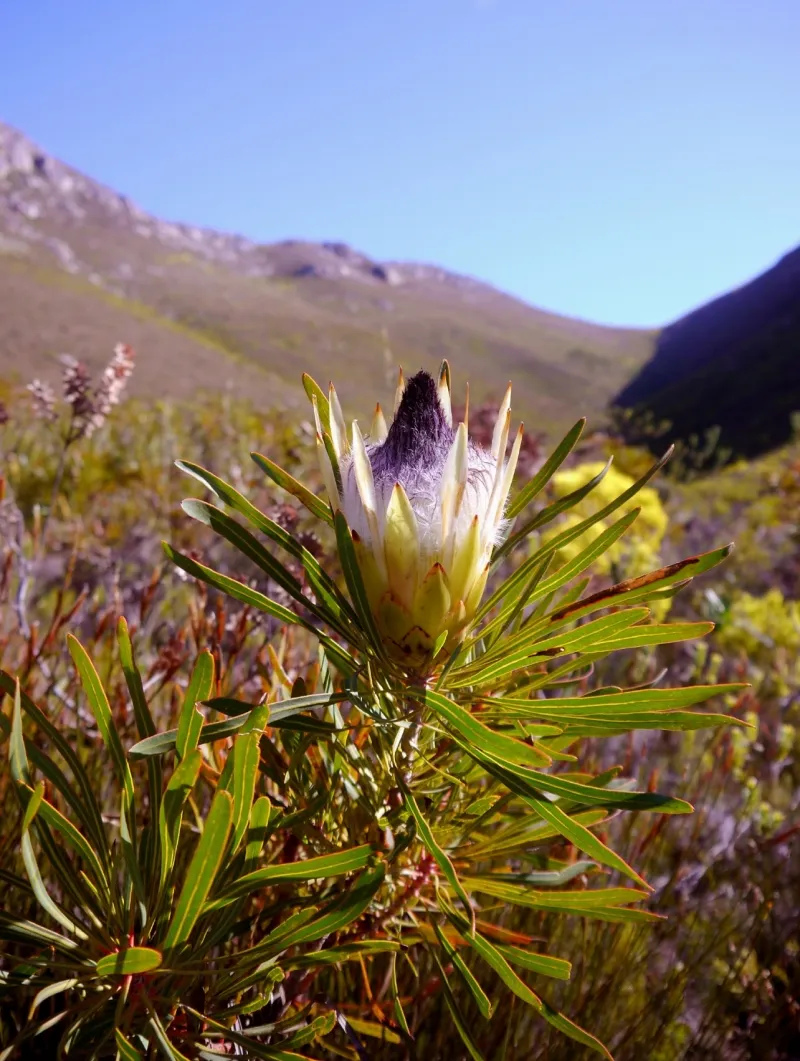
Long-leaf protea is an open sprawling shrub. Branch tips hold unusual pale flowers with wooly centers that are white edged and have pointed black centers. Good drainage. No phosphorus.
 Mature size | 4–6ft tall 3–5ft wide |
|---|---|
 Exposure | Part Shade – Full Sun |
 Hardy to | 25°F |
 Sunset zones | 15–17, 19–24, H1 |
 Water needs | Low – Moderate Proteas are well adapted to our Mediterranean climate, making them carefree plants with bountiful rewards. After a few years, when your protea is established, it will want deep watering every couple weeks, though it will tolerate more if the drainage is excellent. Protea respond very poorly to clay soils, especially if they are overwatered. If you just have to plant one in your clay garden, mounding or planting on a slope can help. Also amending with liberal minerals such as lava or pumice helps. |
 Tolerates | Cool Summers, Drought, Wind |
 Plant traits | Flowering, Shrub |
 Drainage | In Ground: Cactus Mix, In Pots: Cactus Mix, Tolerates Sandy Soil |
 Fertilizing | Bloodmeal, Fish Emulsion, Low Needs, No Phosphorus |
 Origin | South Africa |
Growing Notes
Proteas can be kept smaller by pruning, but don't prune more than two years of growth where there are no leaves and the branches are woody. Proteas can even be espaliered or pruned into a loose informal screen.
By tip-pinching buds early on (each time they have grown a few leaves), you can force your protea to become more dense. Since they bloom on the terminal buds, this will delay flowering.
Proteas have evolved to live in very poor soils, and so they should never have phosphorus fertilizer, which many a grower has learned the hard way. If you give your protea all-purpose fertilizer, it'll likely be completely dead within a couple weeks. They do respond well to light acidic fertilizer, such as cotton seed meal, or nitrogen fertilizers such as blood meal and fish emulsion. Generally its better to sit back and see how the plant grows without fertilzier, which is typically not needed.
Special Interest
Their coveted flowers on stiff stems are long-lasting after they're cut, perfect for arrangements.
Flowers vary from yellow-green to creamy-white or pale salmon.
Links
What we've learned from growing this plant ourselves and in our customers' gardens. We always love to hear more. Tell us
© 2020–2026 Grubb and Nadler. All rights reserved.