
Puya alpestris
sapphire tower
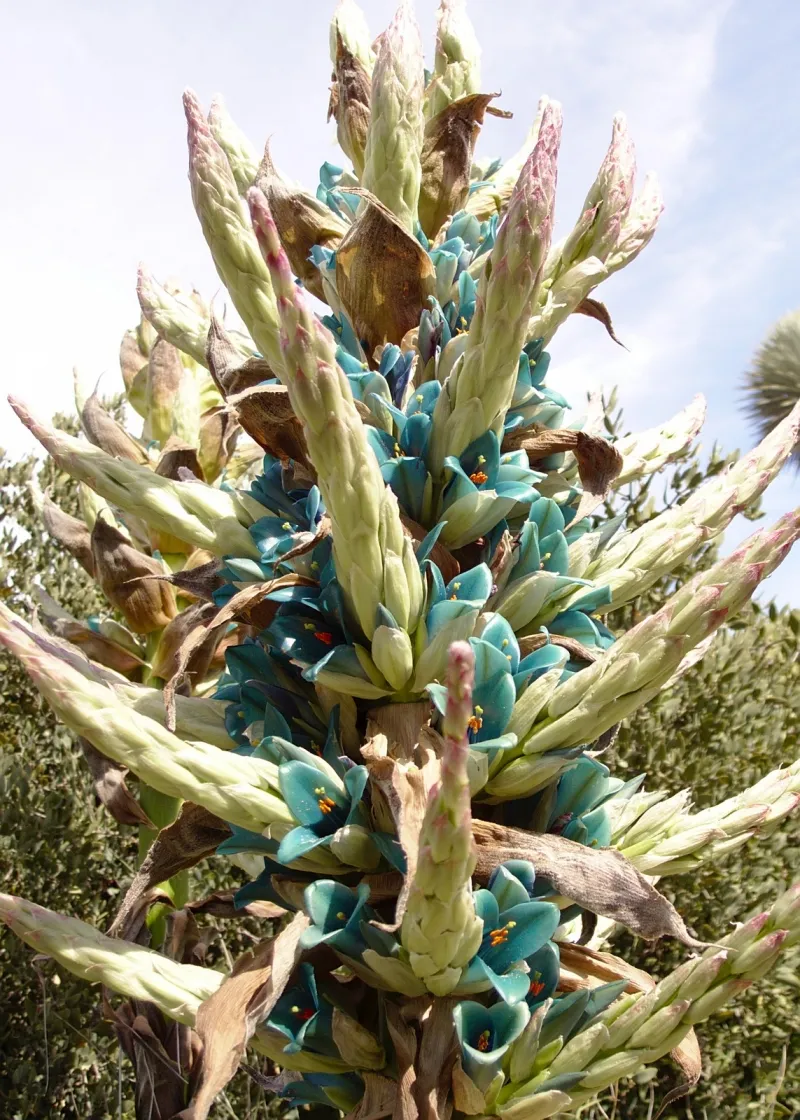
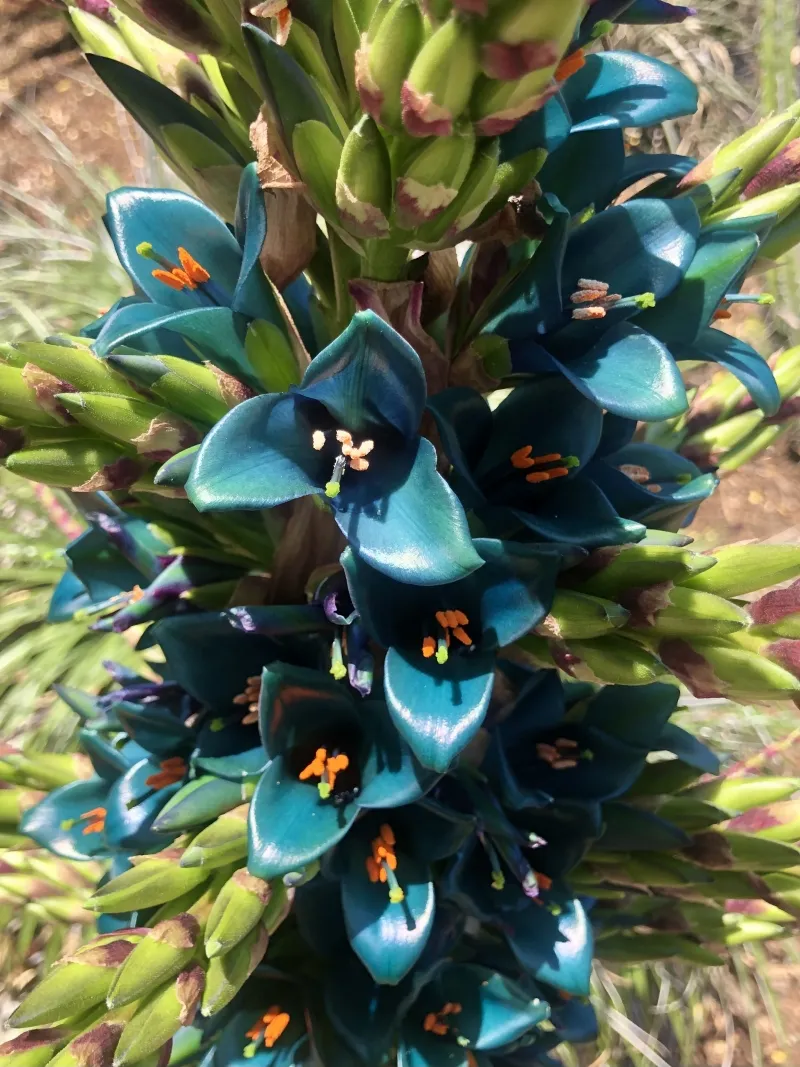
Pretty silvery-green rosettes raise towers in spring of luminous, otherworldly turquoise flowers with orange anthers when mature. Clumping, spiny, tough, hardy. Tolerates pots, rocky slopes.
 Altura Altura | 1–3 pies |
|---|---|
 Ancho Ancho | 2–6 pies |
 Tolera Tolera | Costa, Frío, Veranos frescos, Sequía, Venados, Neblina, Macetas, Azoteas, Descuido, Viento |
 Riego Riego | Bajo |
Ensure good drainage. Allow to dry out between waterings. It may be beneficial to wet the foliage, especially when the soil is hard to reach. Puyas may need no supplemental irrigation in coastal California once established, especially in foggy areas. They will however look better and grow faster if they are given occasional supplemental water in the dry season. Native to the Mediterranean climate zone of Chile (where it's called chagual), this succulent bromeliad tolerates our summer drought, especially in coastal areas. They will need more summer irrigation in warm, dry places away from the coast. | |
 Resiste hasta Resiste hasta | 17 °F |
 Exposición Exposición | Sol parcial – Pleno sol |
 Características Características | Con espinas, Bromelia, Forma matas, Con flores, Follaje vistoso, Colibríes, Roseta, Escultural |
 Interior / exterior Interior / exterior | Exterior |
 Drenaje Drenaje | En el suelo: mezcla para cactus, En maceta: mezcla para cactus, Tolera suelo arenoso |
 Fertilización Fertilización | Necesita poco |
 Origen Origen | Centro de Chile |
 Nativa de California Nativa de California | No |
 Zonas Sunset Zonas Sunset | 8, 9, 14–24, H1 |
Notas de cultivo
Perfect for decorating rocky areas, slopes, accenting flats, creating a protective barrier, attracting hummingbirds. Flowering may occur starting when the largest rosette reaches 10 inches tall by 20 inches wide. The flowering rosette dies while side pups continue expanding the clump. Flowers open successively over up to a month. The tower (up to 7' tall) lasts much longer as fruits develop and ripen.
Be sure to weed around this plant early and consistently as it is difficult to remove well established weeds around its base.
Interés especial
Flora Grubb's encounter with the flower of Puya alpestris in San Francisco inspired her to move to California to work in gardens.
This species is one of the southernmost naturally occurring members of the tropical bromeliad family, which accounts for its hardiness to cold. The most popular bromeliad in kitchens worldwide is the pineapple, Ananas comosa.
Enlaces
Esta información refleja las observaciones de Grubb and Nadler y de nuestra comunidad de amantes de las plantas. Siempre tomamos en cuenta las aportaciones de otros horticultores y agradecemos los comentarios de quienes tengan más información sobre el cultivo de esta planta.
© 2020–2026 Grubb and Nadler. Todos los derechos reservados.