
Ravenea hildebrandtii
dwarf majesty palm
Growing it outdoors
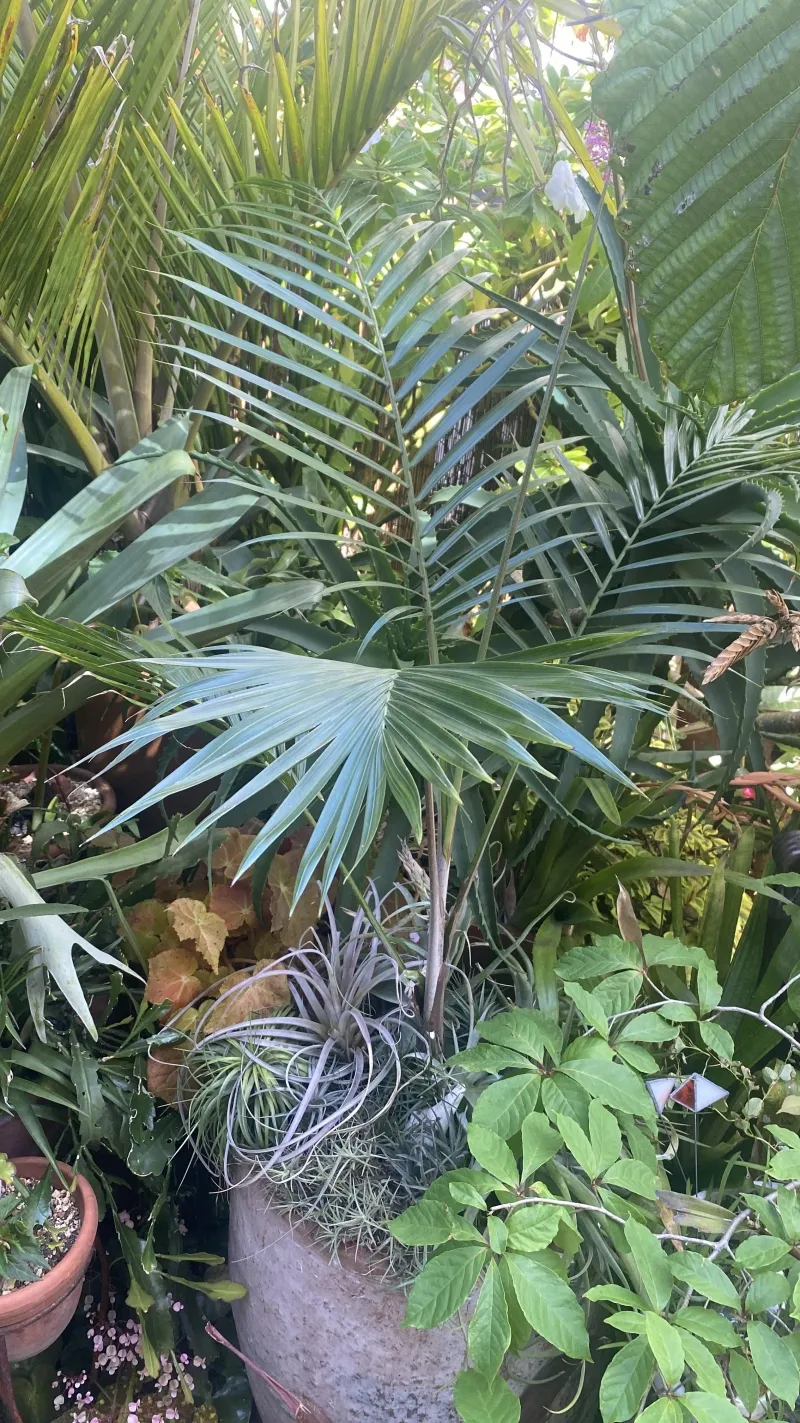
Perfect mini palm tree for shade gardens. Rich green feathery foliage; curious long flower stalks.
 Height | 3–8ft |
|---|---|
 Width | 3–6ft |
 Tolerates | Narrow Planting, Pots |
 Water needs | Moderate |
Water this plant regularly, when the top inch or so of soil feels dry. If you establish this pattern over several years, then you can cut back to watering every week or two in dry weather. Use drippers, emitters, or a slow stream of water so that it doesn't run off; allow the water to trickle all the way down through the deepest layers of soil. In a pot slowly water the entire surface until water comes out of the bottom of your pot. | |
 Hardy to | 27°F |
 Exposure | Full Shade – Part Sun |
 Plant traits | Solitary, Tropical, Trunking |
 Drainage | In Ground: Cactus Mix, In Pots: Cactus Mix, Tolerates Sandy Soil |
 Fertilizing | Palm Fertilizer |
 Origin | Comoro Islands |
 California native | No |
 Sunset zones | 16, 17, 21–24, H2 |
Growing Notes
Very slow growing palm should be considered a foliage feature for many years, before growing into a petite trunked palm.
Tolerates mild coastal sun, but avoid hot scorching sun.
Best near the coast, but will tolerate some lower humidity. Doesn't do well in dry desert heat where leaves get brown and tippy.
Tolerates moderate winds, but not a great choice for an exceptionally windy spot.
The dwarf majesty palm is fairly adaptable to various soils, including clay, but given the option it prefers well drained rich soil.
Growing it indoors
| Water needs | When soil surface is dry. |
|---|---|
| Exposure | Bright Indirect – Partial Direct |
| Plant traits | Solitary, Tropical, Trunking |
| Drainage | In Pots: Cactus Mix |
| Fertilizing | Palm Fertilizer |
| Origin | Comoro Islands |
Which store do you shop at?
Special Interest
One of the smallest species of Ravenea.
More Info
While this plant was grown for an outdoor environment, so we do not recommend moving it inside, it can be grown as houseplant in bright indirect light as it was during victorian times.
This plant would make a good houseplant if it had been grown in a controlled greenhouse with houseplant soil. This 'greenhousing' ensures that plants who come home with you are well acclimated to indoor life, and also that they don't have any pests. It is common for outdoor plants to have other passengers as well, such as earthworms or centipides that don't necessarily hurt the plant, but aren't welcome indoors.
If you consider yourself an expert gardener, you can of course attempt to transition this plant indoors. In that case you'll want to strip all the soil from the rootball, wash the roots clean and then spray the entire plant (leaves, undersides of the leaves, all the cracks and roots) with a mix of one tablespoon of rubbing alcohol in a cup of water. Repot the plant in the appropriate sterile soil/pot and take extra care as it transitions to the indoors, especially looking for pests and treating at the first sign of problems. Always consider the risk that any bugs could also affect other houseplants you have nearby.
The above information reflects the observations of Grubb and Nadler and our extended plant community. We always consider input from fellow horticulturists and welcome feedback from those with additional information on the culture of this plant.
© 2020–2026 Grubb and Nadler. All rights reserved.