
Rhipsalis cereuscula
coral cactus
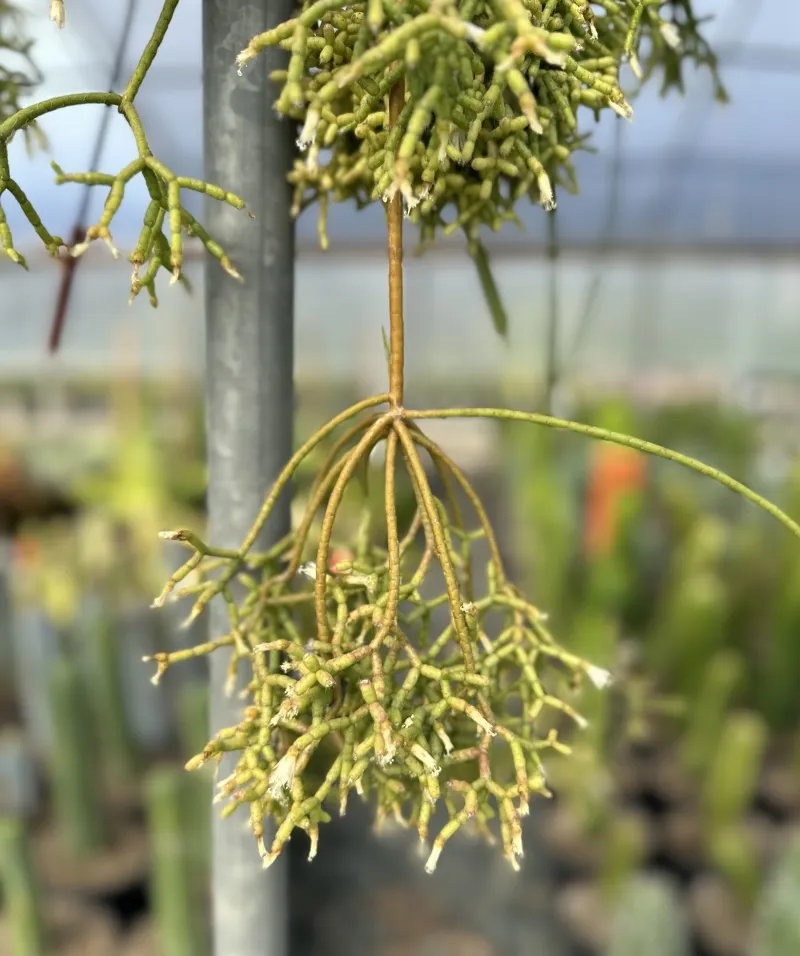
Shrubby epiphytic cactus looks great in pots, baskets, and vertical gardens. Long dangling stems end in bushy clusters. Mature plants bob in the breeze like living mobile art pieces.
 Height | 1–3ft |
|---|---|
 Width | 1–2ft |
 Tolerates | Heat, Pots |
 Water needs | Moderate |
This plant is a stereotype buster. Not only is it a cactus, yes a cactus! It also lives up in the tree tops - a so called epiphyte. While these plants can go mostly dry, do not water them like a cactus. Rhipsalis are from South American forests that receive consistent rainfall and, as such, they appreciate a drink when they are mostly dry to just barely dried out. If you push them too far the stems will begin to shrivel and later fall off. While they can take some sun they respond to drought much better in shady locations. If rhipsalis are in very fast draining material they are hard to overwater. | |
 Hardy to | 30°F |
 Exposure | Full Shade – Part Shade |
 Plant traits | Cactus, Epiphyte, Hanging, Succulent, Vertical Gardening |
 Indoor / outdoor | Outdoor |
 Drainage | In Pots: Cactus Mix, Orchid Bark |
 Fertilizing | All Purpose |
 Origin | W South America |
 California native | No |
 Sunset zones | 16, 17, 21–24, H2 |
Growing Notes
In habitat these plants cascade from the treetops, rooting wherever they land. This makes them ideal for hanging planters and elevated pottery. It also makes them exceedingly easy to propagate by cutting. They do well in pots, even tiny ones, where they can live indefinitely as long as the water is consistent.
Many small white bell shaped flowers at branch tips add grace when in bloom, though this plant is shy to put on such a show.
Typically this plant is not grown in the ground.
The above information reflects the observations of Grubb and Nadler and our extended plant community. We always consider input from fellow horticulturists and welcome feedback from those with additional information on the culture of this plant.
© 2020–2026 Grubb and Nadler. All rights reserved.