
Sabal ‘Riverside’
Riverside palmetto
Grand palmetto thrives in California conditions. Unmatched for large-scale foliage with ease of care. Very cold- and heat-tolerant. In time, becomes stately palm tree.
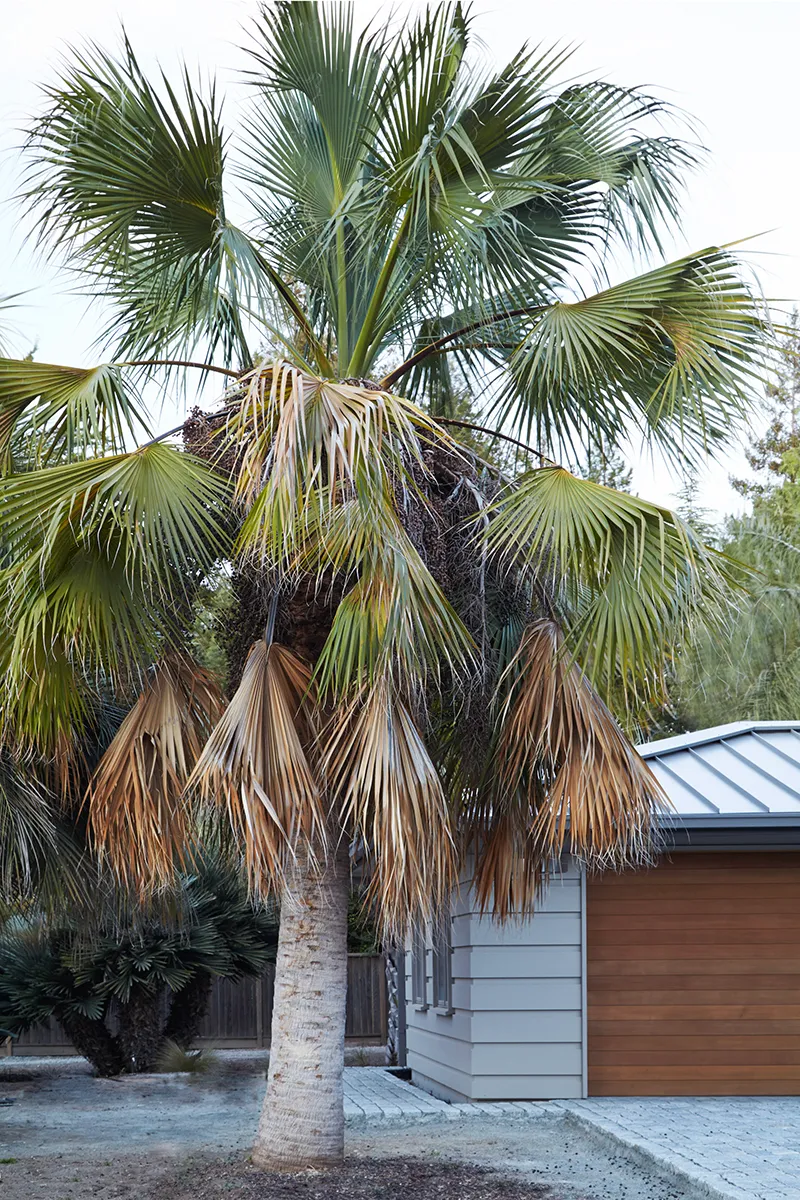
 Altura Altura | 20–30 |
|---|---|
 Ancho Ancho | 15–20 |
 Tolera Tolera | Costa, Frío, Veranos frescos, Calor, Sal, Viento |
 Riego Riego | Moderado |
Needs plenty of water to get established, but after a few years can be irrigated moderately. Will grow faster with more water in warm weather. Will tolerate more drought in cooler areas, and in heavier soils. | |
 Resiste hasta Resiste hasta | 17 °F |
 Exposición Exposición | Sombra parcial – Pleno sol |
 Características Características | Abejas, Insectos benéficos, Columnar, Follaje vistoso, Palma, Roseta, Escultural, Solitaria, Tropical, Forma tronco |
 Interior / exterior Interior / exterior | Exterior |
 Drenaje Drenaje | En el suelo: mezcla para cactus, En el suelo: mezcla para plantar, En maceta: mezcla para cactus, En maceta: tierra para macetas, Tolera suelo pesado, Tolera suelo arenoso |
 Fertilización Fertilización | Fertilizante para palmas |
 Origen Origen | Cultivo |
 Nativa de California Nativa de California | No |
 Zonas Sunset Zonas Sunset | 8, 9, 11–24, H1, H2 |
Notas de cultivo
Fast-growing, and especially well-adapted to California conditions. Apply palm food (3-2-3 with micronutrients) quarterly (OK to skip winter fertilizer application). At maturity, its garlands of thousands of flowers make pollinators and gardeners happy.
Interés especial
First identified in a garden in Riverside, California, in the mid-20th century, this variety has never been identified to species. Some believe it to be a strain of Sabal mexicana from the southern portion of its range. Others see resemblances to the notably large Caribbean species, Sabal causiarum and Sabal domingensis.
Esta información refleja las observaciones de Grubb and Nadler y de nuestra comunidad de amantes de las plantas. Siempre tomamos en cuenta las aportaciones de otros horticultores y agradecemos los comentarios de quienes tengan más información sobre el cultivo de esta planta.
© 2020–2026 Grubb and Nadler. Todos los derechos reservados.