
Senecio ficoides ‘Skyscraper’
Skyscraper senecio
Succulent with sculptural, flattened leaves, pleasing blue foliage. Stems grow boldly upright in clusters. Good focal point or soft shrub.
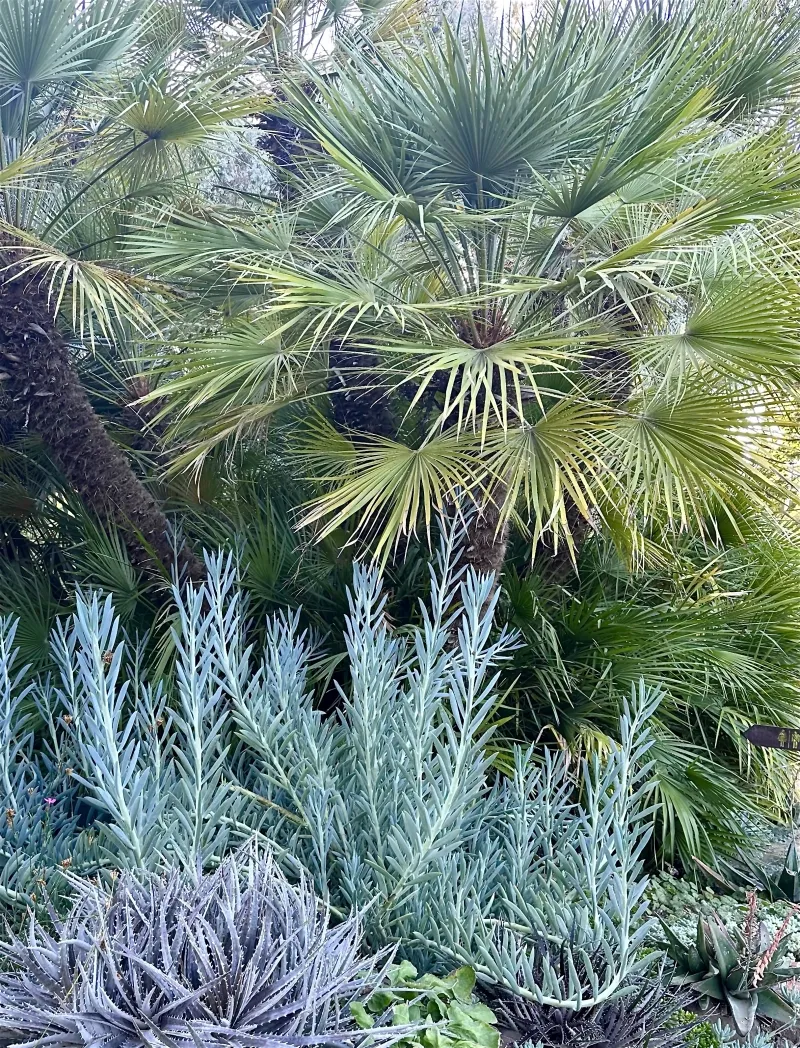
 Synonyms | Senecio ficoides 'Mount Everest' Curio ficoides 'Skyscraper' Kleinia ficoides |
|---|---|
 Height | 3–4ft |
 Width | 1–2ft |
 Tolerates | Drought, Deer, Heat, Narrow Planting, Pots, Rooftops |
 Water needs | Low – Moderate |
This succulent likes to be fully saturated and then go totally dry before the next watering; you risk rotting the roots if you water while there is significant moisture in the soil. Keep an eye on the leaves, if they begin to shrivel the plant is ready for water. If the plant is in a small pot it will be heavy when well watered and lighter when it's ready for a drink. Remember your watering schedule will depend on the size of the pot (smaller pots needing more frequent watering) and environmental factors such as the season, weather, humidity and exposure. Don't leave succulents in standing water, such as a saucer, for more than a day. | |
 Hardy to | 25°F |
 Exposure | Full Sun – Part Shade |
 Plant traits | Sculptural, Shrub, Succulent |
 Indoor / outdoor | Outdoor |
 Drainage | In Ground: Cactus Mix, In Pots: Cactus Mix, Tolerates Sandy Soil |
 Fertilizing | All Purpose |
 Origin | Hybrid, South Africa |
 California native | No |
 Sunset zones | 12–24 |
Growing Notes
This shrub can grow in part shade or even part sun, but branches will flop over, losing the upright form that makes this plant so appealing.
Brittle plant is best kept back from high traffic areas.
Can be cut back hard to refresh the clump.
Special Interest
Reportedly hybridized by Lammert Koning at Paterswolde in Holland, who crossed Senecio ficoides 'Portugal L52' with the pollen of Senecio ficoides 'Lin 05'.
Links
In stock today in Los Angeles
| 1 gallon | 5 available | $24.95 |
The above information reflects the observations of Grubb and Nadler and our extended plant community. We always consider input from fellow horticulturists and welcome feedback from those with additional information on the culture of this plant.
© 2020–2026 Grubb and Nadler. All rights reserved.