
Senecio rowleyanus ‘String of Pearls’
string of pearls
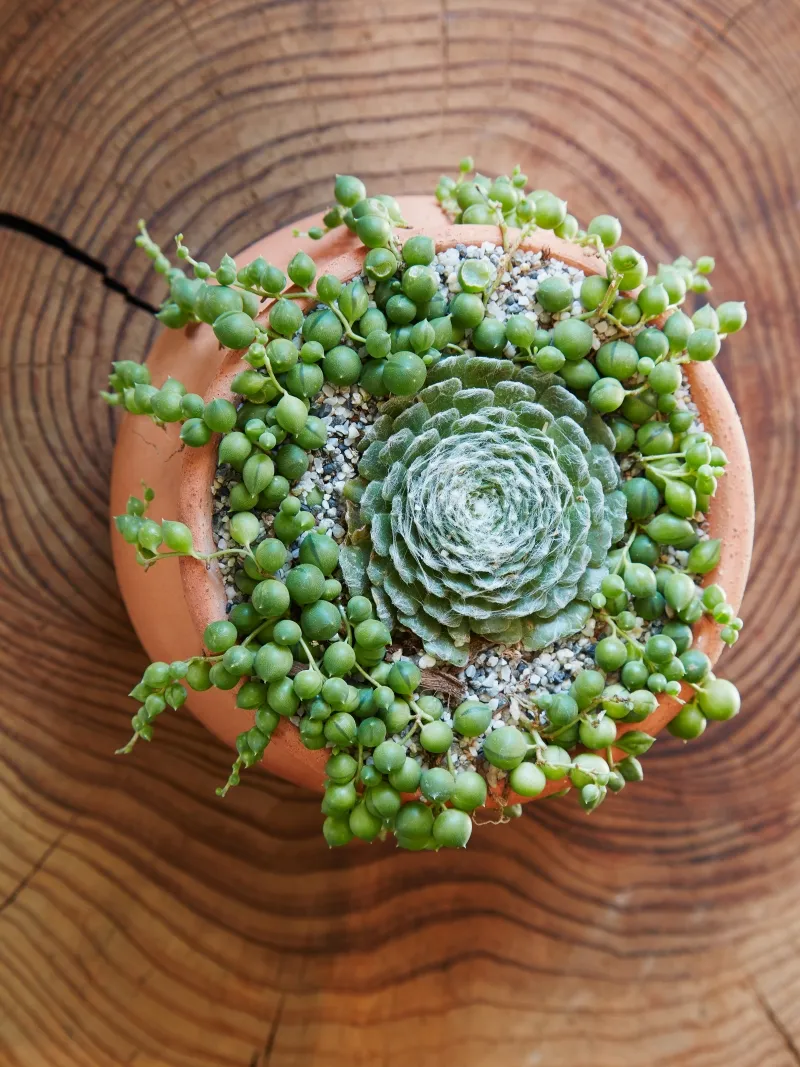
The name says it all! Excellent in hanging baskets or over the edge of pots. Doesn't want to run bone dry or plant will lose pearls. Also for rockeries and cracks.
Seen in Trailing Succulents for Hanging Baskets →
 Synonyms | Curio rowleyanus |
|---|---|
 Height | 2–4in |
 Width | 1–3ft |
 Tolerates | Drought, Heat, Pots, Wind |
 Water needs | Low – Moderate |
This plant will want water around every two to five weeks. Let the soil totally dry out, but don't let it go bone dry and then sit around for a month or so; once they are totally dried out, they want water! Remember that the top of the soil may feel dry, while residual water remains deeper in the pot. Since water is heavy, a light potted plant often indicates it's time to water, especially with smaller pots. It's also a good idea to keep an eye on the plant: If leaves are shriveling, or even dropping off, you've probably gone too long without watering. You can think of each leaf as a tiny water tank; when the plant encounters drought it goes to these reserve water sources and uses them up. | |
 Hardy to | 28°F |
 Exposure | Full Sun – Part Shade |
 Plant traits | Ground Cover, Hanging, Spreading, Succulent |
 Indoor / outdoor | Outdoor |
 Drainage | In Ground: Cactus Mix, In Pots: Cactus Mix, Tolerates Sandy Soil |
 Fertilizing | All Purpose |
 Origin | SW Africa |
 California native | No |
 Sunset zones | 13, 17, 22–24 |
Growing Notes
This senecio has a form that naturally trails along the ground, rooting as it goes and making a mat over time. However, in cultivation, most gardeners place them in a pot, often hanging, where the cascading stems can be appreciated.
When grown as a groundcover, this plant will eventually begin to smother itself; once this happens it's best to prune it back each spring, creating a cleaner form. These cuttings are easily rooted.
Stories featuring this plant
Which store do you shop at?
The above information reflects the observations of Grubb and Nadler and our extended plant community. We always consider input from fellow horticulturists and welcome feedback from those with additional information on the culture of this plant.
© 2020–2026 Grubb and Nadler. All rights reserved.