
Senna multiglandulosa
buttercup bush
Easy, evergreen, nearly ever-blooming shrub, drought-tolerant. Makes golden flowers. Prune to form.
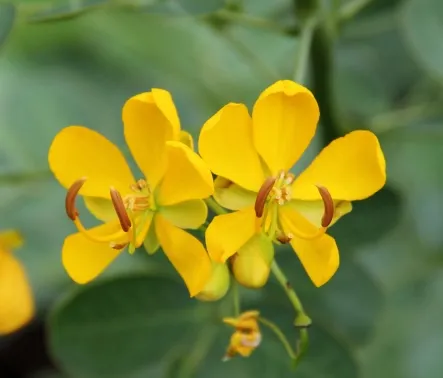
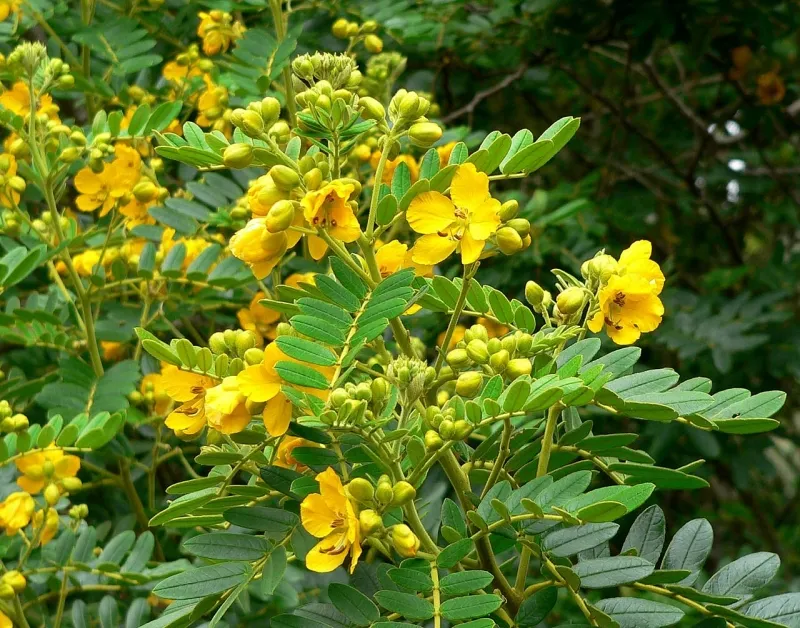
 Synonyms | Senna marilandica Senna bicapsularis |
|---|---|
 Height | 3–5ft |
 Width | 3–6ft |
 Tolerates | Drought, Fog, Wind |
 Water needs | Low – Moderate |
Water this plant regularly, when the top inch or so of soil feels dry. If you establish this pattern over several years, then you can cut back to watering every week or two in dry weather. Use drippers, emitters, or a slow stream of water so that it does not run off; allow the water to trickle all the way down through the deepest layers of soil. In a pot slowly water the entire surface until water comes out of the bottom of your pot. This plant has adapted to survive drought by shedding its leaves, and as such if it defoliates during a dry spell you've probably pushed it too far. It's not dead though! Give it a good deep watering and it should come back. | |
 Hardy to | 28°F |
 Exposure | Full Sun – Part Shade |
 Plant traits | Butterflies, Flowering, Screen, Shrub, Tropical |
 Indoor / outdoor | Outdoor |
 Drainage | In Ground: Planting Mix, In Pots: Potting Soil, Tolerates Heavy Soil, Tolerates Sandy Soil |
 Origin | Centra America |
 California native | No |
 Sunset zones | 15–17, 19–24, H1 |
Growing Notes
This plant typically grows as an open shrub. You can prune it up to have a more treelike form or tip prune to increase the density of your shrub. Be sure to prune out any crossing branching when young, as this plant has a tendency to send out erratic cross branches. Stems tend to rise vertically, then arch over, producing profuse flowering branchlets.
Special Interest
The species name multiglandulosa refers to many small glands found on this plant's leaves.
Bright and cheery without overwhelming or pulling focus.
Links
The above information reflects the observations of Grubb and Nadler and our extended plant community. We always consider input from fellow horticulturists and welcome feedback from those with additional information on the culture of this plant.
© 2020–2026 Grubb and Nadler. All rights reserved.