
Stapelia gigantea
carrion flower
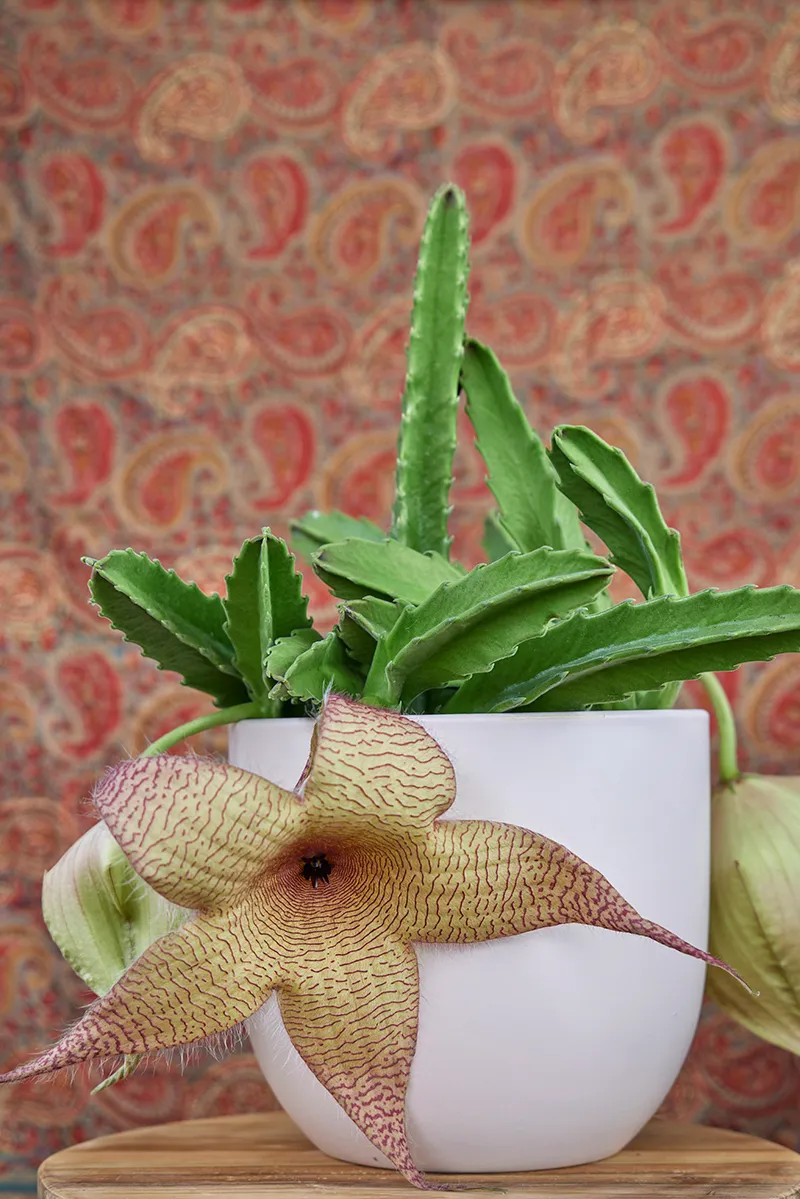
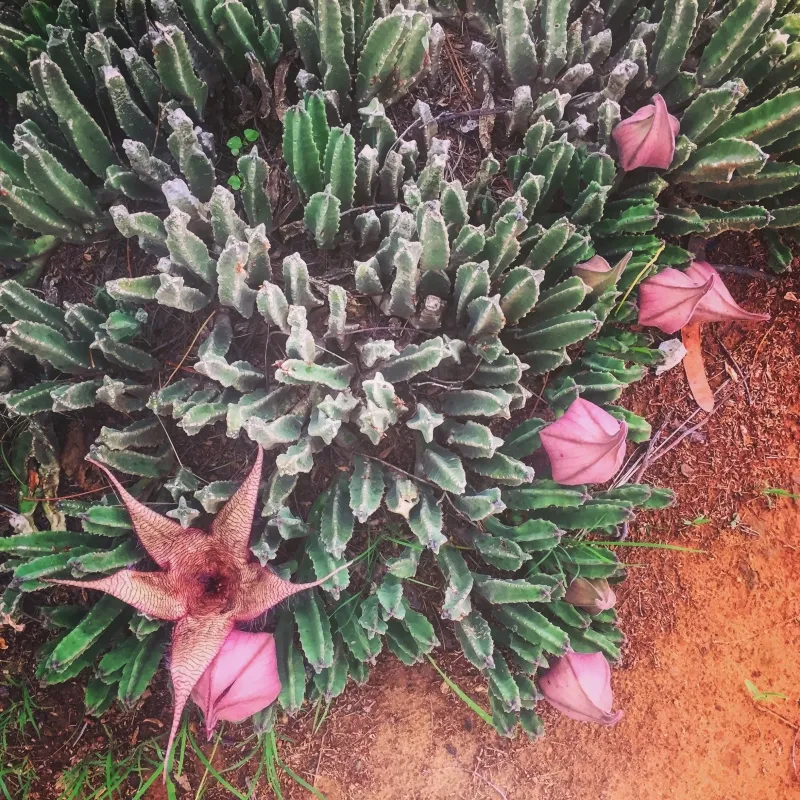
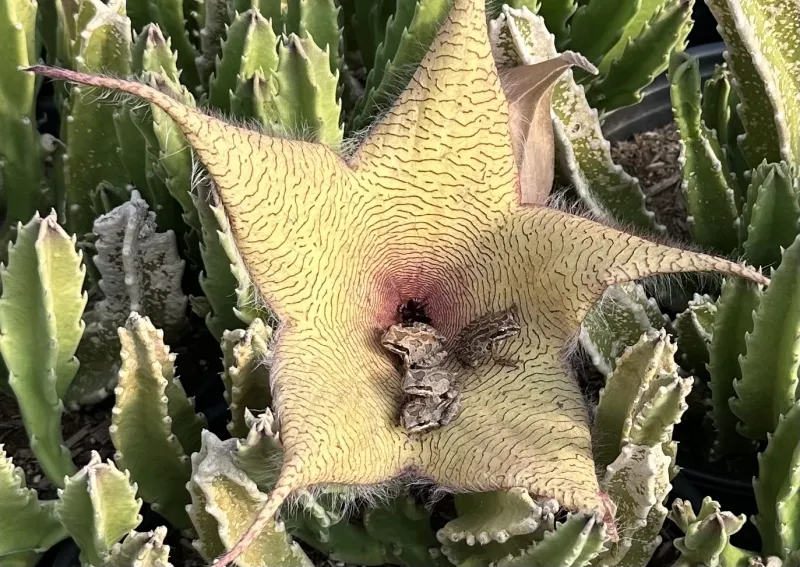
Green coral head colony produces hand-sized yellow-ocher starfish flowers, blushed with maroon patterns and peach fuzz. A unique stunner! Pots, rock gardens.
 Height | 5–10in |
|---|---|
 Width | 1–3ft |
 Tolerates | Drought, Heat, Pots, Wind |
 Water needs | Low – Moderate |
This stapelia is from arid areas of East Africa and as such likes to go totally bone dry between waterings, making it very low-maintenance. To get good healthy growth your plant doesn't want to sit around totally dried out during its growing season. Once it is dry, water it. This plant comes from an area with summer rainfall and is actively growing during that time, when it is forgiving of overwatering errors. During winter dormancy it should be kept extra dry and won't tolerate overwatering. Remember that if kept in a small pot your plant will want more frequent watering. Shriveling stems are sign of underwatering. | |
 Hardy to | 32°F |
 Exposure | Full Sun – Part Shade |
 Plant traits | Flowering, Fragrant Flower, Ground Cover, Rock Garden, Sculptural, Succulent |
 Indoor / outdoor | Outdoor |
 Drainage | In Ground: Cactus Mix, In Pots: Cactus Mix, Requires Perfect Drainage, Tolerates Sandy Soil |
 Fertilizing | All Purpose 1/2 Strength |
 Origin | NE South Africa |
 California native | No |
Growing Notes
Stems fall to the ground as this plant grows, rooting and forming a dense colony. As such this plant is fairly easy to root (though you'll want to be sure any stem cuts dry for ten days to two weeks first) and often you'll see little white bumps low on stems, that are roots beginning to form. It's also very easy to just divide off a section of the colony that already has roots.
Typically doesn't need much maintenance, besides picking up the spent flowers.
When exposed to harsh sun, stems often take on a reddish purple hue.
Appreciates heat, especially during the summer. If in the marine influence areas of coastal California be sure to put this plant in a sunny protected spot.
Special Interest
The common name carrion flower refers to this plants pungent flowers that range in description from a stinky cheese to rotting meat. This adaptation helps the plant attract pollinating flies. Don't worry though, the smell is amusing at best and only intense when you put your nose right up in the flowers. If you want to play a dirty trick on your friends ask them to smell this lovely flower when they come to visit; this always prompts lively conversation!
This plant does attract flies (when outdoors) so take that into consideration. One of our friends loves keeping his in a pot near his carnivorous plants. The stapelias lure them in and the carnivores take them down!
The above information reflects the observations of Grubb and Nadler and our extended plant community. We always consider input from fellow horticulturists and welcome feedback from those with additional information on the culture of this plant.
© 2020–2026 Grubb and Nadler. All rights reserved.