
Strelitzia juncea
narrow-leafed bird of paradise
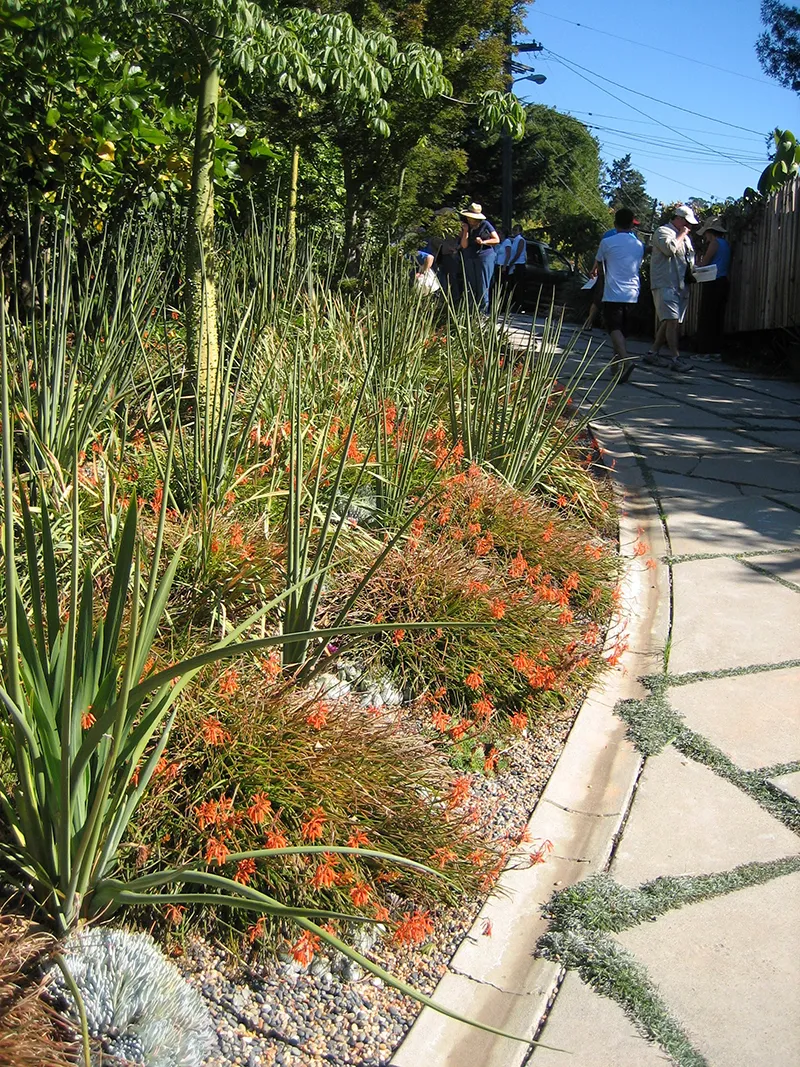
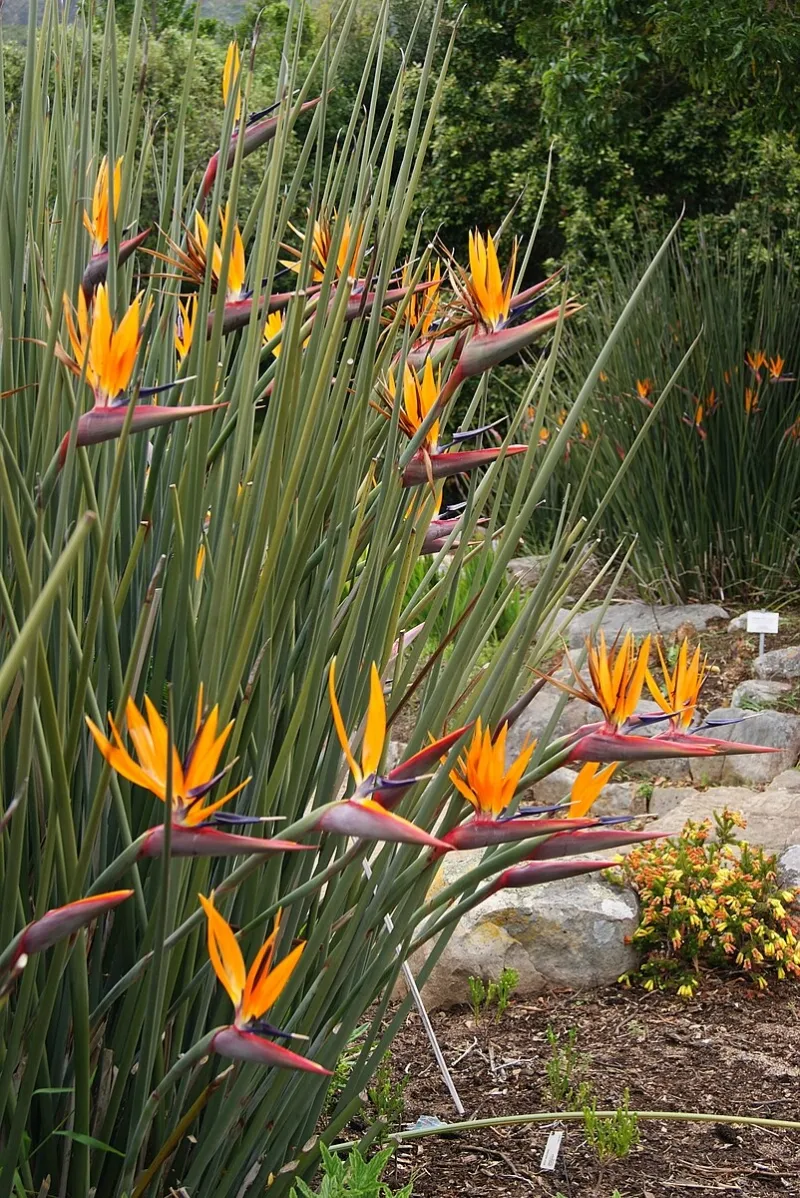
Upright clumps of leafless cylindrical spikes make a mesmerizing backdrop for iconic bird of paradise flowers. Nice in pots. Slow and rare.
 Mature size | 3–5ft tall 1–3ft wide |
|---|---|
 Exposure | Part Shade – Full Sun |
 Hardy to | 25°F |
 Sunset zones | 15–17, 19–24, H1, H2 |
 Water needs | Low – Moderate While this bird of paradise looks tropical, don't underestimate its durability. When you repot your bird of paradise you'll see many succulent taproots; these make this plant incredibly drought tolerant. Once established, this plant easily grows with no additional water (in coastal California). They want deep regular watering to establish for several years, especially during dry months. Moving forward they prefer be watered when mostly dry. Some muse that this bird of paradise has evolved a leafless form to conserve water, likely making it better for a hot dry spot, but at this point its just too rare in cultivation to say for sure. |
 Tolerates | Drought, Pots, Wind |
 Plant traits | Clumping, Flowering, Foliage Feature, Sculptural |
 Drainage | In Ground: Cactus Mix, In Pots: Cactus Mix, Tolerates Sandy Soil |
 Fertilizing | All Purpose |
 Origin | E South Africa |
Growing Notes
This plant is notoriously slow, so be sure to fertilize it during planting and during the spring and summer to nudge it along.
The narrow-leafed bird of paradise blooms from fall through spring. While this plant can tolerate a hard frost, the winter blooms are damaged.
Mature clumps can be divided, but they are so slow and SO pretty when mature... why would you?
Often immature plants will have small leaves at the tips of their spears. These go away as the plant matures.
This plant is fairly variable. Some individuals are more upright, while others have slight arches to their leaves. Some are thinner, others thicker...
Special Interest
The species name comes from 'juncea' in the Greek meaning 'rush-like'.
The common name of this plant refers to its flower resembling a crested tropical bird. Coincidentally, the plant is also pollinated by sunbirds its native range. Occasionally you'll see the flowers drip nectar, which attracts these birds.
Technically this plant is not 'leaf less'; the spears are a leaf petiole (stem) that lacks a blade.
Stories featuring this plant
Links
What we've learned from growing this plant ourselves and in our customers' gardens. We always love to hear more. Tell us
© 2020–2026 Grubb and Nadler. All rights reserved.