
Strelitzia nicolai
giant bird of paradise
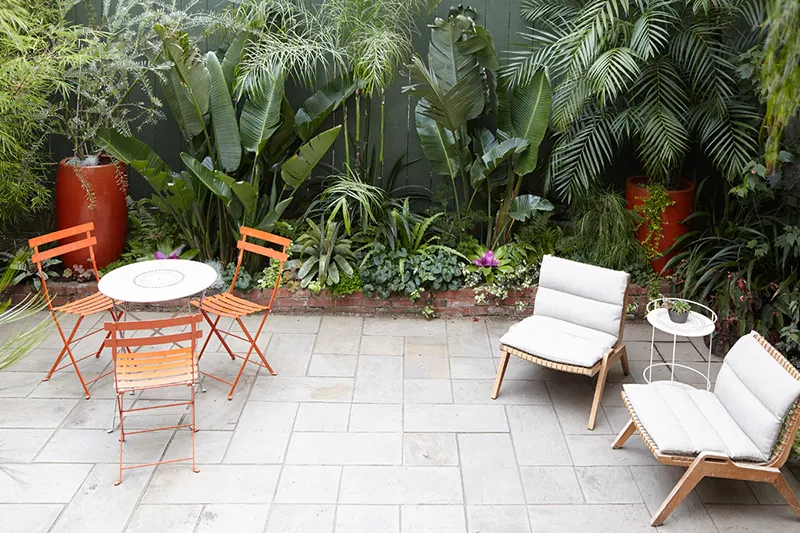
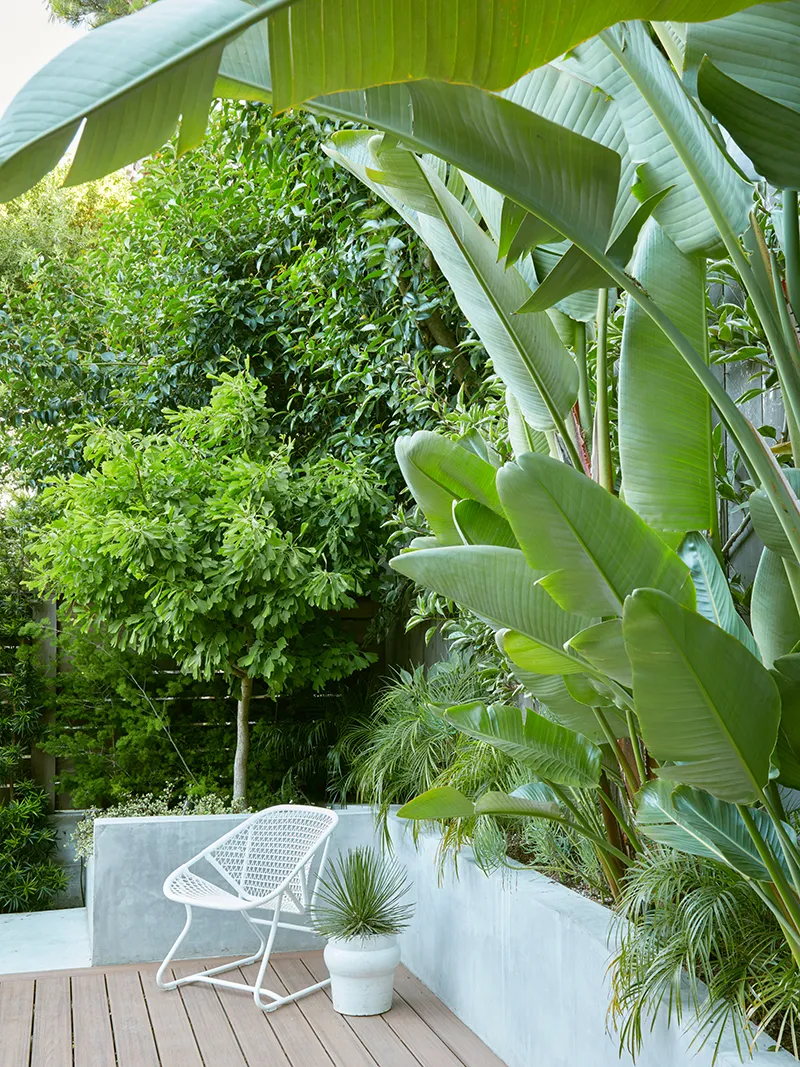
Growing it outdoors
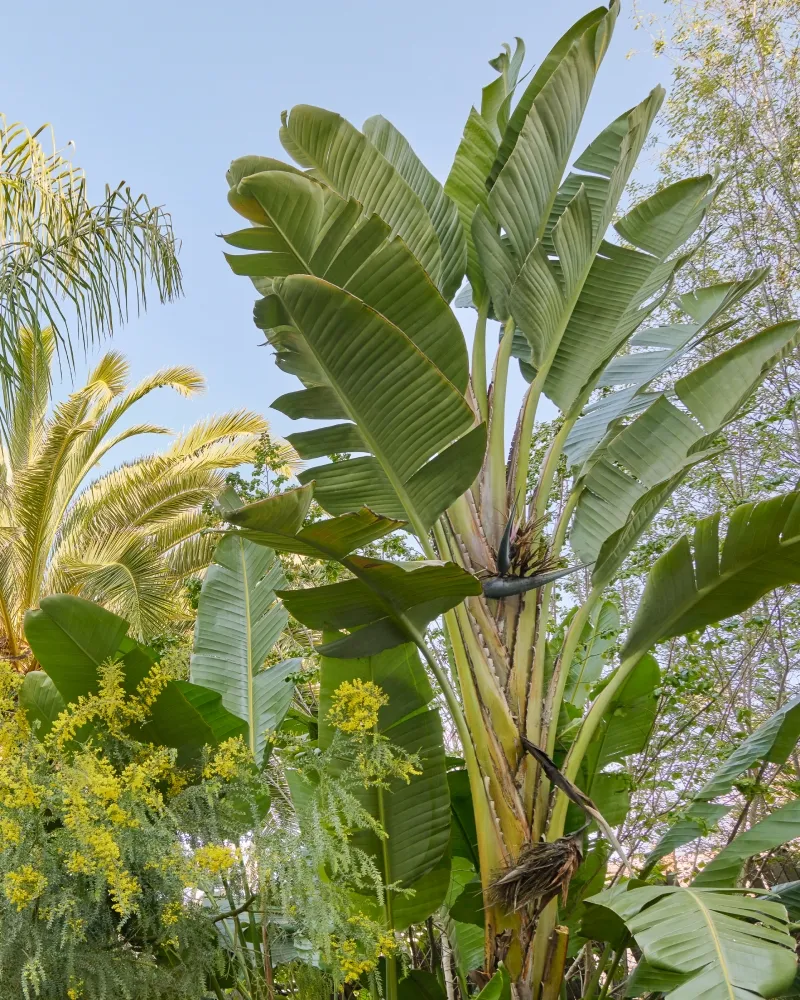
This tropical looking shrub starts as a foliage screen, but becomes palm-like and grandiose with age. Suckering habit with many trunks. Infrequent, blue and white 'bird head' flowers.
 Height | 15–30ft |
|---|---|
 Width | 10–15ft |
 Tolerates | Drought, Heat, Salt, Wind |
 Water needs | Moderate |
Water this plant regularly, when the top inch or so of soil feels dry. If you establish this pattern over several years, then you can cut back to watering every week or two in dry weather. Use drippers, emitters, or a slow stream of water so that it doesn't run off; allow the water to trickle all the way down through the deepest layers of soil. In a pot slowly water the entire surface until water comes out of the bottom of your pot. This plant is fairly hard to overwater, especially if the drainage is good. We know of two cases where this plant grows in soil that is wet year round (with a dripper constantly dripping on it) and they thrive! They are in fast draining soil in SSZ 16. This plant tells you when it is thirsty. Sometimes the leaves begin to unfurl, but then stall and never open. Other times they have a cupped form or brown tips and / or margins. Luckily this is a tough plant and it rarely dies from underwatering once established. It's not going up and collapse on you when a timer fails or you go on vacation. | |
 Hardy to | 26°F |
 Exposure | Part Shade – Full Sun |
 Plant traits | Foliage Feature, Screen, Shrub, Suckering, Tropical, Trunking |
 Drainage | In Ground: Planting Mix, In Pots: Potting Soil, Tolerates Heavy Soil, Tolerates Sandy Soil |
 Fertilizing | All Purpose |
 Origin | E South Africa |
 California native | No |
 Sunset zones | 16, 17, 19–24 |
Growing Notes
Remove unwanted suckers early to establish the quantity and location of mature trunks and create a more open form. Trunks can be removed later, but this leaves scarred bases. Conversely, allow new suckers to fill in over time, keeping a good thick screen or make a staggered canopy.
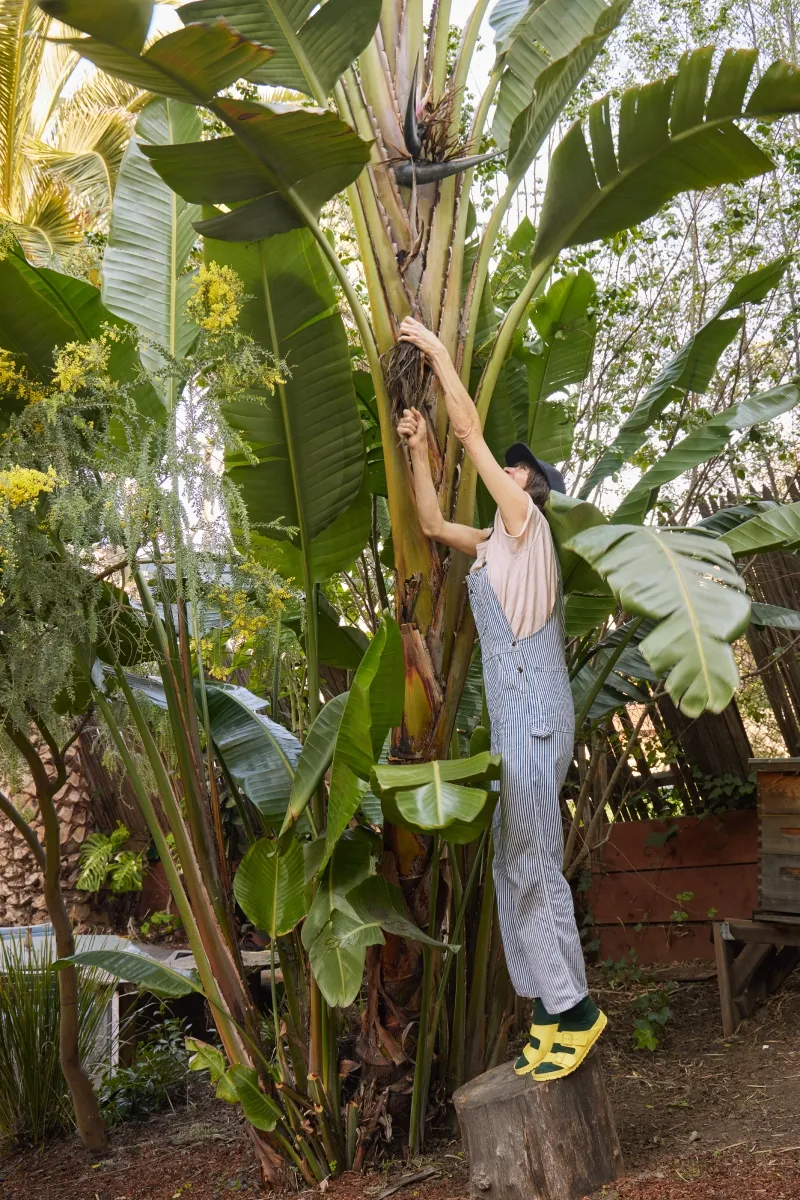
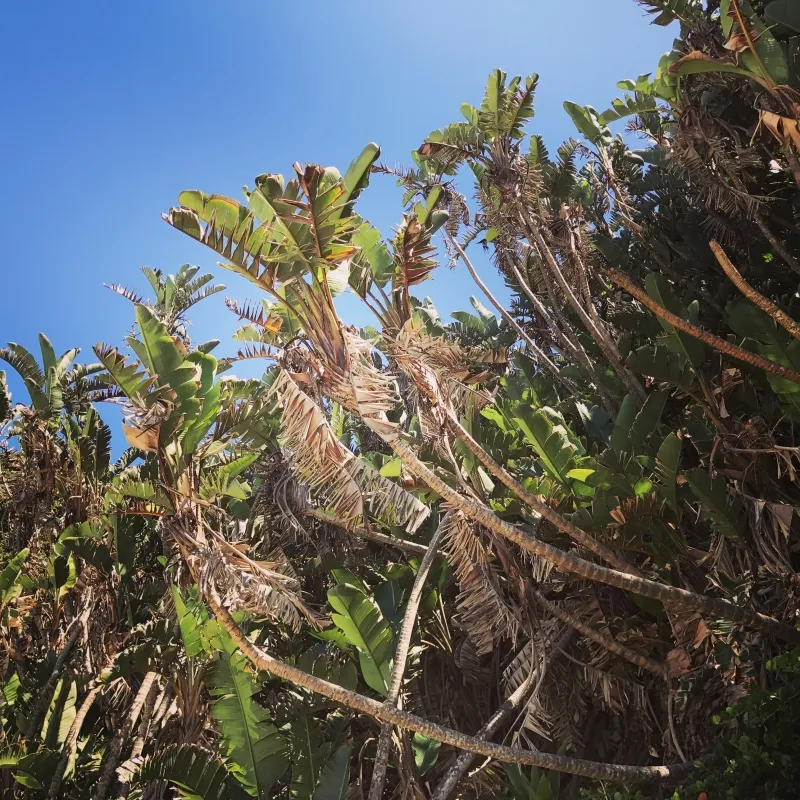
The leaves naturally grow from the center and, as they are replaced with newer leaves, old ones turn brown and make a "beard." As such, there's no need to worry if the older leaves are turning brown, this is the natural growth of the plant. You can prune the leaves off once they start to look ratty, or leave them as they would be in nature. The trunks can also be skinned by cutting off older leaves with a serrated hori hori or razor knife. Do this by scoring a ring around the trunk, just above the base of the leaf (where it attaches to the trunk, not up near the leaf petiole coming off of the trunk). Cut just deep enough to get through the leaf without damaging the trunk (you may find a shallow cut line on the trunk, which is fine); do this while pulling the leaf base away from the cut as you go. This helps the cut stay clean and shallow. Skinning a bird of paradise gives it a clean smooth trunk, slightly ringed, and accentuates the canopy. The trunk will be light colored at first and then darken to grey-black over time.
The leaves have adapted to split toward the midrib instead of just tearing off entirely in violent storms. For this reason, the giant bird of paradise isn't the best choice for a windy area, where it will grow happily, but with tattered leaves. It should also be protected during transit and not taken in a pickup bed at full speed flapping in the wind!
The growth speed of this plant seems directly tied to temperature. In areas with hot summers it bounds forward, given good water and fertilizer. In areas with consistently cool weather it remains a foliage screen for much longer, before getting the fully trunked form.
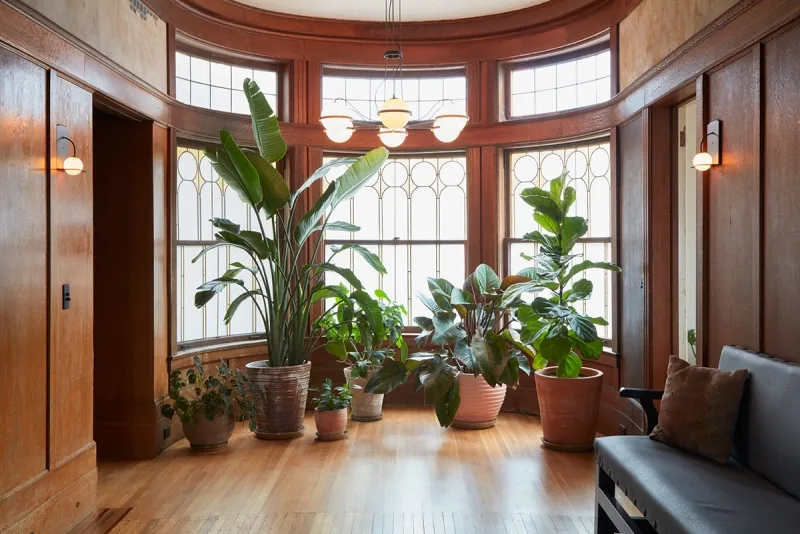
The giant bird of paradise develops a thick succulent base. It expands over time and can do damage to nearby hardscaping or piping. We recommend planting at least three feet from nearby structures and hardscaping and at least six feet from underground pipes. It's an especially bad idea to plant this plant in a tight spot BETWEEN two walls. We have seen it push forward the lower wall when planted in a bed that is a couple feet wide. This same trait causes this plant to crack pottery, especially if the pot is terracotta or fibre clay. It sure thrives in a pot though where it looks great for many years. This is one of the reasons this plant is used as a durable indoor houseplant.
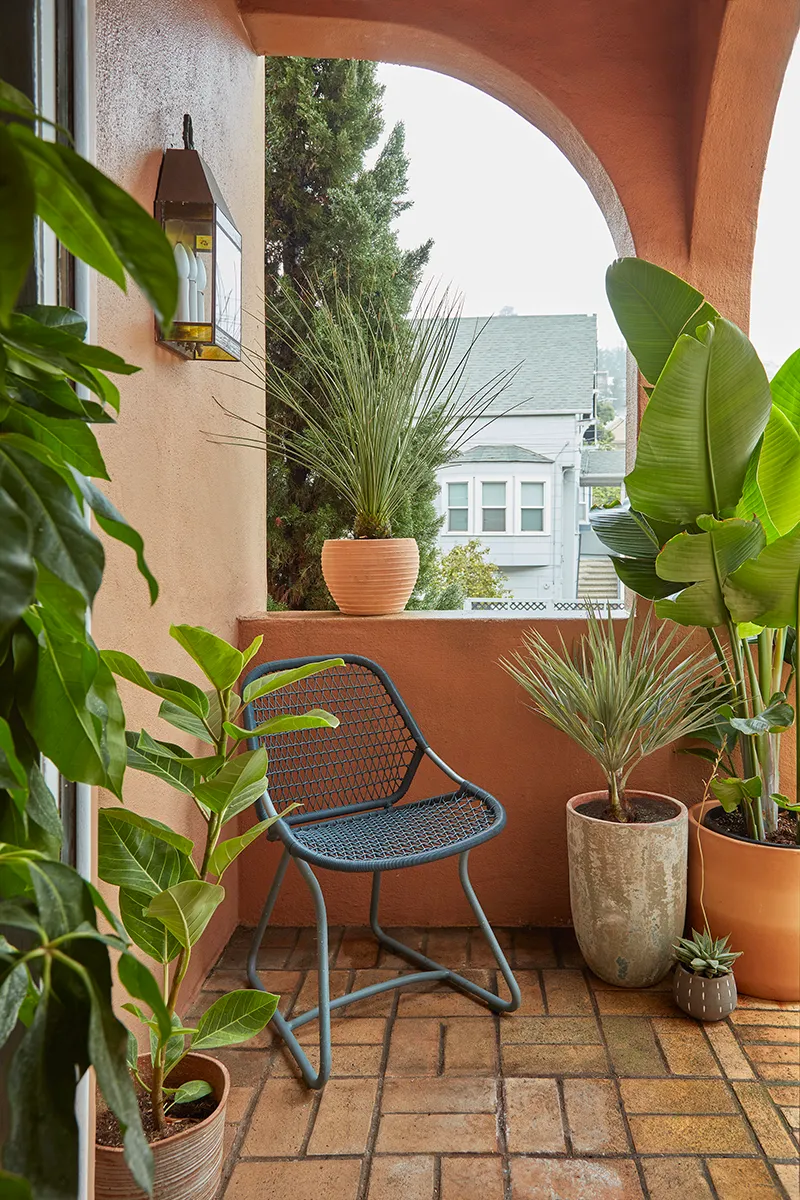
Growing it indoors
| Height | 4–12ft |
|---|---|
| Width | 2–6ft |
| Water needs | When soil is mostly dry. |
This plant wants the top two thirds of its soil to dry out between waterings, while always having some moisture left deep in the pot. Generally the plant will want water every one to three weeks. Leaves that don't unfurl, or are cupped on the ends show signs that this plant is not getting enough water. | |
| Exposure | Bright Indirect – Direct Sun |
| Plant traits | Foliage Feature, Screen, Shrub, Suckering, Tropical, Trunking |
| Drainage | In Pots: Potting Soil |
| Fertilizing | All Purpose |
| Origin | E South Africa |
Growing Notes
Prune off older leaves at their base once they begin to turn brown.
This plant will grow in a similar manner to a palm tree, with a trunk and foliage at the top of it. Once trunking, you can skin this plant for a cleaner look. Do this by running a razor knife around the base of the leaf, where it attaches to the trunk. Make sure you do this without cutting the trunk.
Bird of paradise flowers are striking, this one being quite large, blue and white. They exude nectar, so if you see nectar coming from your flower be sure to either prune it off or place something under it so it doesn't damage your floors.
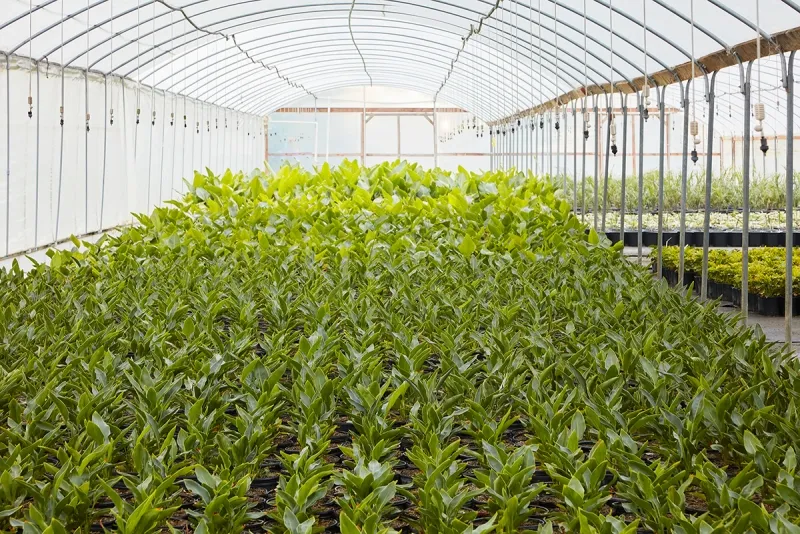
Which store do you shop at?
Special Interest
This plant is closely related to the more common bird of paradise (Streletzia regina) which has an orange and blue flower, doesn't trunk and stays as a foliage feature indefinitely.
The plant is not a banana, though the leaves are similar due to convergent evolution and they are often mistakenly referred to as 'banana trees'.
Stories featuring this plant
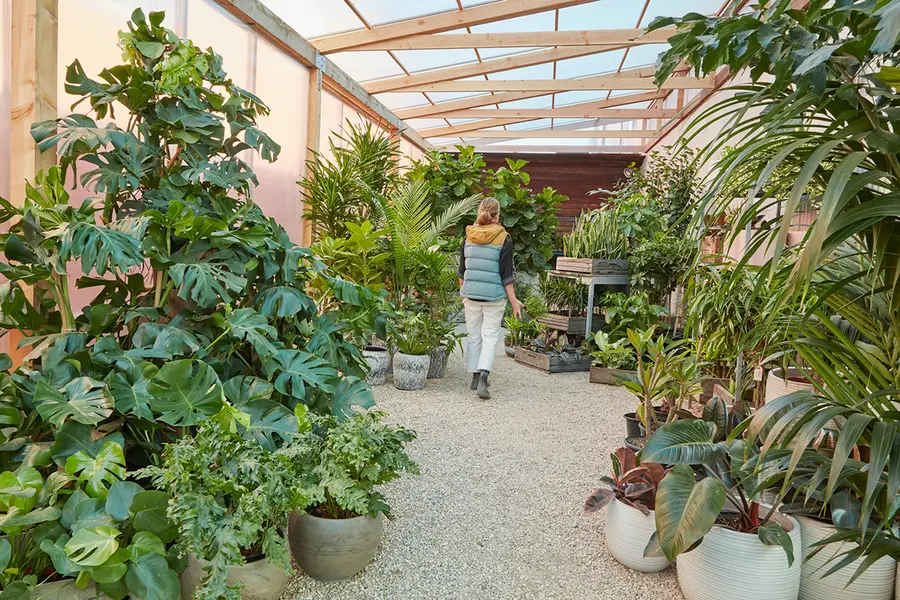 Garden storyHouseplant Care: Light, Water, and SoilHere at FGG, the question we hear most often from customers is “How often do I water my houseplant?” It sounds like a simple question, but the answer is actually pretty complicated.
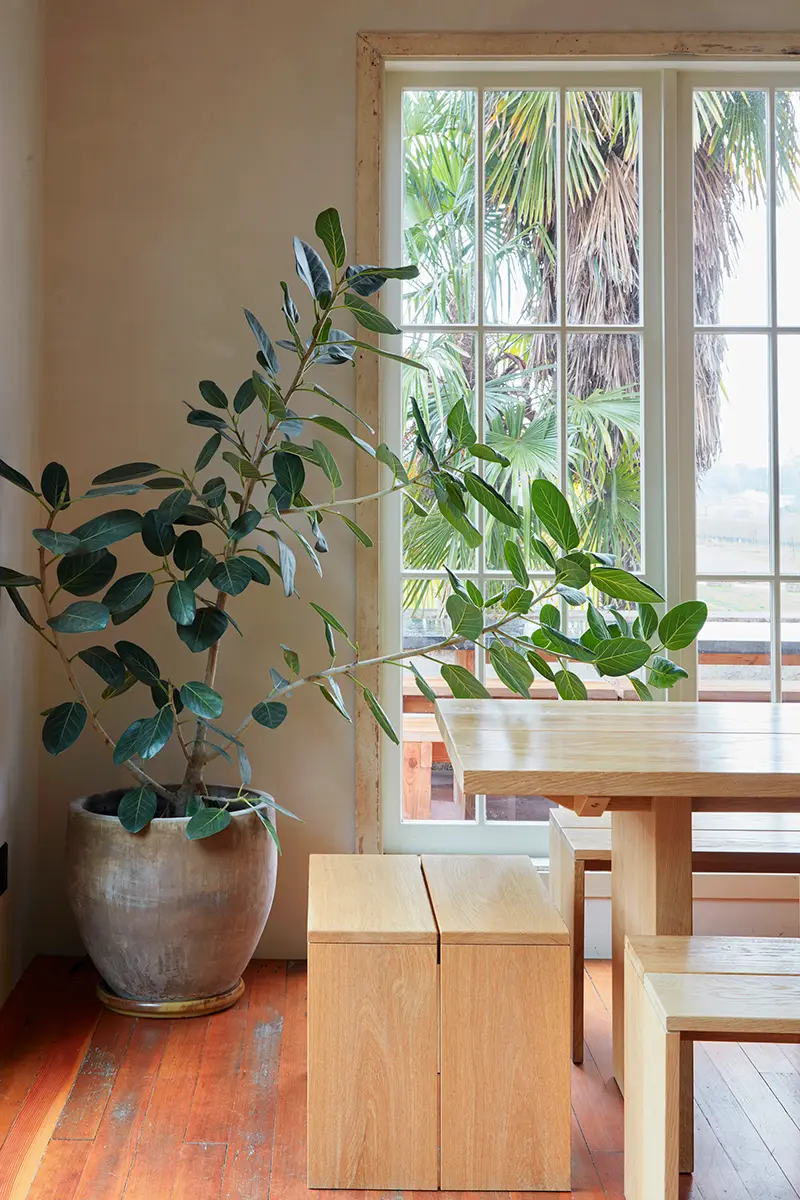 Garden storyFavorite Houseplants for Direct SunHere’s a pro tip: Almost all indoor plants will happily grow in bright indirect light, but only some are okay with sitting in a sunny window. feeling the direct warm sun on their leaves. We’ve got some beautiful houseplant suggestions for spots in your home with bright direct sun.
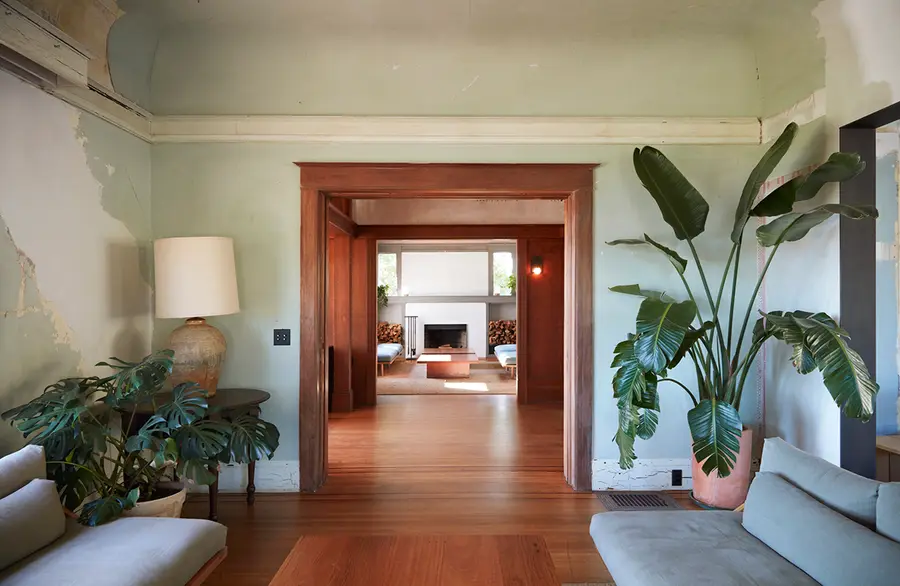 Garden storyGrowing the Giant Bird of Paradise IndoorsStrelitzia nicolai—also known as Giant Bird of Paradise, the banana leaf plant or banana leaf palm, is one of our favorite plants for Bay Area gardens, but few people know that this plant can also grow happily indoors!
More Info
Shy to flower indoors - probably a good thing, since the flowers can drip nectar.
This plant was grown for an outdoor environment, so we do not recommend moving it inside. In general we do not recommend moving plants raised for an outdoor environment indoors.
This plant would make a good houseplant if it had been grown in a controlled greenhouse with houseplant soil. This 'greenhousing' ensures that plants who come home with you are well acclimated to indoor life, and also that they don't have any pests. It is common for outdoor plants to have other passengers as well, such as earthworms or centipides that don't necessarily hurt the plant, but aren't welcome indoors.
If you consider yourself an expert gardener, you can of course attempt to transition this plant indoors. In that case you'll want to strip all the soil from the rootball, wash the roots clean and then spray the entire plant (leaves, undersides of the leaves, all the cracks and roots) with a mix of one tablespoon of rubbing alcohol in a cup of water. Repot the plant in the appropriate sterile soil/pot and take extra care as it transitions to the indoors, especially looking for pests and treating at the first sign of problems. Always consider the risk that any bugs could also affect other houseplants you have nearby.
For some plants, we sell two versions: outdoor-grown and greenhouse-grown. If you're looking to grow this plant indoors, feel free to ask our staff if we have a greenhouse-grown version in stock!
Links
The above information reflects the observations of Grubb and Nadler and our extended plant community. We always consider input from fellow horticulturists and welcome feedback from those with additional information on the culture of this plant.
© 2020–2026 Grubb and Nadler. All rights reserved.