Strelitzia reginae
bird of paradise
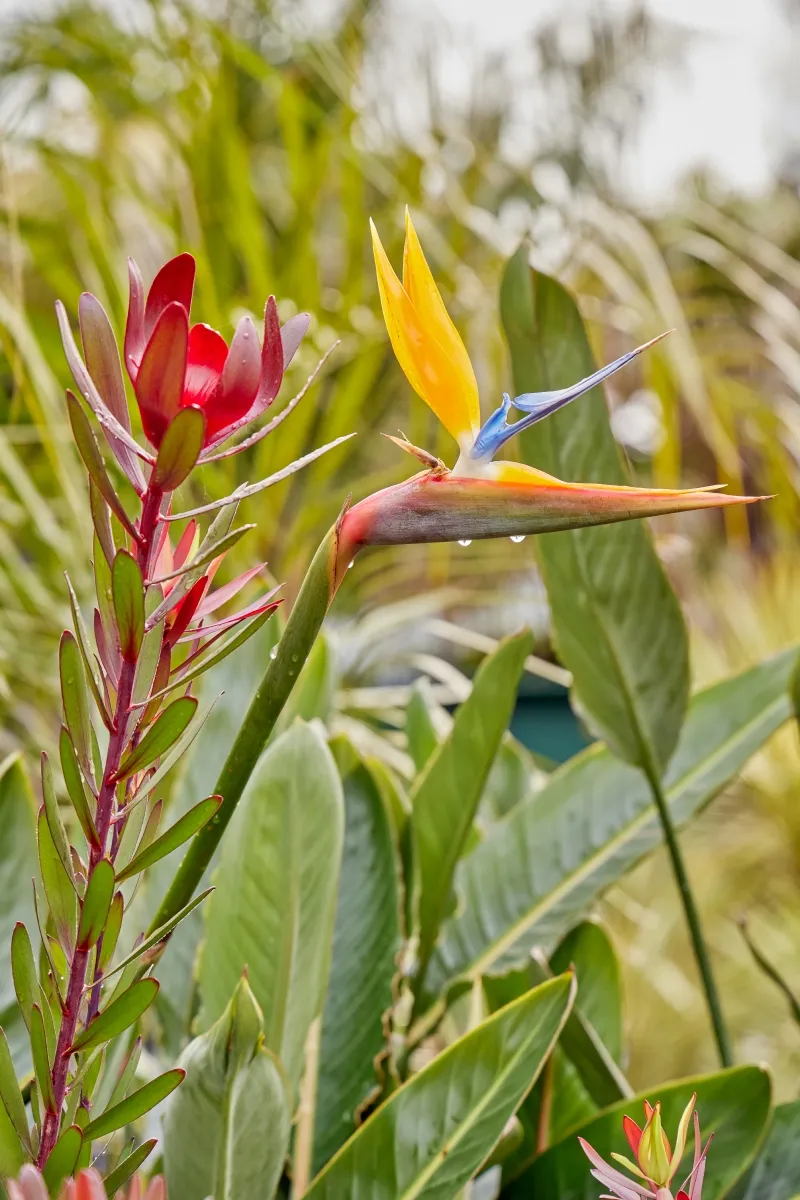
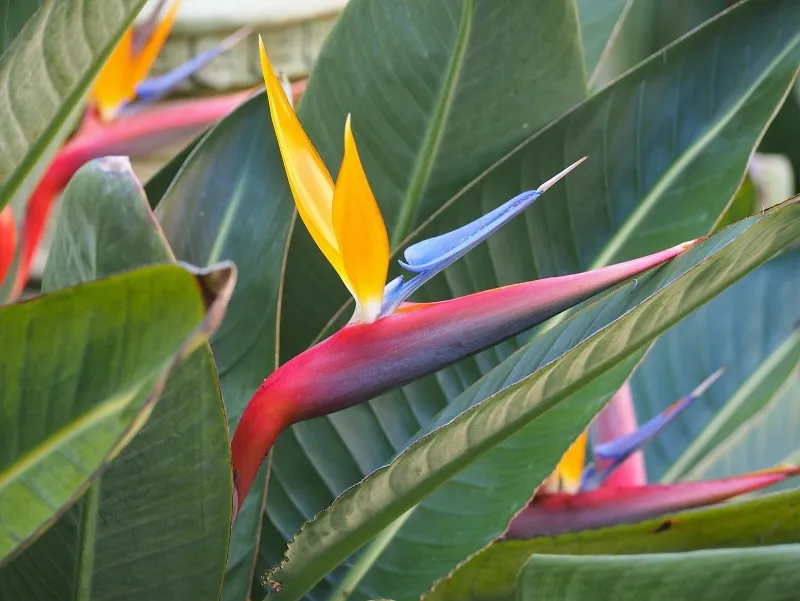
Clumping with many upright leaves, this is the iconic bird of paradise. Get a tropical look with little water. Long-lasting cut flowers. Fall through spring bloom.
 Height | 3–5ft |
|---|---|
 Width | 3–6ft |
 Tolerates | Coast, Cool Summers, Drought, Pots, Neglect, Salt, Wind |
 Water needs | Low |
While the bird of paradise looks lush and tropical, don't underestimate its durability. When you repot your bird of paradise you'll see many succulent taproots; these make this plant incredibly drought tolerant. Once established, this plant easily grows with no additional water (in coastal California); we often see them in abandoned lots, surviving. However, they do look quite stressed and to be lush the'll want deep regular watering to establish for several years, especially during dry months. Moving forward they prefer be watered when partially dry. Look for cupped leaves and a dull plant as a signs of underwatering. This will probably land in the one to three week watering cycle. | |
 Hardy to | 25°F |
 Exposure | Full Shade – Full Sun |
 Plant traits | Clumping, Flowering, Tropical |
 Indoor / outdoor | Outdoor |
 Drainage | In Ground: Planting Mix, In Pots: Potting Soil, Tolerates Heavy Soil, Tolerates Sandy Soil |
 Fertilizing | All Purpose |
 Origin | E South Africa |
 California native | No |
 Sunset zones | 9, 13–24 |
Growing Notes
Thin out the older leaves as they turn brown. Dead head spent flowers at the base of their long stalks.
Mature plants can be divided, though this is a laborious task done with a long saws all blade. Some say that bigger clumps bloom with more flowers as well.
Tolerates wind much better than the giant bird of paradise.
The plant will open up more, with longer leaves and fewer larger flowers if grown in a shady position.
If grown in cool marine influence zones this plant should be considered a Full Sun - Part Sun plant.
Special Interest
The common name of this plant refers to its flower resembling a crested tropical bird. Coincidentally, the plant is also pollinated by sunbirds its native range. Occasionally you'll see the flowers drip nectar, which attracts these birds.
Stories featuring this plant
Links
Which store do you shop at?
The above information reflects the observations of Grubb and Nadler and our extended plant community. We always consider input from fellow horticulturists and welcome feedback from those with additional information on the culture of this plant.
© 2020–2026 Grubb and Nadler. All rights reserved.