
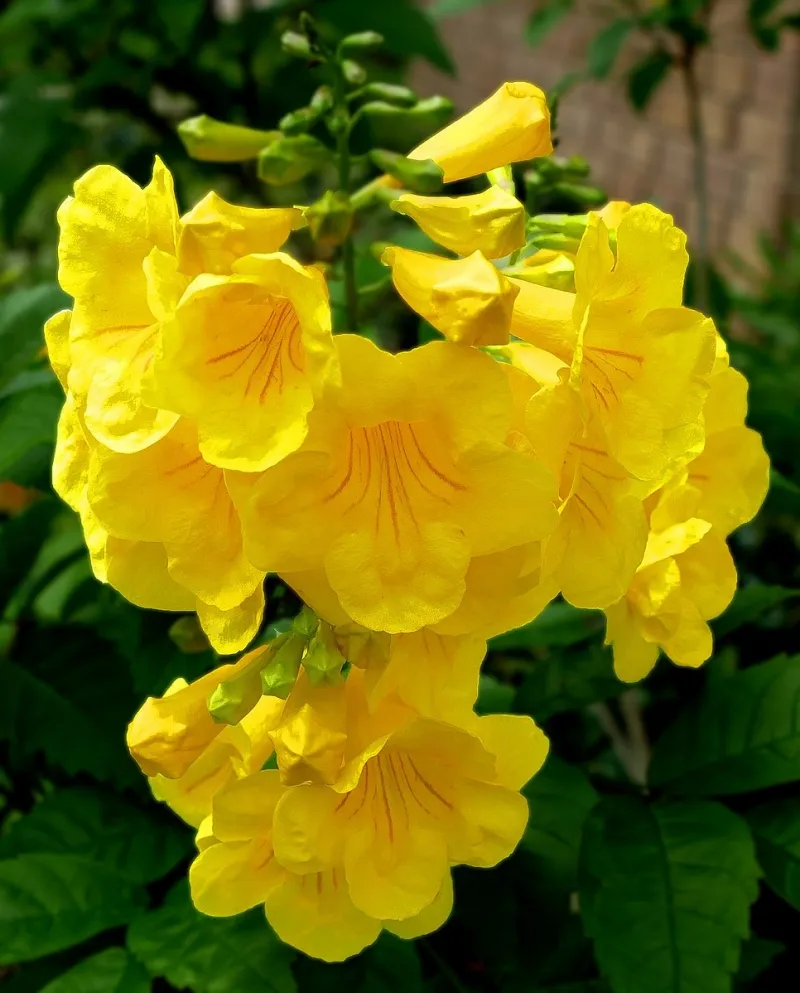
yellow bells
Grown for its golden yellow flower clusters at branch tips from spring through summer into fall. Prune into a shrub or small tree. Semi-deciduous.
 Mature size | 6–10ft tall 5–8ft wide |
|---|---|
 Exposure | Part Shade – Full Sun |
 Hardy to | 25°F |
 Sunset zones | 9, 12–24, H1, H2 |
 Water needs | Low – Moderate Water this plant infrequently, when the top two inches or so of soil feel dry. Usually this will mean every week or two in dry weather. If you establish this pattern over several years, then you can cut back to watering every four to six weeks in dry weather. Use drippers, emitters, or a slow stream of water so that it doesn't run off; allow the water to trickle all the way down through the deepest layers of soil. This plant will look more lush if given water every two to four weeks during dry weather once established. In a pot slowly water the entire surface until water comes out of the bottom of your pot. |
 Tolerates | Heat, Pots, Wind |
 Plant traits | Bees, Butterflies, Deciduous, Flowering, Shrub, Tropical, Trunking |
 Drainage | In Ground: Cactus Mix, In Ground: Planting Mix, In Pots: Potting Soil, Tolerates Sandy Soil |
 Fertilizing | All Purpose |
 Origin | Americas |
Growing Notes
Established plants may die back from frost but will regrow when warm weather sets in in spring. Very tough and resilient, and floriferous.
Surprisingly successful in banana belts of coastal central California, such as the east side of San Francisco. Exceptional performance in hot inland regions.
Special Interest
Tecoma stans is nontoxic itself, but the honey from its flowers is poisonous nonetheless.
Links
What we've learned from growing this plant ourselves and in our customers' gardens. We always love to hear more. Tell us
© 2020–2026 Grubb and Nadler. All rights reserved.