
Tetrapanax papyrifer
rice-paper plant
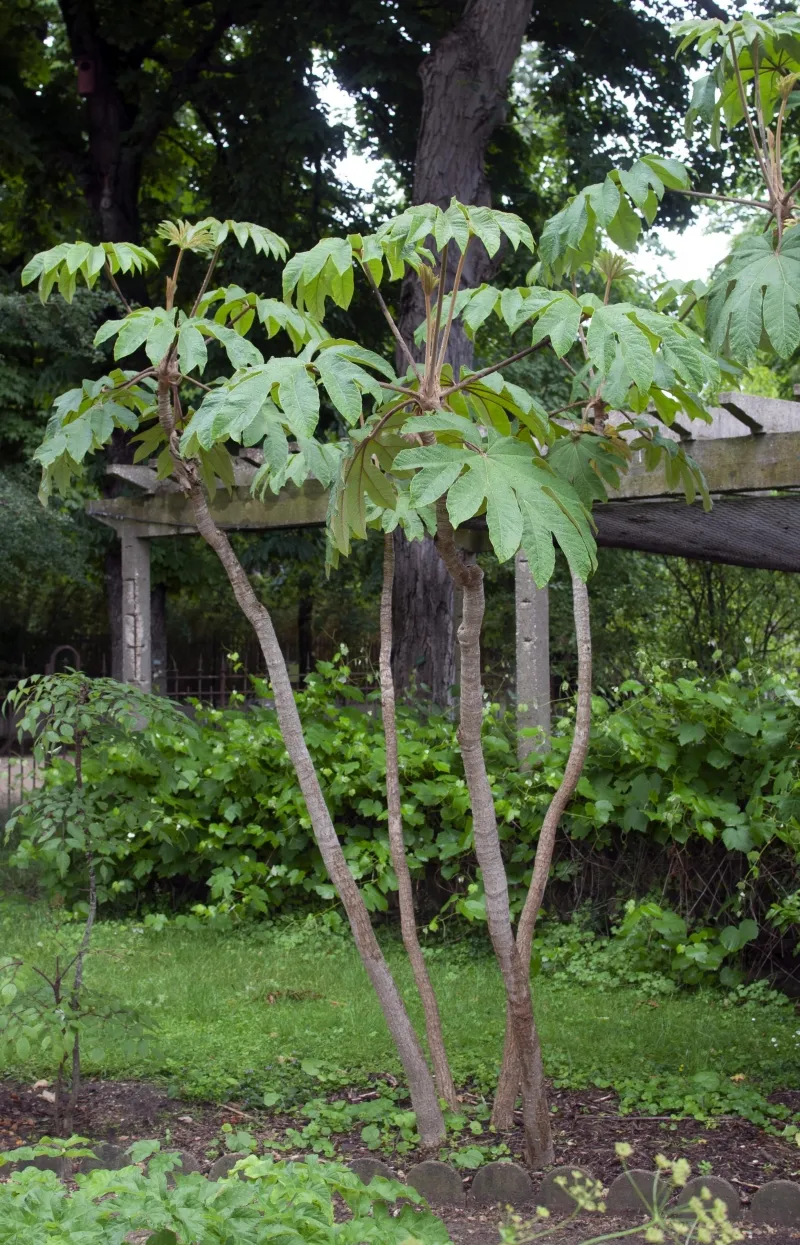
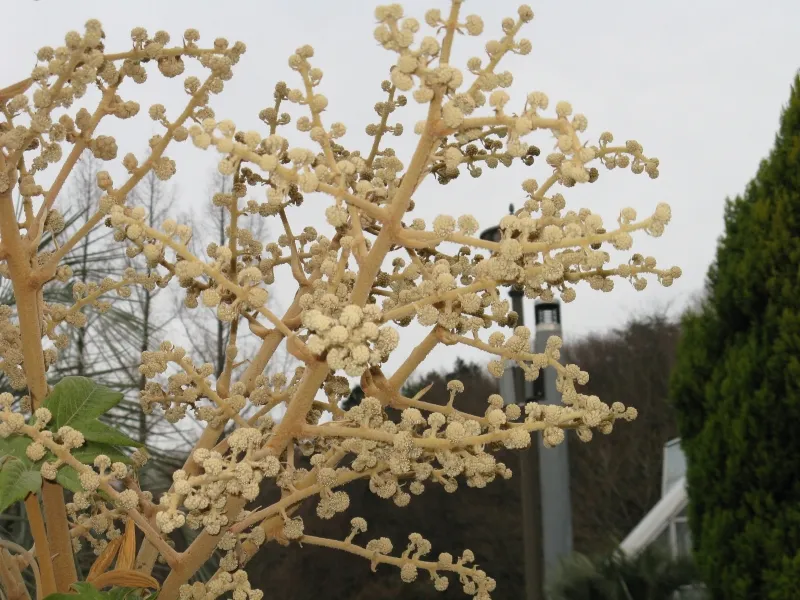
Bold, beautiful, upright evergreen shrub with showy big leaves atop clean stems grows fast and eventually forms clumps. Showy, cream-colored flowers on occasion.
 Altura Altura | 8–15 pies |
|---|---|
 Ancho Ancho | 3–6 pies |
 Tolera Tolera | Frío |
 Riego Riego | Moderado |
A deep watering every week or two will serve it well, especially in the first two or three years after planting. In cool coastal areas in heavier soil it can tolerate some drought after the establishment phase. In warmer areas, plan to irrigate regularly through the dry season. | |
 Resiste hasta Resiste hasta | 16 °F |
 Exposición Exposición | Sombra total – Pleno sol |
 Características Características | Follaje vistoso, Rastrera, Escultural, Arbusto, Tropical |
 Interior / exterior Interior / exterior | Exterior |
 Drenaje Drenaje | En el suelo: mezcla para plantar, En maceta: tierra para macetas, Tolera suelo pesado, Tolera suelo arenoso |
 Fertilización Fertilización | Uso general |
 Origen Origen | China |
 Nativa de California Nativa de California | No |
 Zonas Sunset Zonas Sunset | 4–10, 14–24, H1, H2 |
Notas de cultivo
Easy to grow. Good drainage is best, but this plant will tolerate a range of soil conditions. Avoid blustery locations as the large leaves may get tattered. Watch for aggressive underground runners sending up new shoots many feet from the mother plant, especially in moist, rich soils. In areas where freezing weather kills the stems, it will bounce back in spring as a worthy foliage perennial.
Interés especial
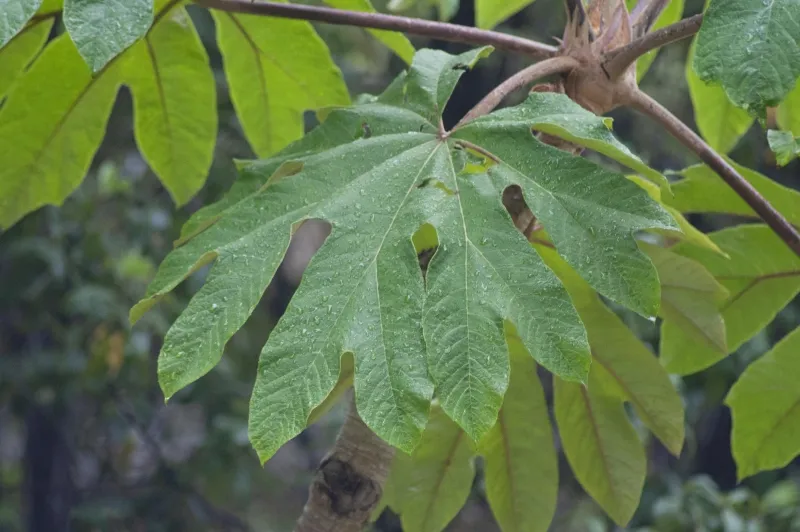
One of the best foliage shrubs for a tropical effect, especially in colder zones where temperatures dip below 20F. Two-tone leaves with creamy taupe below and olive green above are a pleasing combo.
Más información
Our friends at Cistus Nursery in Portland, Oregon, introduced a variety that blew our minds called 'Steroidal Giant' with especially large leaves and a deciduous habit (at least up in the Pacific Northwest).
Enlaces
Esta información refleja las observaciones de Grubb and Nadler y de nuestra comunidad de amantes de las plantas. Siempre tomamos en cuenta las aportaciones de otros horticultores y agradecemos los comentarios de quienes tengan más información sobre el cultivo de esta planta.
© 2020–2026 Grubb and Nadler. Todos los derechos reservados.