
Tylecodon paniculatus
butterboom
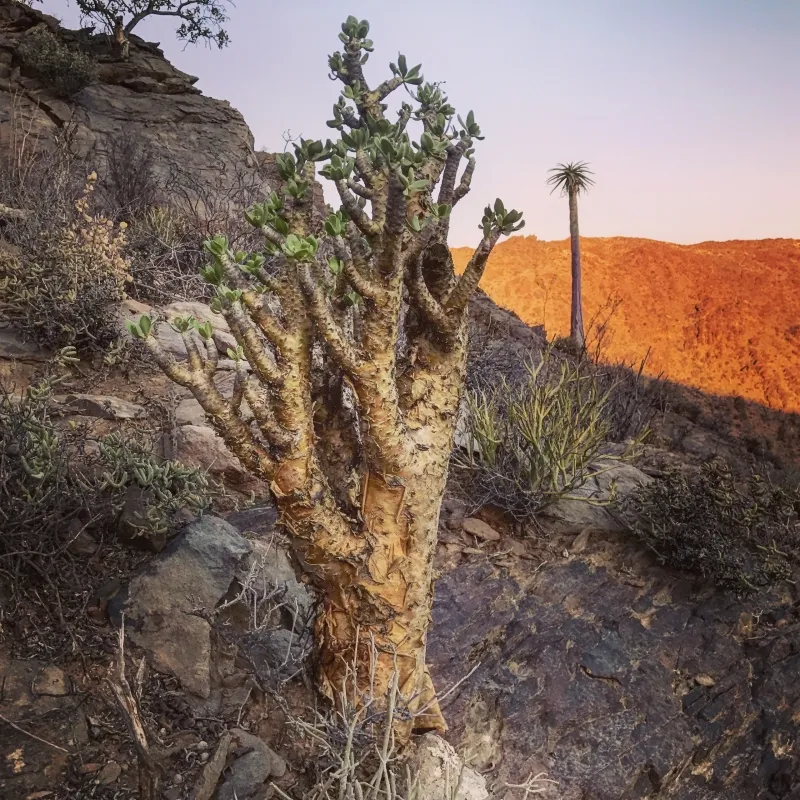
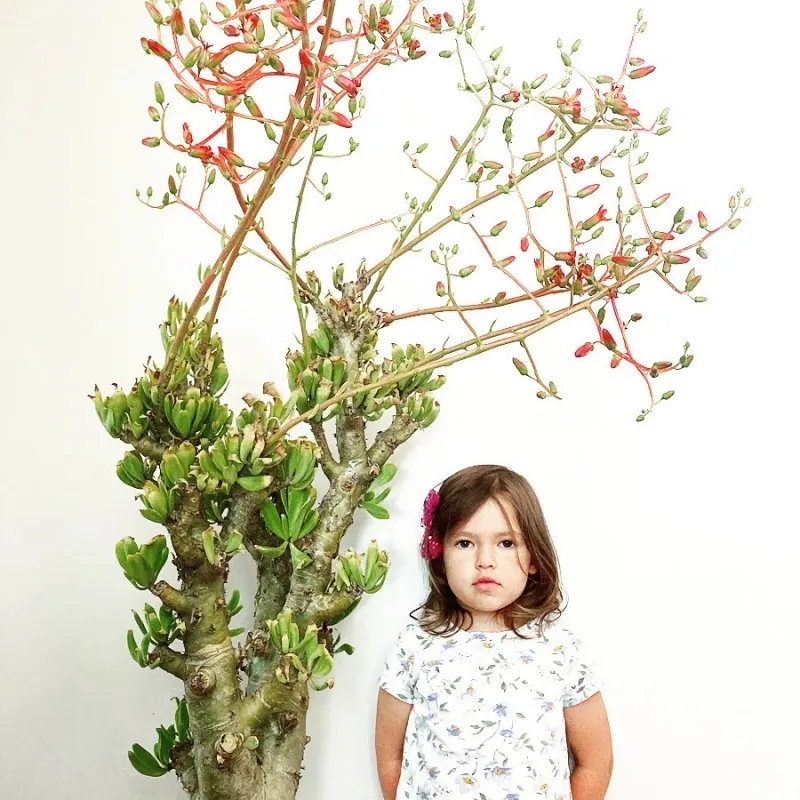
Peeling bark adorns this natural bonsai. If water is withheld, loses leaves during summer, when flowers are held on long upright stems. Good drainage.
 Height | 2–4ft |
|---|---|
 Width | 1–3ft |
 Tolerates | Drought, Heat, Pots, Rooftops |
 Water needs | Low – Moderate |
Most tylecodon are from the deserts of Southern Africa and as such like to go totally bone dry between waterings, making them very low-maintenance. If you see your tylecodon begin to shrivel or lose firmness, your plant is likely totally dry and should be watered. This tylecodon comes from an area with winter rainfall and is actively growing during that time, when it is forgiving of overwatering errors. During summer dormancy it should be kept extra dry and won't tolerate overwatering. If you see the trunk shriveling, or branches shriveling and falling off you know your plant needs some water. Remember that if kept in a small pot your plant will want more frequent watering. | |
 Hardy to | 25°F |
 Exposure | Part Shade – Full Sun |
 Plant traits | Caudiciform, Flowering, Shrub, Succulent |
 Indoor / outdoor | Outdoor |
 Drainage | In Ground: Cactus Mix, In Pots: Cactus Mix, Requires Perfect Drainage, Tolerates Sandy Soil |
 Fertilizing | All Purpose |
 Origin | W South Africa |
 California native | No |
 Sunset zones | 16, 17, 19–24, H2 |
Growing Notes
Appreciates a spot with full winter sun, but won't mind summer shade.
Cut back hard every few years to keep the trunk more stout, if desired.
Does not tolerate heavy clay soil.
Cut branches can be rooted in fall or early spring, but are not the easiest to root.
More Info
The stunning photo of this plant in habitat (with Aloe pillansii photo bombing in the background) was taken by our staff member Tyson Curtis in Namibia.
The above information reflects the observations of Grubb and Nadler and our extended plant community. We always consider input from fellow horticulturists and welcome feedback from those with additional information on the culture of this plant.
© 2020–2026 Grubb and Nadler. All rights reserved.