
Yucca elata
palmilla
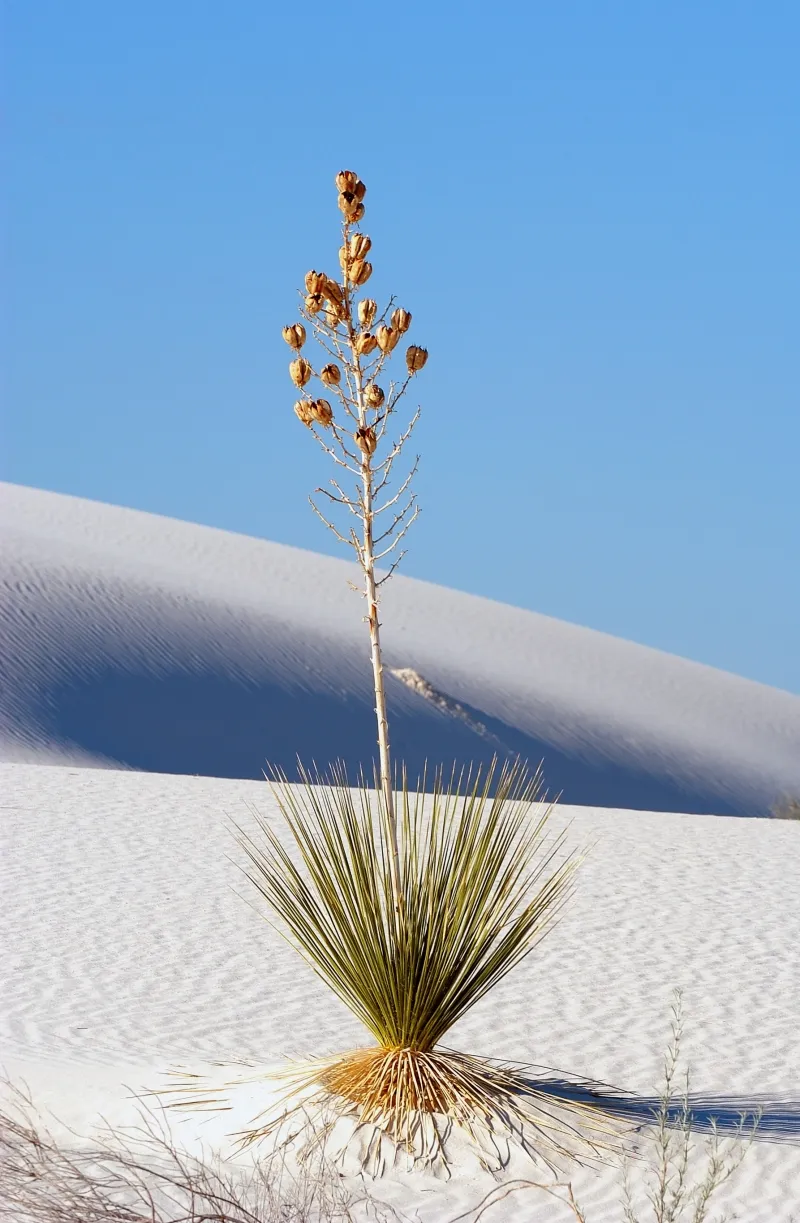
Single or branching trunked yucca topped in thin pliable gray green leaves. Creates skirt of protective leaves. Clusters of tall white-green flowers in summer.
Seen in Everything Looks Like a Yucca! →
 Synonyms | Yucca angustissima var. elata Yucca elata var. elata Yucca elata var. utahensis Yucca elata var. verdiensis Yucca utahensis Yucca verdiensis |
|---|---|
 Height | 5–20ft |
 Width | 4–6ft |
 Tolerates | Cold, Drought, Deer, Heat, Pots, Rooftops, Neglect, Wind |
 Water needs | Lowest |
Water this plant every couple of weeks through its first dry season. Use drippers, emitters, or a slow stream of water so that it does not run off; allow the water to trickle all the way down through the deepest layers of soil. Going forward it will not need supplemental irrigation, though it will look more lush if given water every three to six weeks during dry weather once established. In a pot slowly water the entire surface until water comes out of the bottom of your pot. | |
 Hardy to | 0°F |
 Exposure | Full Sun |
 Plant traits | Armed, Flowering, Fragrant Flower, Rosette, Trunking |
 Indoor / outdoor | Outdoor |
 Drainage | In Ground: Cactus Mix, In Pots: Cactus Mix, Tolerates Sandy Soil |
 Fertilizing | All Purpose |
 Origin | SW USA |
 California native | No |
 Sunset zones | 7–24 |
Growing Notes
Ignore the old dead leaves of this plant and they'll form a thick beard , or trim them off when they begin to turn brown to expose a textured trunk.
Flowers spikes are three to seven feet tall! Remove them once they are dead and dried out as they will persist for years.
Even branched plants have an upright nature.
This plant is quite slow growing, putting on only an inch or so of growth per year once trunking.
Uniquely, once mature, this yucca creates rhizomes at the base, that can be divided to create new plants.
Special Interest
The common name palmilla is Spanish for 'little palm tree' referring to this trees similar growth form to palms.
Edible flowers can be added to salads or cooked.
Stories featuring this plant
Links
Which store do you shop at?
The above information reflects the observations of Grubb and Nadler and our extended plant community. We always consider input from fellow horticulturists and welcome feedback from those with additional information on the culture of this plant.
© 2020–2026 Grubb and Nadler. All rights reserved.