
Yucca linearifolia
linear-leaf yucca
Shimmery orb grows to resemble a mini Joshua tree. Showy white flowers. Great in containers, especially in wetter areas.
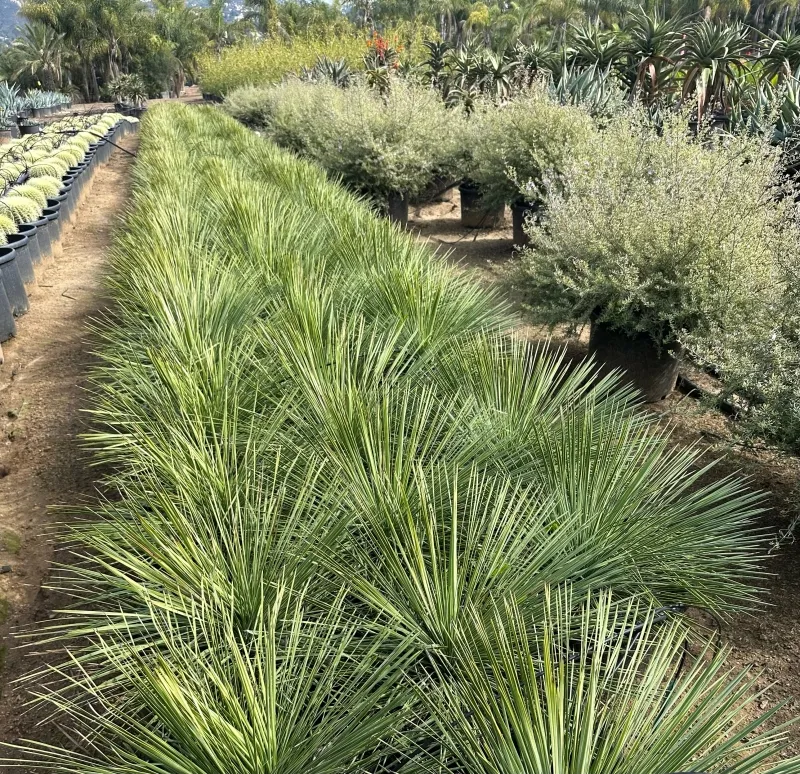
Seen in Everything Looks Like a Yucca! →
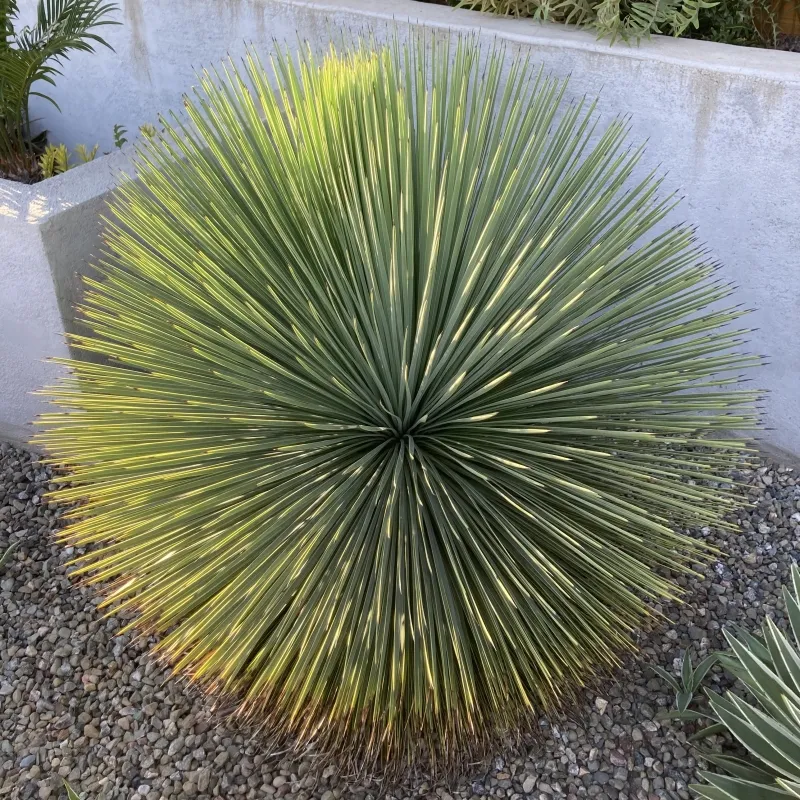
 Synonyms | Yucca rostrata var. linearis |
|---|---|
 Height | 4–10ft |
 Width | 1–3ft |
 Tolerates | Drought, Heat, Pots, Rooftops, Wind |
 Water needs | Low |
Yuccas are exceptionally drought tolerant, not needing additional water once established in coastal California. They will however, grow faster, look more lush and bloom more if given water once they dry out in the summer-fall. | |
 Hardy to | 10°F |
 Exposure | Full Sun |
 Plant traits | Armed, Flowering, Trunking |
 Indoor / outdoor | Outdoor |
 Drainage | In Ground: Cactus Mix, In Pots: Cactus Mix, Tolerates Sandy Soil |
 Fertilizing | All Purpose |
 Origin | N Mexico |
 California native | No |
 Sunset zones | 4–24 |
Growing Notes
Yuccas grow from their crown. Gradually the oldest leaves of this yucca will shrivel and create a persistent beard that protects the plant in nature. Don't worry if the older leaves are browning, as this is the natural growth pattern of your yucca. For a cleaner look (or to reduce fire load) prune off lowest leaves. This is best done consistently and before the leaves start to drop and become parallel with the trunk.
Special Interest
This rare yucca is also native to Texas. It's among the yucca group with fleshy fruits (rather than those that dry and split).
Stories featuring this plant
More Info
Yucca is the genus of succulent plants. The word has two "c"s.
"Yuca" (one "c") is the common name for the starchy root of an unrelated plant, Manihot esculenta in the Spanish-speaking Americas. Other names for "yuca" are manioc and cassava.
Yuca / manioc / cassava is also processed into a starchy powder made into tapioca, i.e. boba pearls.
Yucca, the succulent genus, does produce edible flowers (best cooked).
Links
Which store do you shop at?
The above information reflects the observations of Grubb and Nadler and our extended plant community. We always consider input from fellow horticulturists and welcome feedback from those with additional information on the culture of this plant.
© 2020–2026 Grubb and Nadler. All rights reserved.