
Agave ‘Blue Glow’
Blue Glow agave
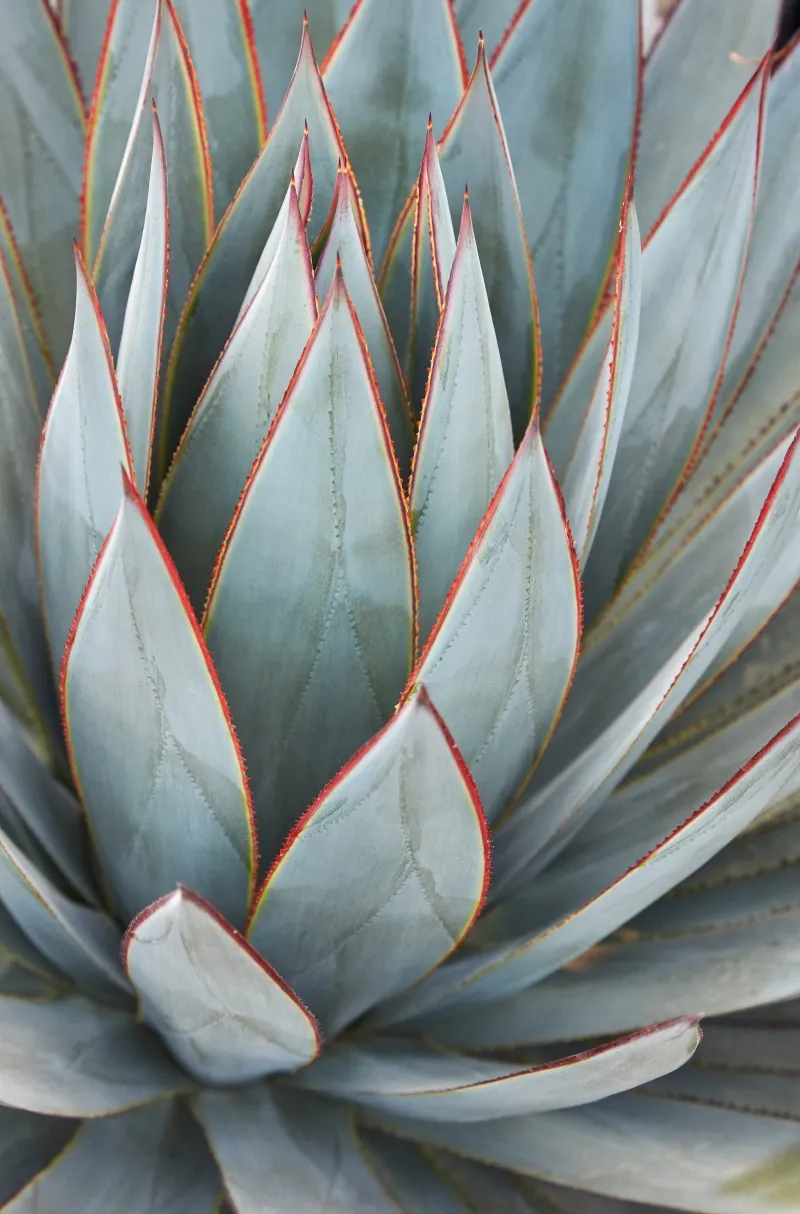
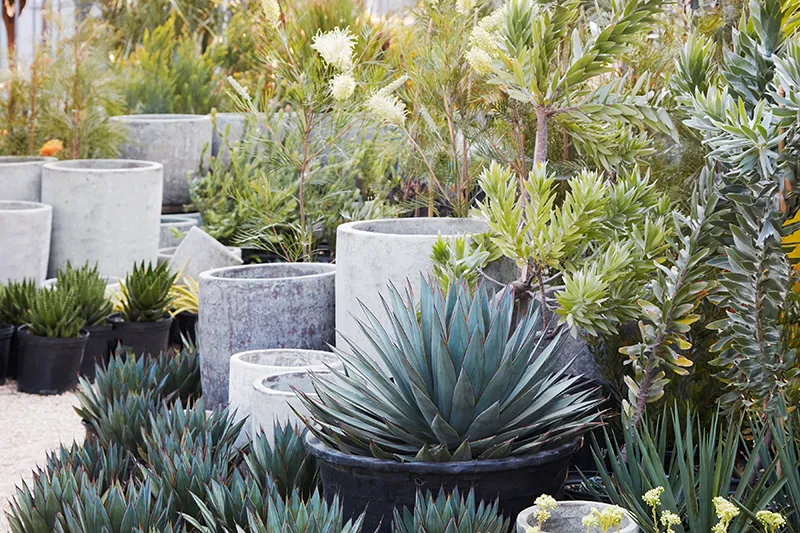
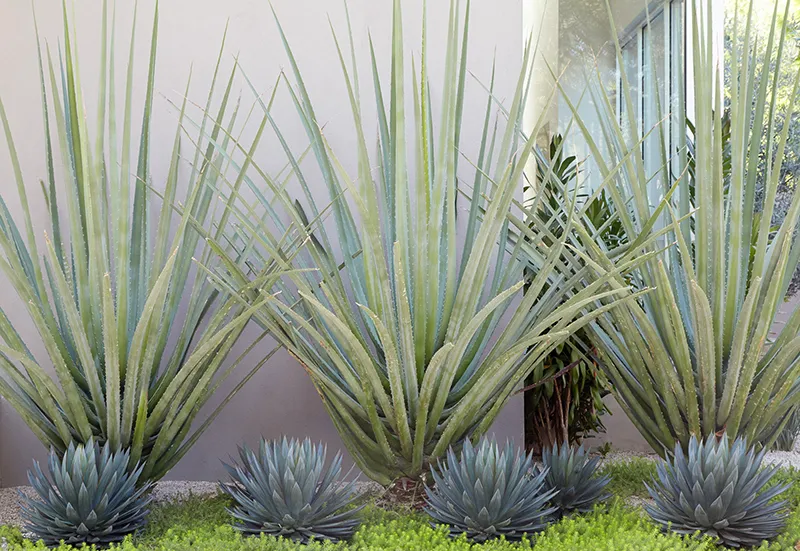
Rigid rosettes with glowing ruby edges are perfectly symmetrical. Good for containers and planted in groups in the dry garden.
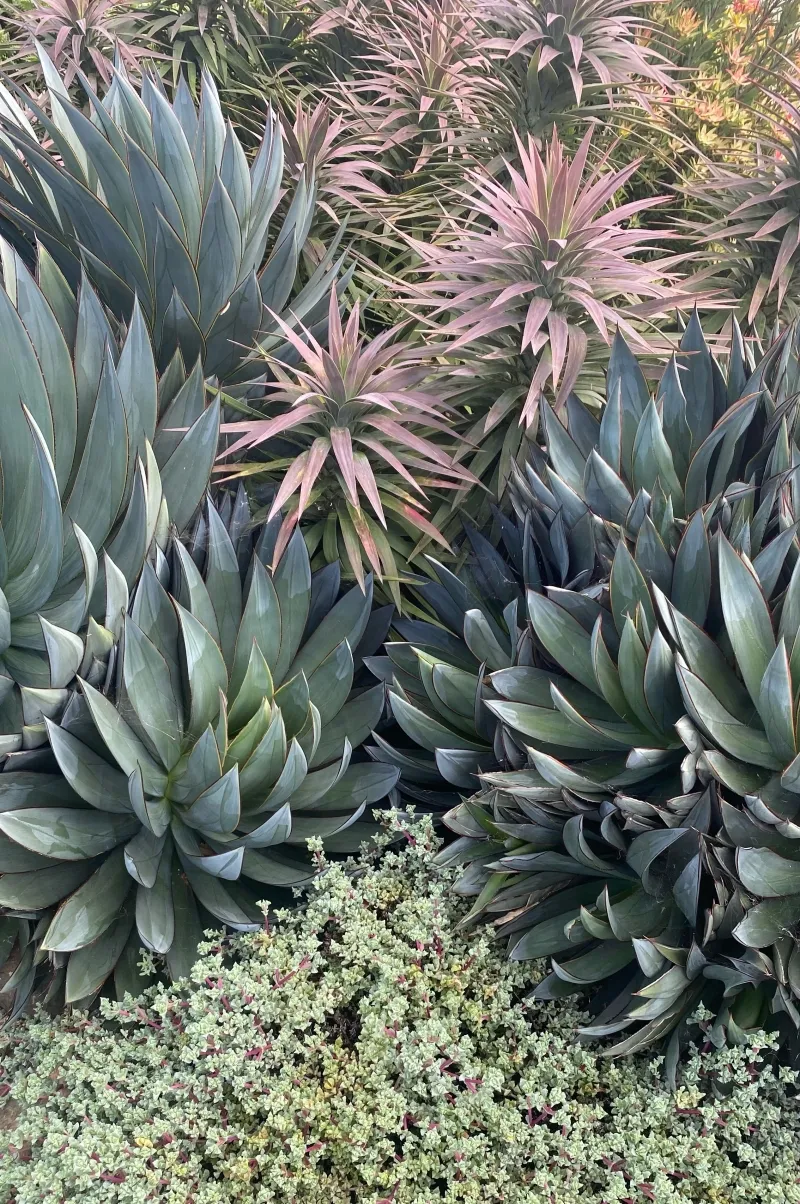
 Height | 18–30in |
|---|---|
 Width | 2–3ft |
 Tolerates | Drought, Heat, Pots, Rooftops, Neglect, Salt, Wind |
 Water needs | Low |
Agaves are extremely drought tolerant, and many need little to no supplemental irrigation in coastal california. They will however look better and grow faster if they are given additional water, especially during summer. | |
 Hardy to | 23°F |
 Exposure | Part Sun – Full Sun |
 Plant traits | Armed, Monocarpic, Sculptural, Solitary |
 Indoor / outdoor | Outdoor |
 Drainage | In Ground: Cactus Mix, In Pots: Cactus Mix, Tolerates Sandy Soil |
 Fertilizing | All Purpose, Low Needs |
 Origin | Hybrid |
 California native | No |
 Sunset zones | 9, 11–24, H1, H2 |
Growing Notes
Agave Blue Glow shows the unusual character of being generally solitary until it blooms. After blooming the head will die, but be replaced by many pups, which look a bit messy at first, but fill out into a nice cluster over time. Take care when pruning or removing agave, as many have a toxic sap that causes inflammation.
Special Interest
This agave is a hyrbid between A. ocahui and A. attenuata, introduced by Kelly Griffin during his time at Rancho Soledad. Blue glow has a thin (4" across) seven foot tall flower spike that is blue with ruby hints. After blooming it sets keikis (small pups) along the spike that add a whimsical nature to the plant. These can be planted to grow a new agave once the flower spike has finished blooming.
Which store do you shop at?
The above information reflects the observations of Grubb and Nadler and our extended plant community. We always consider input from fellow horticulturists and welcome feedback from those with additional information on the culture of this plant.
© 2020–2026 Grubb and Nadler. All rights reserved.