
Understanding Your Climate: Here's Why Coastal California is Paradise for Plant Lovers
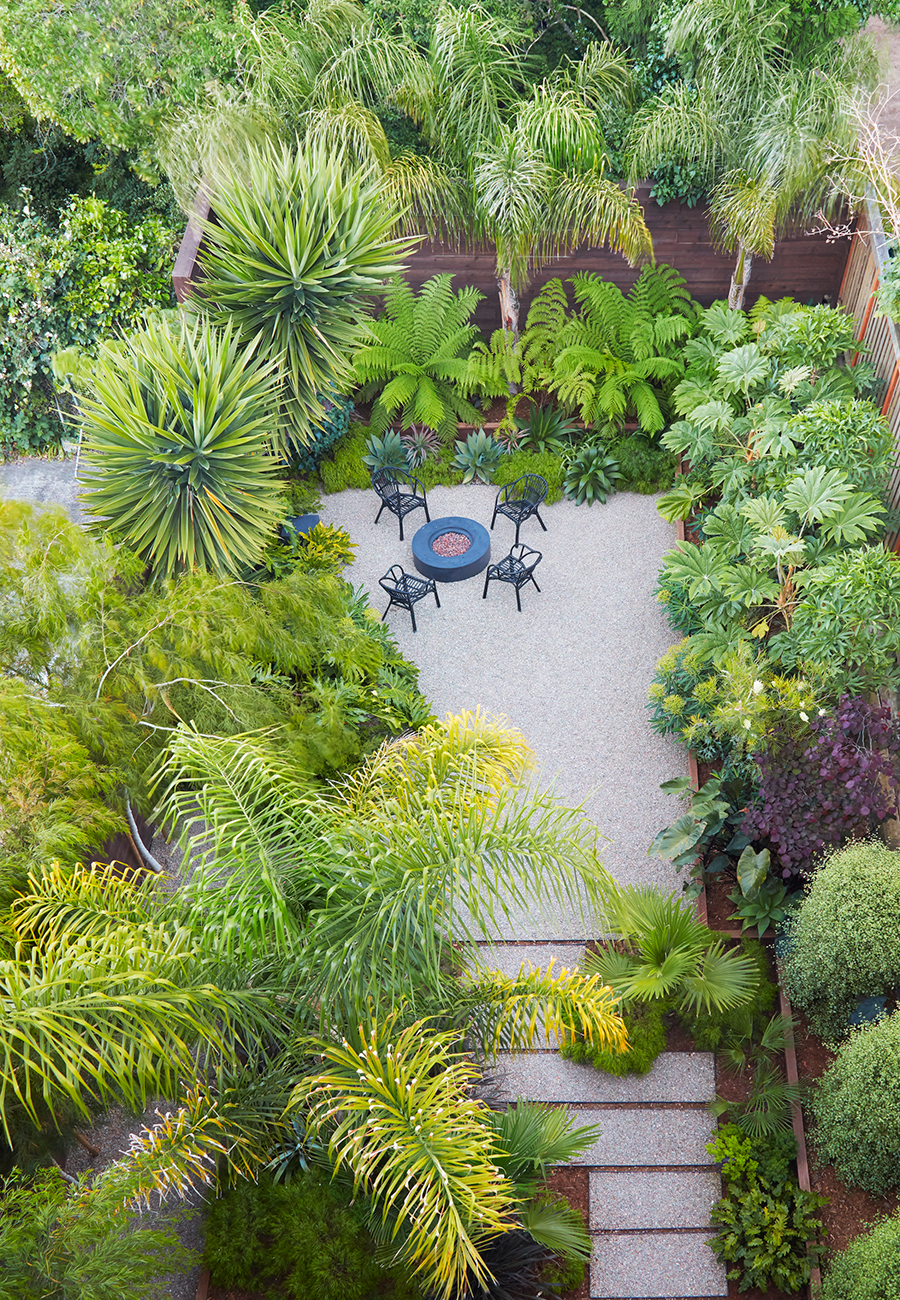
Featured plants, from left: queen palm, Acacia cognata, Yucca elephantipes, Dicksonia (large ferns)
We all know California has lots of wonderful quirks, and the climate is one of the most vexing for visitors and newcomers. Our weather can be a puzzle, but for garden enthusiasts (like all of us here at Flora Grubb Gardens), this particular puzzle is what makes coastal California a gardening paradise. Plants that might never find themselves communing anywhere else in the world make happy neighbors here in our gardens, and our unique climate is the reason why.
So what makes the coastal California climate so special? Get ready for some fun weather facts to impress your friends at that foggy barbecue this weekend!

Trachycarpus palms and Japanese maples are a happy garden combo in this Bay Area garde, and also in Japan!
Maybe you already know that we have a Mediterranean climate, which means we get a dry summer and a mild winter with rain. Lots of cities all over the globe have Mediterranean climates (Cape Town, Casablanca, and Perth, to name a few), but in coastal California, because we’re between the cold ocean and the hot valleys and deserts on the other side of the mountains, we also get a steady onshore flow of cool air that brings along our friend the foggy marine layer. This killer combo of marine layer and the Mediterranean climate is actually very rare. Nerdy fun fact alert: Santa Monica’s sister in temperature averages is Cape Town, South Africa, while San Francisco’s closest climate twin is Valparaiso, Chile. Viña del Mar, next to Valparaiso, is Sausalito’s sister city.

Foggy Valparaiso, Chile (photo by Maximiliano Neira)
So because of the marine layer, our coastal communities have a lot more moisture in the air than many places with Mediterranean climates do. San Francisco’s Karl the Fog is basically a wall of humidity, just like June gloom in Southern California. Here’s another tidbit to drop over cocktails: Did you know that San Francisco has nearly the same average humidity as Miami? Except that it’s thirty degrees colder! The coast’s cool, humid summer is a lot like the weather in highland tropical areas like the Andes, parts of the Himalayas and East Africa, and the mountains of Indonesia—minus the year-round rainfall. That means plants that love to grow in those far-flung regions can also thrive here in our gardens, depending on how we take care of them. Crazy, right?

Trachycarpus latisectus (large palm on left); Cyathea cooperi (Australian tree fern), and Dicksonia antarctica
Certain microclimates along the coast even resemble cloud forests: misty, mossy wonderlands where plants get much of their water from fog drip. Visit San Francisco’s Mount Sutro behind UCSF in summer and you can practically hydrate yourself from the fog drip, too. Even in coastal Southern California there are natural fog-forest pockets on Santa Rosa and Santa Cruz islands festooned with lichens and mosses sustained on fog drip.
There’s more! With our long dry season, frequent drought periods, and relatively mild winters, many desert plants and plants from semi-arid regions also love it here. Our climate makes it easy to regulate the water these plants receive in our gardens so we can keep them almost as dry and happy as they are at home in Joshua Tree or Tunis.

Cactus happy hour on the roof! Golden barrel cactus (in the round black pots) with a variety of Opuntia species and columnar cacti enjoying the view of San Francisco.
All these surprisingly strange and wondrous climate comparisons add up to make coastal California an incredible place to garden. Gardeners and plant collectors lucky enough to live here can create otherworldly designs by combining plants that would never grow together in nature. At Flora Grubb Gardens, we delight in bringing together these unlikely plant neighbors and nerding out with our customers over rare beauties that love to grow here.

Proteaceous plants love California’s mild coastal temperatures and sandy soil, as do cloud-forest beauties like bocconia.
We’ve put together some suggestions of favorite plants from far-flung locales that thrive in our weird and wonderful climate. From larger specimen palms to small collectibles you can pop in a pretty pot, there’s something in this list for every plant nerd’s particular passion, and all are available (while they last!) in our Marina Del Rey and San Francisco stores.

Haworthias and sempervivums grow wild in very different regions of the globe, but we bring them together here in our California gardens!
Haworthias
Haworthias hail from South Africa and its neighboring countries. They look a bit like tiny aloes and, like many aloes, will grow indoors or out. Some are more pillowy, with chunkier leaves, and others have elegant tapered leaves with “zebra” stripes.

Sempervivums are excellent choices for potted compositions.
Sempervivums
Because sempervivums grow wild in the rocky mountainous regions of Southern Europe and the Middle East, most of them can tolerate both drought and frost, making them perfect garden plants for cool, coastal California.

Crassula pubescens radicans
Crassula pubescens radicans
Another South African beauty, from the Eastern Cape Province, this pretty succulent is great for containers and also makes an attractive groundcover. In the winter, its leaves begin to turn red, and it produces little clusters of white flowers.

Aeonium ‘Mint Saucer’
Aeoniums
What’s interesting about these easy-grow succulents is that they come from the Canary Islands and North Africa, but they love our (mostly) frost-free coastal climate, too. They’re perfect for dry gardens and come in a dazzling variety of color and forms.

Aeonium arboreum ‘Atropurpureum’

From left: Pelargonium ‘Mrs. Pollack’, Senecio radicans ‘Fishhooks’, Neoregelia ‘Fireball’, and Fuchsia ‘Campo Molino’
Bromeliads
Bromeliaceae are natives of the tropical and subtropical areas of Central and South America, including the Andean highlands and the cloud forests, which makes coastal California the perfect place to grow them. They love our mild winter and coastal humidity!

Potted rhipsalis and Schefflera arboricola (dwarf umbrella tree)
Rhipsalis
An epiphytic cactus group, Rhipsalis species are at home in tropical rainforests, where they hang from the canopy, but coastal California, we can grow them in soil, tool. We like to use them in potted compositions as a trailing plant paired with rosette-shaped succulents.
Schefflera arboricola
This evergreen shrub is native to forested areas of Taiwan; it’s an easy and popular houseplant, but here, because of our moisture and mild winter, we can also grow it outdoors. Great for pots!

Guadalupe palms growing in the McCoppin Hub parklet in the Mission District
Brahea edulis
Brahea edulis, the Guadalupe palm, is native to the rugged volcanic landscape of Guadalupe Island off the coast of Baja, but there are very few of these trees left in the wild! Fortunately we can cultivate them in California, and they just love it here in coastal California, where the climate is amazingly similar to Guadalupe Island—where fog forests thrive on the high slopes bathed in the marine layer. In San Francisco you’ll find Guadalupe palms growing all along Cesar Chavez Street and in Dolores Park in the Mission. Many of these trees were grown by our very own Grubb and Nadler Growers at our farms in San Diego County!

Parajubaea sunkha (right side foreground) in the San Francisco Botanical Gardens (photo by Caitlin Atkinson)
Parajubaea sunkha
This elegant palm, native to the valleys of the Andes in Bolivia, looks a bit like a coconut palm but is much better adapted to our California climates; it’s fond of the cool summer on the coast, doesn’t mind the wind, and is drought-tolerant. Best of all, it even produces tiny coconuts!
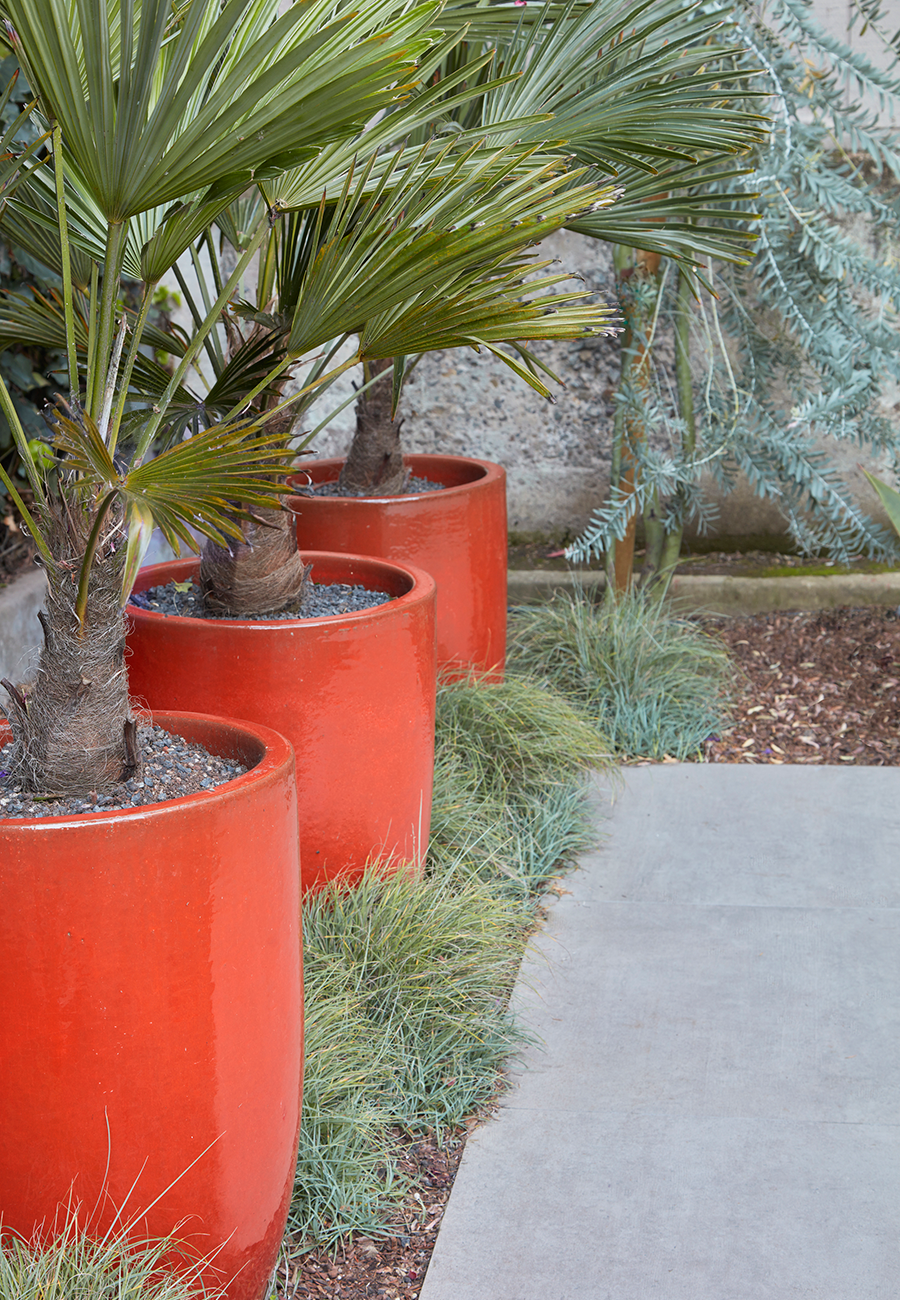
Trachycarpus wagnerianus (in orange pots)
Trachycarpus palms
Trachycarpus come from Asia, ranging from eastern China all the way to the Himalayas. Because many of them grow at high altitudes in nature, they’re happy in cool weather. Trachycarpus wagnerianus (we like to call them “waggies”) can famously be found growing in the harbor areas of both Vancouver and Dublin. Their elegant fans, slender trunks, and slow growth habit make them a great choice for pots.

Trachycarpus fortunei 'Wagnerianus' (left) and Trachycarpus martianus (center) (photo by Caitlin Atkinson)

Banksia integrifolia; photo by Caitlin Atkinson

Banksia menziesii; photo by Caitlin Atkinson
Banksia integrifolia (and more banksias!)
The Banksia integrifolia tree grows along the eastern coast of Australia in Queensland, New South Wales, and Victoria. Lots of different banksias and other proteaceous plants thrive here in coastal California, especially by the coast because they love the sandy soil and coastal temperatures.

Coastal microclimates make California a perfect place to grow tree ferns.
Dicksonia antarctica
Sometimes called the Tasmanian tree fern, Dicksonia antarctica can be found growing wild in eastern Australia and Tasmania, where there are old growth forests of these trees that date back hundreds of years. It grows slowly, making it a great choice for city gardens, and it loves our moist air and mild temperatures.

Leucadendron argenteum (center) surrounded by friends at Flora Grubb Gardens.

Silvery Leucadendron argenteum catching the sunlight is pure magic.
Leucadendron argenteum
The stunning, shimmery silver tree, an endangered member of the protea family, is endemic to a very small corner of the globe: the slopes of Table Mountain on the Cape Peninsula in South Africa, where it grows under a blanket of mist called “the tablecloth.” Lucky for us, Leucadendron argenteum also happens to enjoy growing wherever you find coastal influence. Its soft, lustrous foliage is a truly striking accent in the garden.

Beschorneria ‘Flamingo Glow’ (foreground)
Beschornerias
Beschornerias are an agave relative that hails from northern and central Mexico. The leaf is softer than agave, and they produce tall, dramatic flower spikes (beloved by hummingbirds!) but don’t die after flowering.

Aeonium ‘Sunburst’ and Cordyline australis ‘Torbay Dazzler’
Cordylines
Many members of the cordyline family, like Cordyline australis ‘Torbay Dazzler’ and Cordyline petiolaris, come from New Zealand and the east coast of Australia, so they thrive in coastal California’s climate.
What a wonder it is that these unique beauties from all over the planet can live together happily here in our strange and wonderful climate. We love helping our customers create their own otherwordly spaces in their gardens. Come on down and see us in our stores !
For more of this kind of inspiration, delivered to your inbox, join our mailing list.
