Every Brachychiton hides a secret: a bulbous, sculptural root is developing below the soil surface, and surprisingly, the plant doesn’t mind if you unearth this part of the root. In fact, the Brachychiton is such a tough plant it will put up with almost anything. Here’s an illustrated guide to how you unearth a Brachychiton to give it the bonsai effect shown in the photos below.
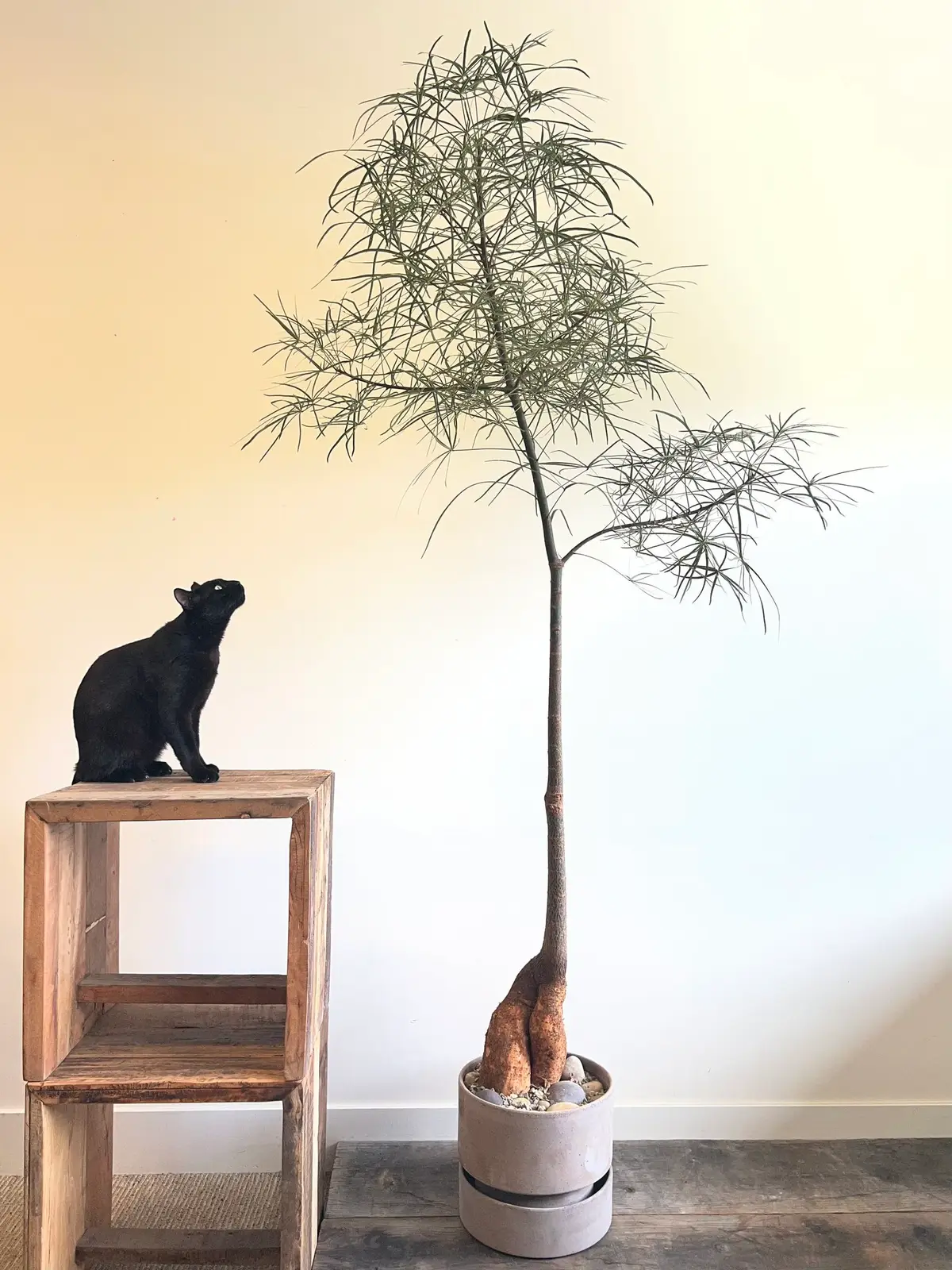
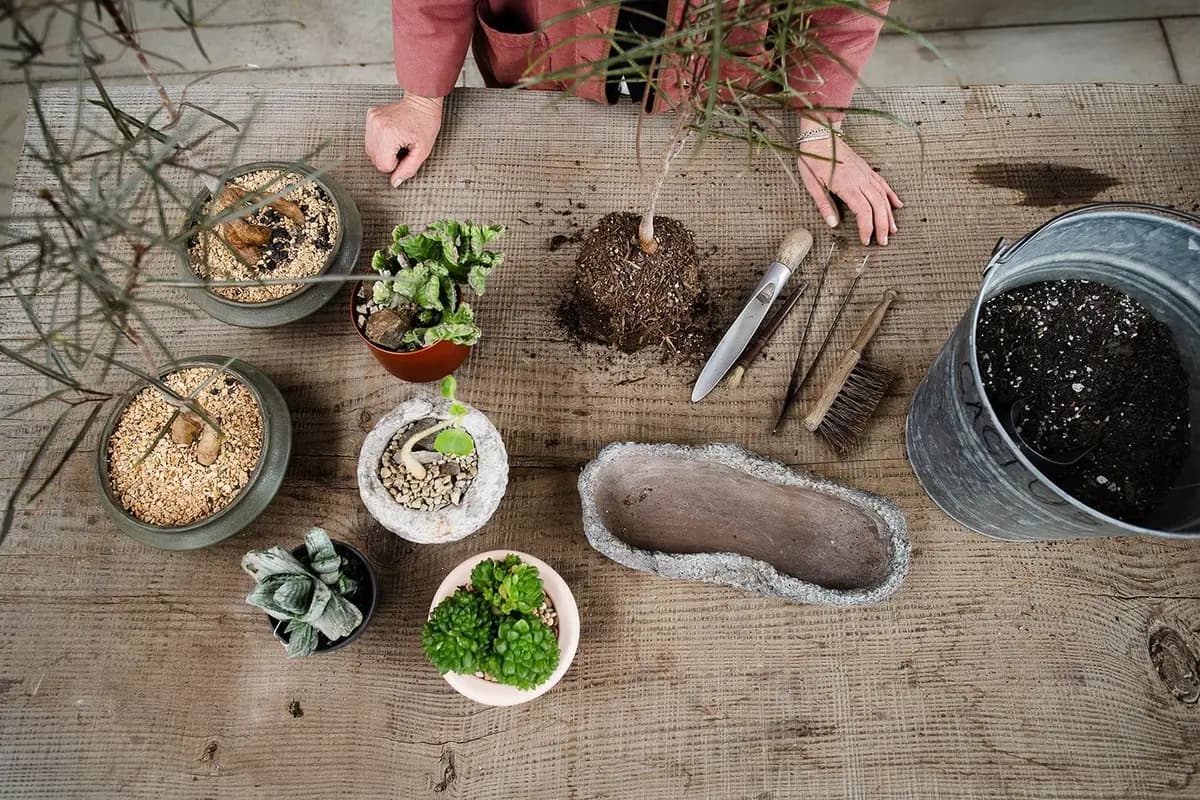
For this demonstration, we’ve used a very small plant, but the process is the same at any size, the work is just a bit heavier.
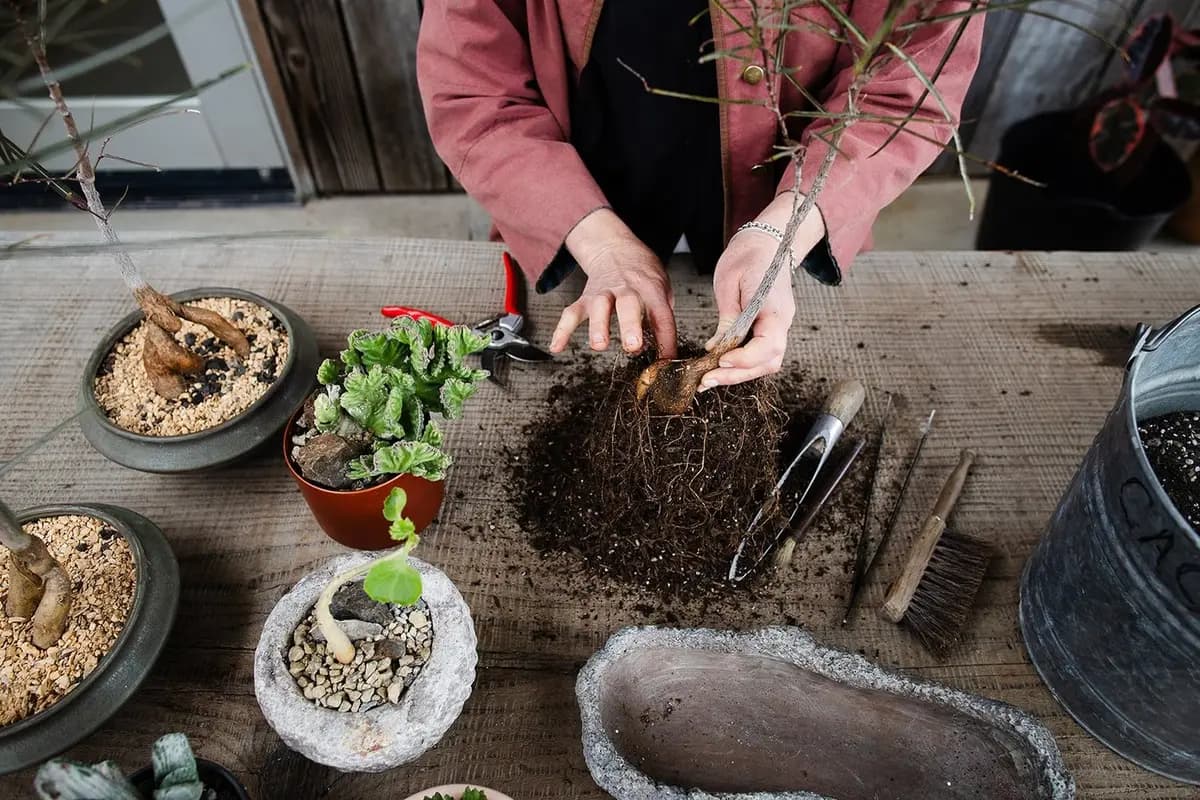
Start by carefully removing the soil from around the trunk. As you do so, be very gentle with the newly exposed trunk which will be a little bit soft and very fragile.
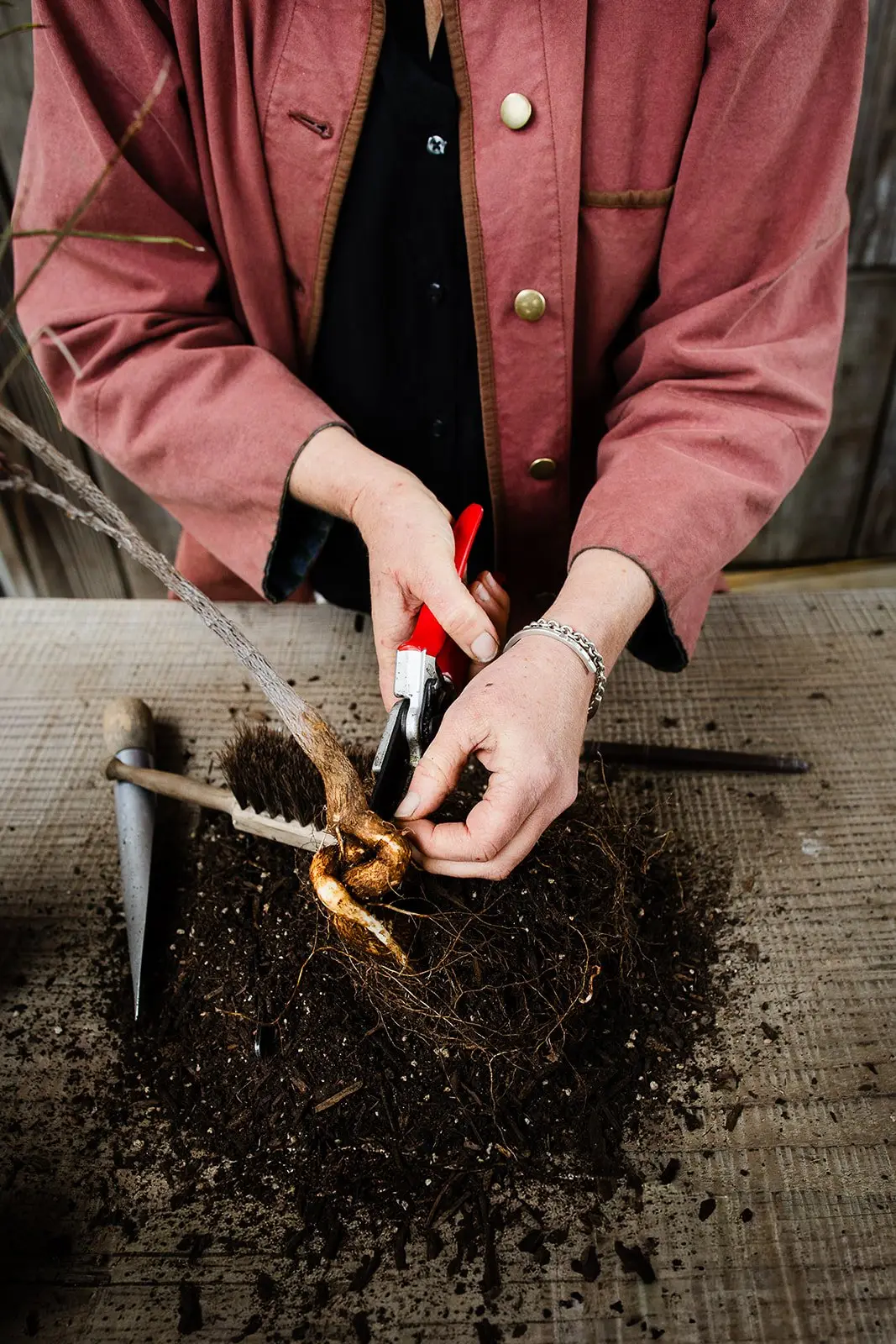
You may want to very carefully remove some of the smallest roots. It is safe to remove about a third of the total root mass of the tree.
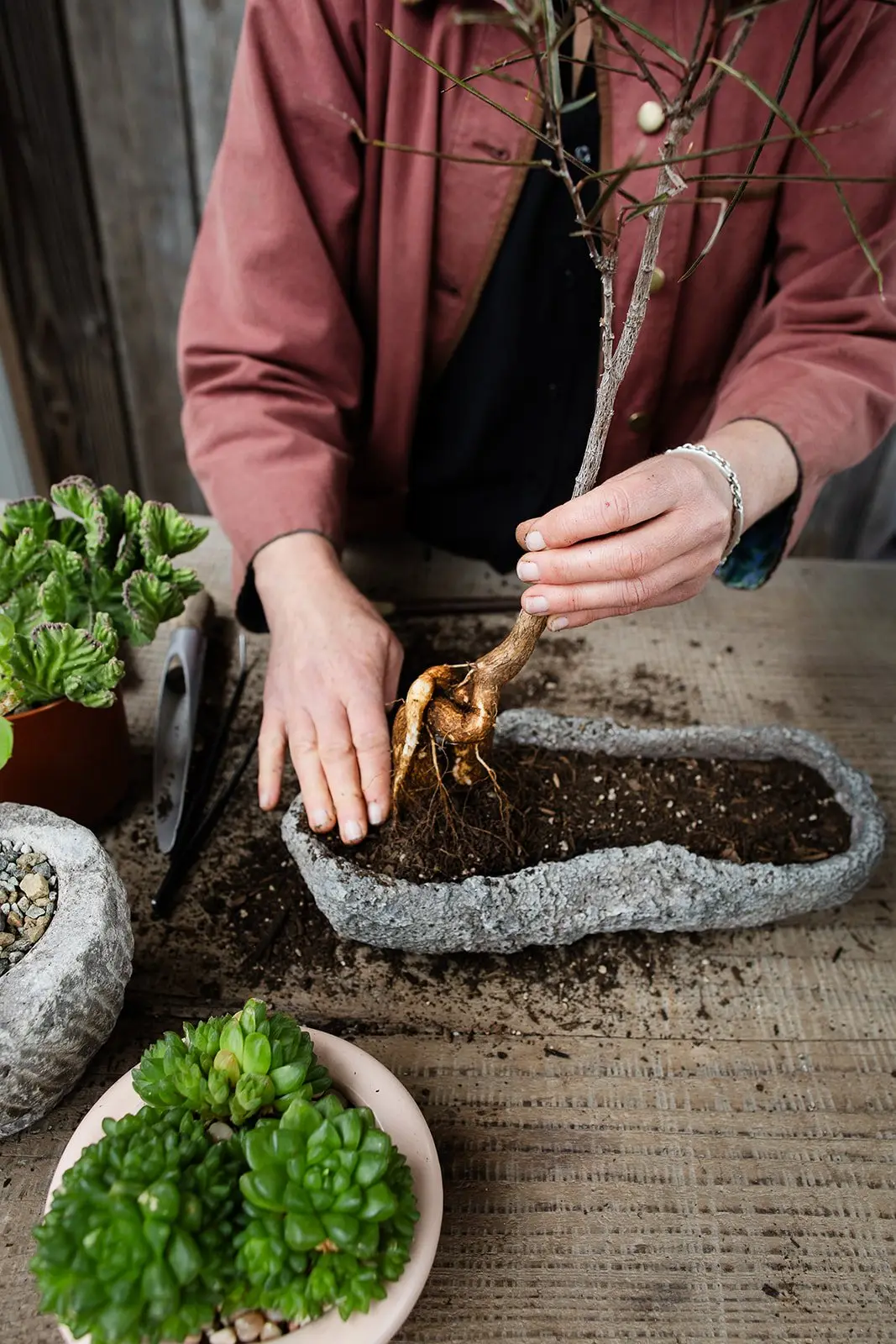
Place the plant in a dish, forcing the lowest roots to the bottom of the dish and spreading them out in the dish to create stability.
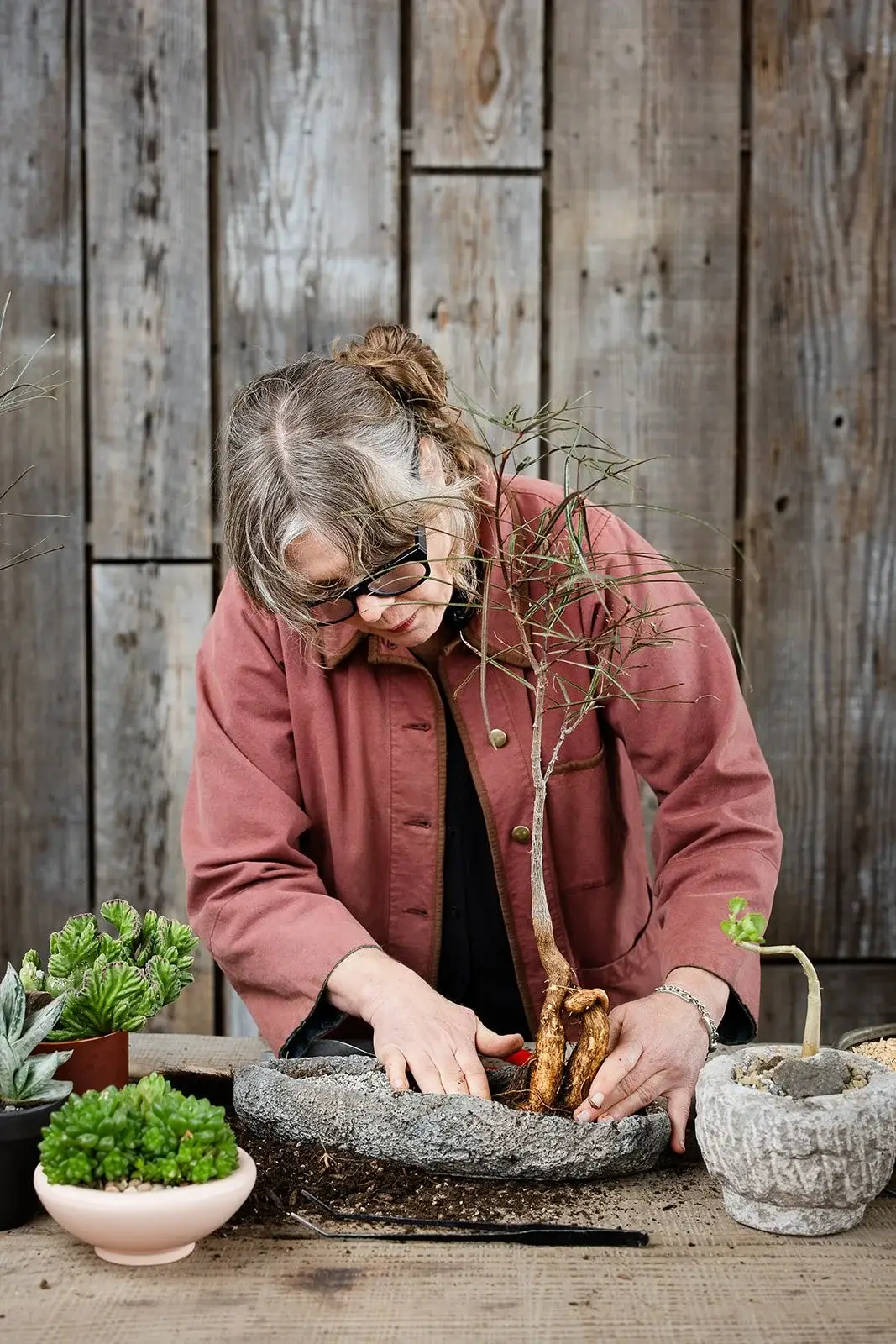
Use a cactus mix soil. put the soil firmly around the roots and trunk. Add an ornamental gravel for a completed look and additional stability.
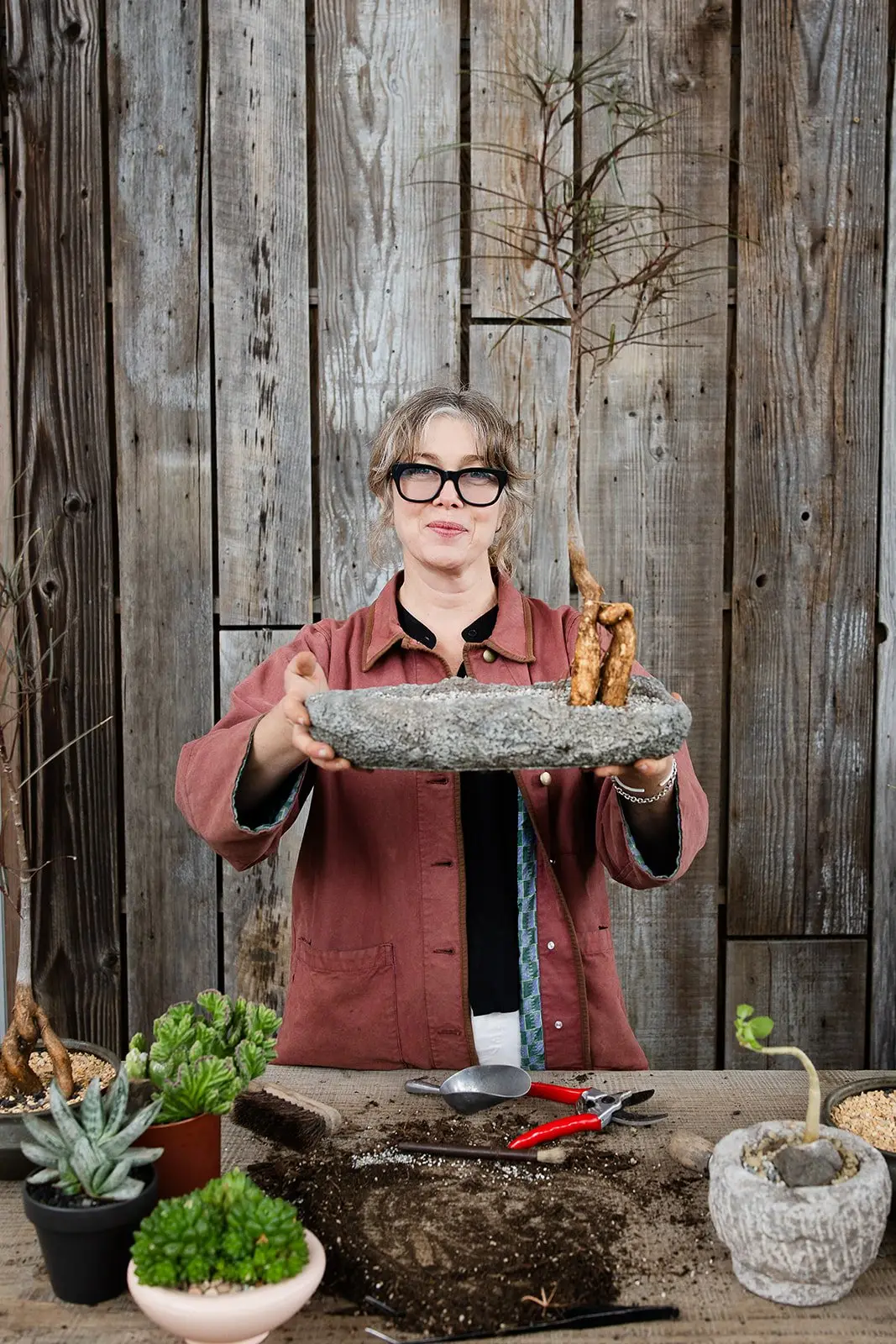
Once completed, water the plant once and then wait for it to go almost completely dry before watering again. Expect some leaf drop! The plant has been through a serious change and will respond by shedding some leaves. Not a problem.
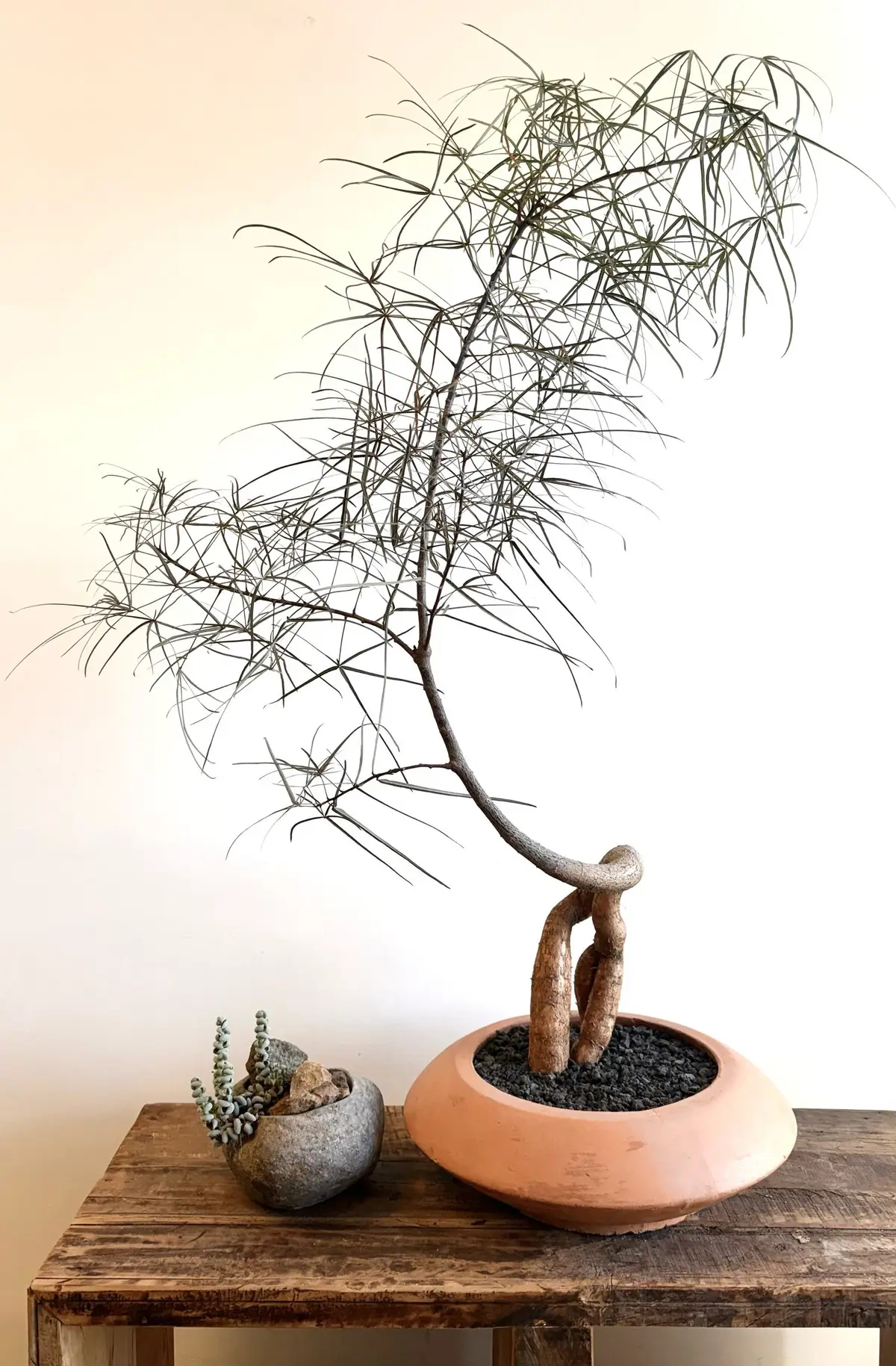
Indoors, your plant will do best in a very bright condition. It will want to go almost completely dry between watering. It it gets very stresses, it may drop all of its leaves, but it will almost always recover.
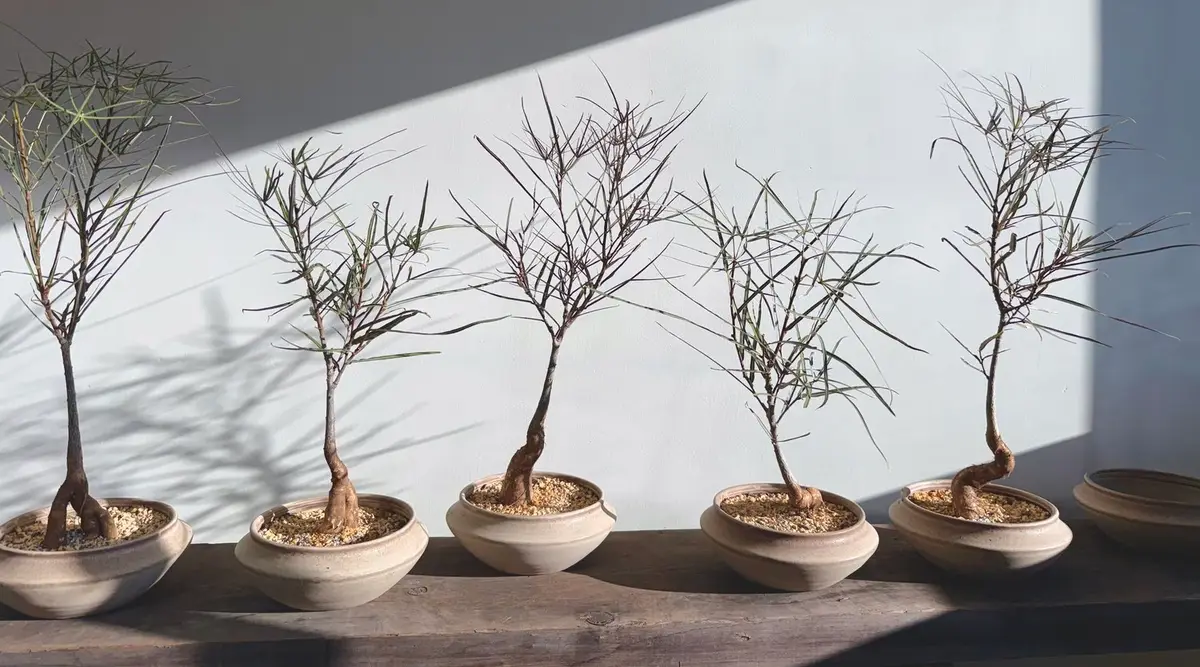
This Brachychiton has been kept in a lower light condition. You can see that the shape of the leaves have changed due to the low light.
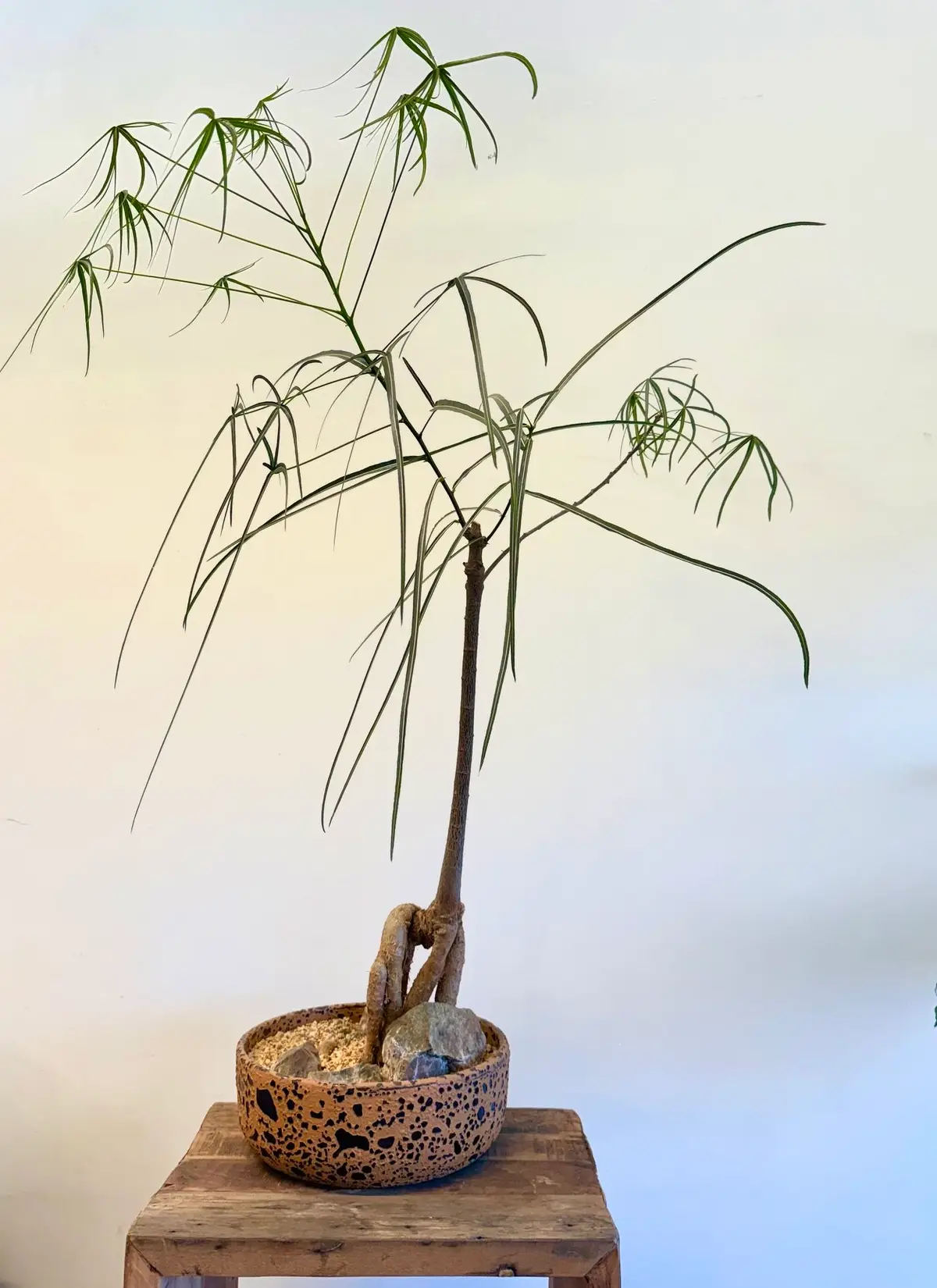
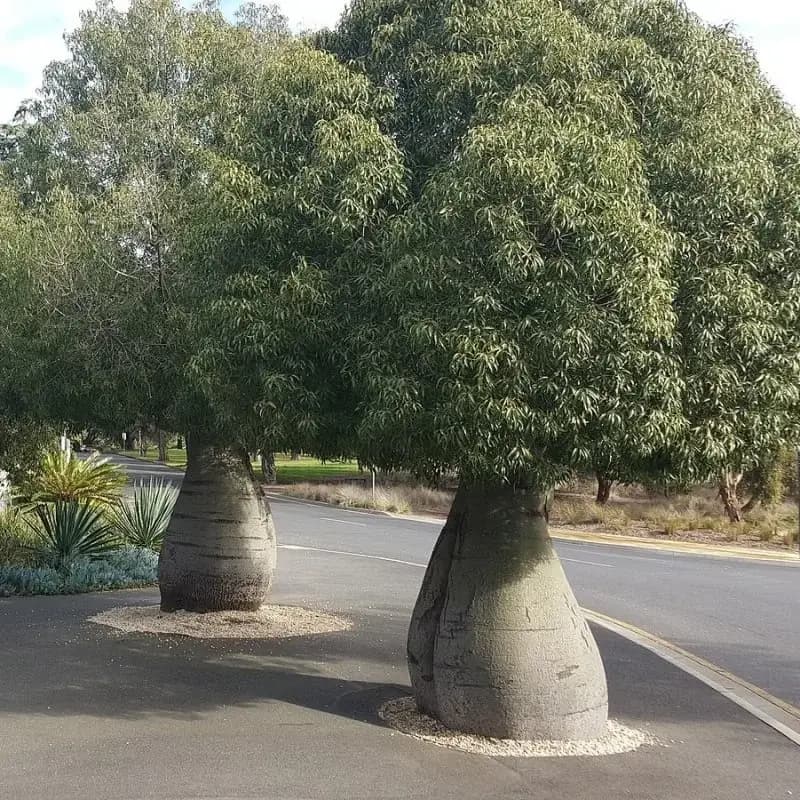
Fun fact: Brachychiton has polymorphic foliage- with different juvenile and mature leaves. The leaves you see in these photos are all juvenile foliage. The mature leaves have a completely different look. Here is a mature Brachychiton, really showing why it is called a “Bottle Tree” and showing its adult foliage.