
Rhopalostylis sapida
nikau palm
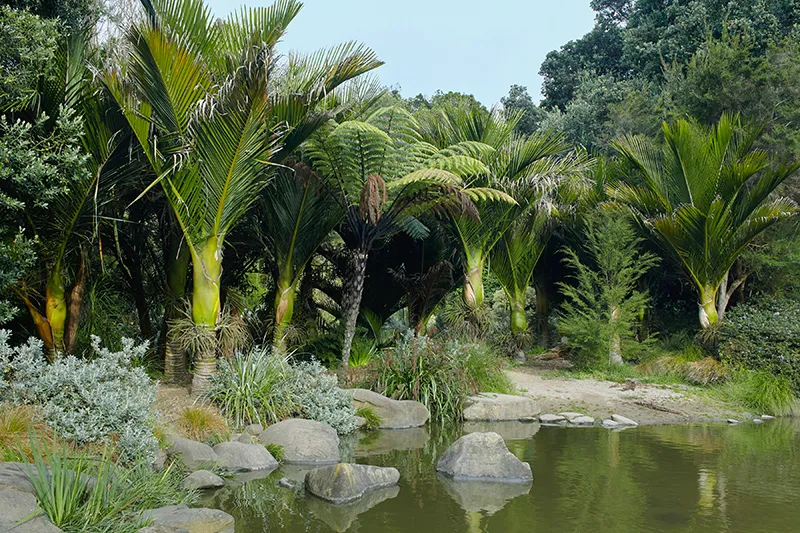
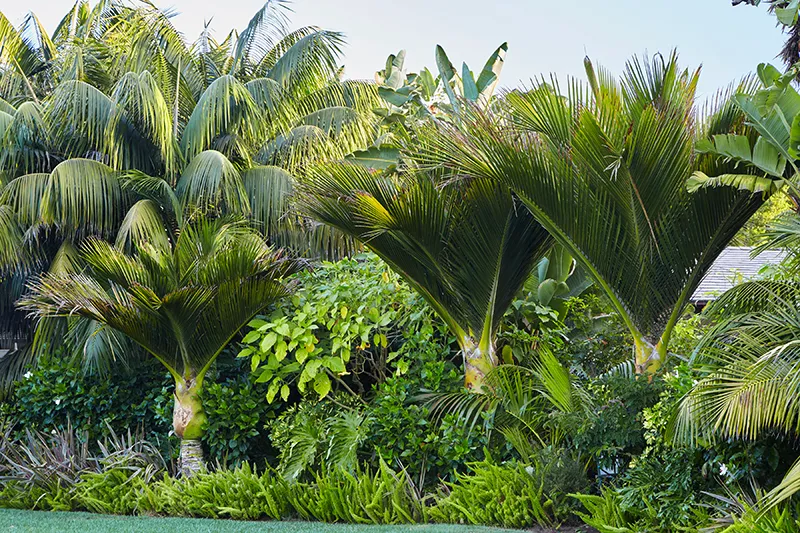
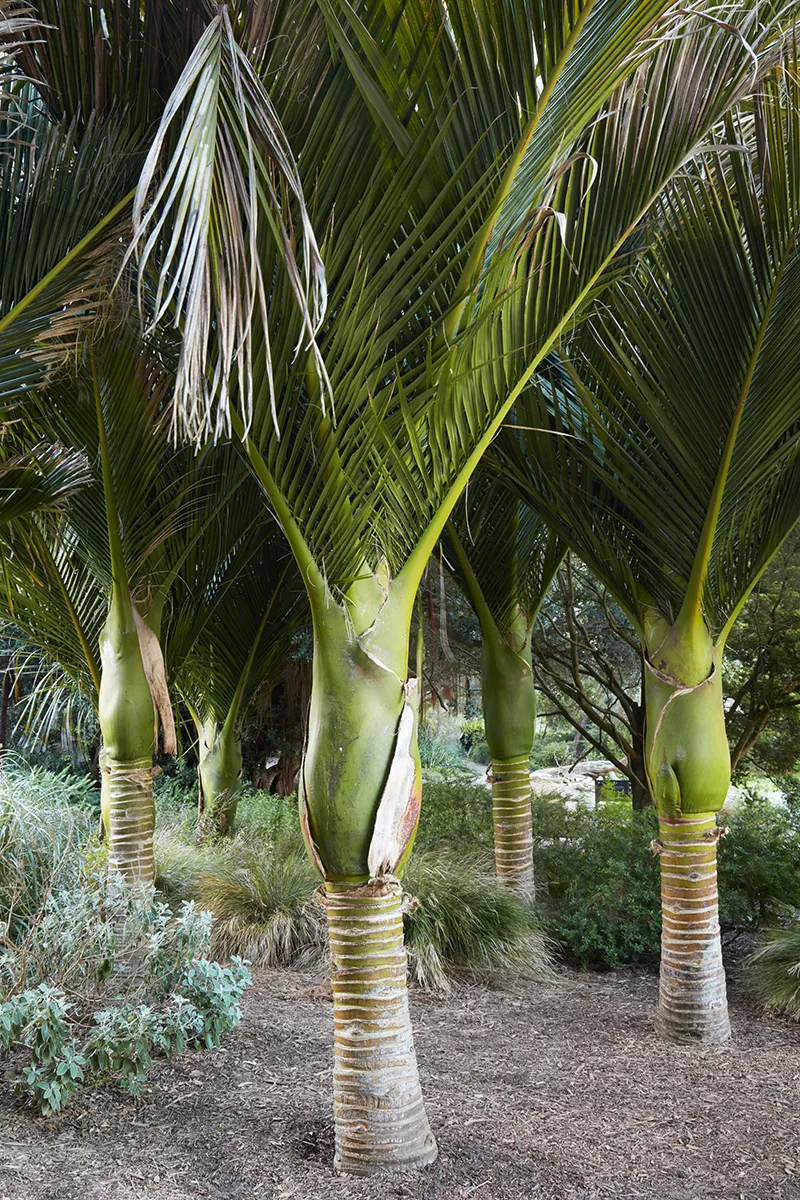
Stiff, upright feather fronds are held by bulbous apple green leaf sheaths. Green ringed trunk. Clean, exotic appearance.
 Altura Altura | 20–30 pies |
|---|---|
 Ancho Ancho | 6–10 pies |
 Tolera Tolera | Costa, Veranos frescos, Neblina, Suelo húmedo, Sal, Viento |
 Riego Riego | Moderado – Alto |
Being from New Zealand, this palm appreciates consistent water, but won't tolerate soggy soil. Once it's established, be sure to water it when the top inch or two of the soil is dry. Usually this will mean watering deeply every five to seven days during the dry season. | |
 Resiste hasta Resiste hasta | 25 °F |
 Exposición Exposición | Sombra total – Pleno sol |
 Características Características | Palma, Solitaria, Tropical |
 Interior / exterior Interior / exterior | Exterior |
 Drenaje Drenaje | En el suelo: mezcla para cactus, En maceta: mezcla para cactus, Tolera suelo pesado, Tolera suelo arenoso |
 Fertilización Fertilización | Fertilizante para palmas |
 Origen Origen | Nueva Zelanda |
 Nativa de California Nativa de California | No |
 Zonas Sunset Zonas Sunset | 16, 17, 21–24 |
Notas de cultivo
Thrives in cool marine influence areas of coastal California, even through the drier areas of Southern California.
Palms are generally heavy feeders, so if you want them growing quickly and looking their best, they should be fertilized at least three times a year. Fertilizing at spring equinox, summer solstice and fall equinox will allow for a winter rest. Be sure to feed your palm with a fertilizer that contains micronutrients (especially including magnesium), especially if you see yellowing leaves or yellow spots on the leaves.
Will not grow in interior California as this palm is intolerant of dry heat.
Young plants appreciate shade and can be cooked quickly in full sun. Mature plants do well in full coastal sun.
Adaptable to various soils, but prefers well drained soil.
Interés especial
Since this palm has almost no petioles (leaf stems) its crown resembles a shaving brush, thus the second common name for this tree - the shaving brush palm. This also means that the crown is both very full and also narrow, fitting into surprisingly tight spots.
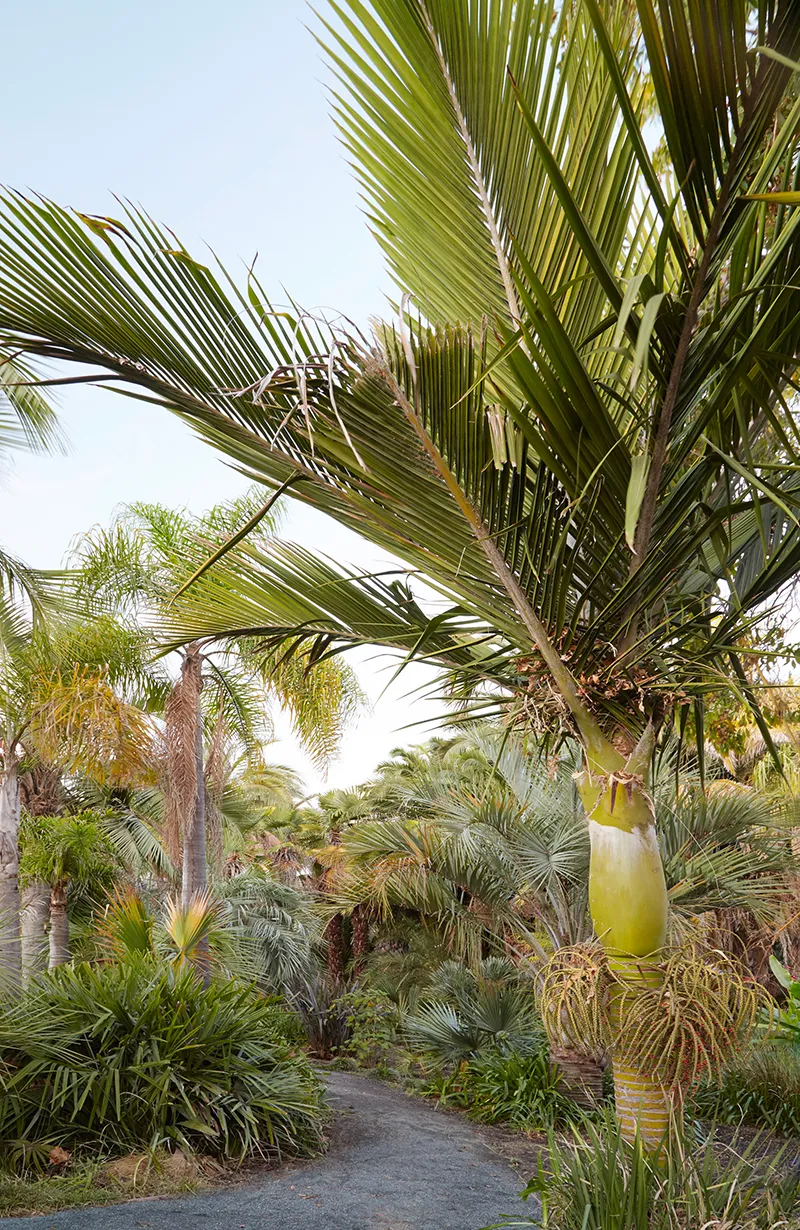
Plumed amethyst flowers emerge below leaf sheaths, followed by red fruit.
It is reported that the Maori traditionally ate the young inner leaf shoots and also immature flower clusters. They also used Nikau leaves for thatch.
This palm is the most southerly growing palm on earth!
Enlaces
Esta información refleja las observaciones de Grubb and Nadler y de nuestra comunidad de amantes de las plantas. Siempre tomamos en cuenta las aportaciones de otros horticultores y agradecemos los comentarios de quienes tengan más información sobre el cultivo de esta planta.
© 2020–2026 Grubb and Nadler. Todos los derechos reservados.