
Aechmea gamosepala
matchstick plant
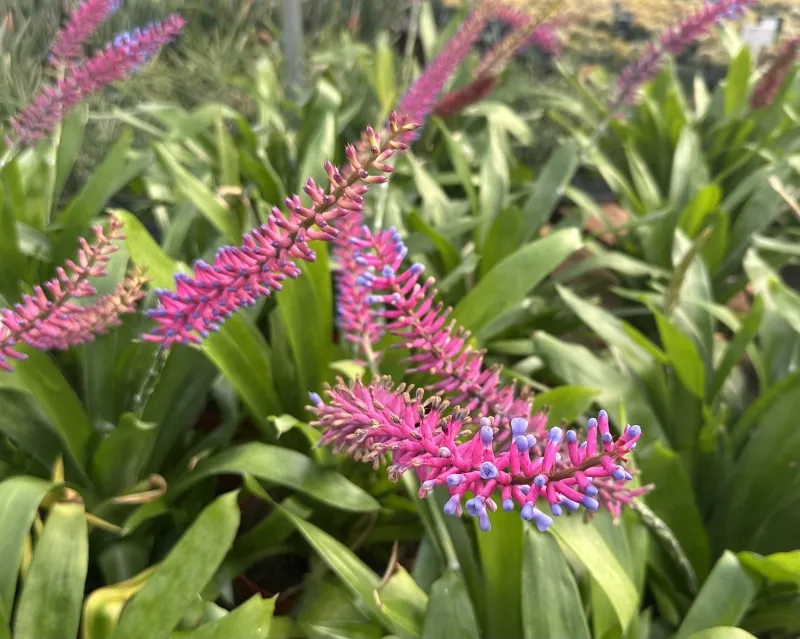
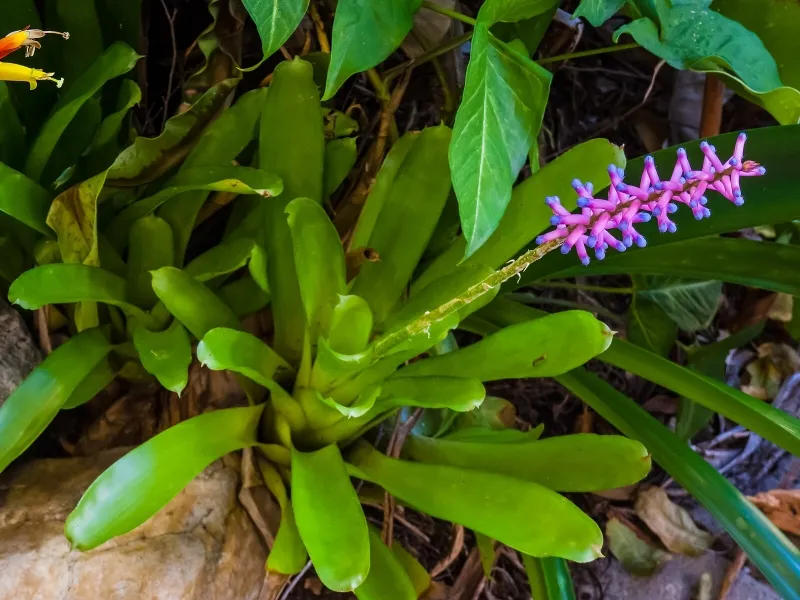
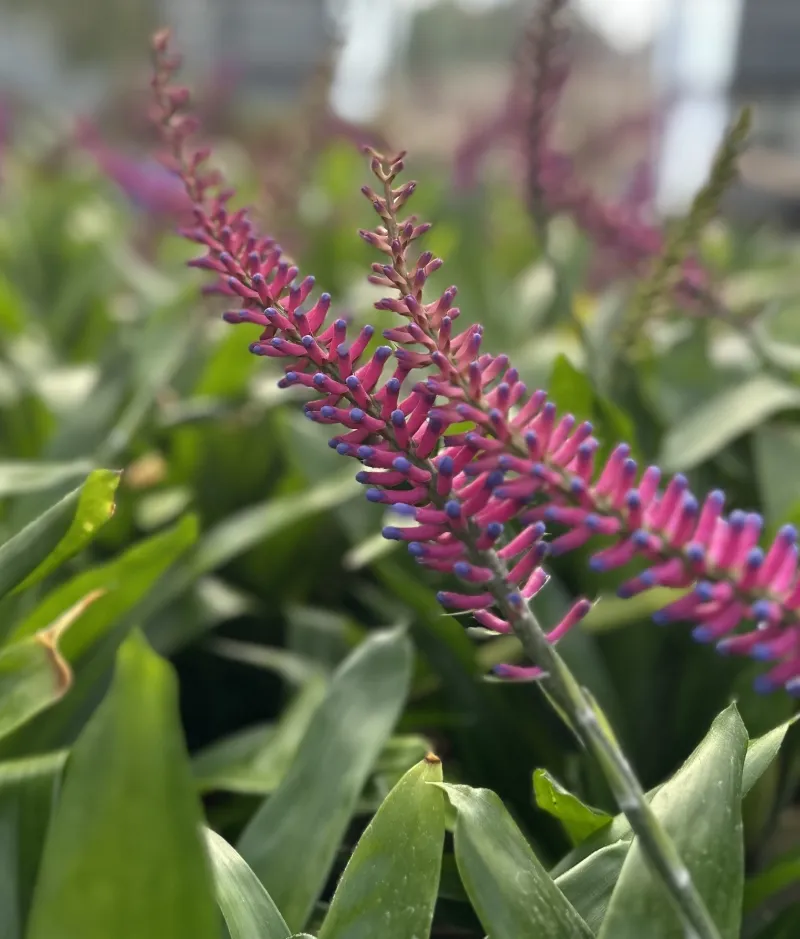
Easy, fast, and adaptable bromeliad. One of the best for cold or planting in the ground. The common name matchstick plant comes from the pastel pink and blue flowers resembling match heads.
 Height | 12–16in |
|---|---|
 Width | 12–24in |
 Tolerates | Cold, Cool Summers, Heat, Narrow Planting, Pots |
 Water needs | Moderate |
While looking tropical, bromeliads are surprisingly drought tolerant and we think of watering them as other soft leaved succulents such as echeveria. One of our staff grows this plant outdoors in Oakland with mostly shade and a couple hours of late afternoon sun. He says they thrive with a once a month hand watering during summer, amazing for such a tropical plant! | |
 Hardy to | 20°F |
 Exposure | Full Shade – Part Shade |
 Plant traits | Bromeliad, Epiphyte, Flowering, Monocarpic, Rosette, Suckering, Tropical, Vertical Gardening |
 Indoor / outdoor | Indoor or Outdoor |
 Drainage | In Ground: Cactus Mix, In Pots: Cactus Mix, Orchid Bark, Tolerates Sandy Soil |
 Fertilizing | Acid 1/2 Strength, All Purpose 1/2 Strength |
 Origin | E South America |
 California native | No |
 Sunset zones | 8, 9, 14–24, H1, H2 |
Growing Notes
This is one of the easiest and most cold hardy of our bromeliads, surviving chills down into the low twenties, though you can expect some damage to any poorly timed flower spikes.
Because they are usually growing in tight spots bromeliads nutrients typically come from decaying litter, making them appreciate a light acidic fertilizer, but all purpose seems to work just fine as well.
Avoid planting under trees or other plants that shed a lot, as the litter will collect in the rosettes, which looks messy and also smothers the bromeliad. Removing the leaves can damage your bromeliads.
Each rosette will bloom once. Afterward you can cut the flower spike low in the rosette, which will persist for months or longer. Eventually that head will brown and die off, at which time it should be removed to keep your plant looking tidy and make space for new rosettes to grow.
If planted in Sunset Zones 8 and 9 be sure this plant is grown in full shade, as it won't thrive in with sun in the low humidity of these zones.
Links
Which store do you shop at?
The above information reflects the observations of Grubb and Nadler and our extended plant community. We always consider input from fellow horticulturists and welcome feedback from those with additional information on the culture of this plant.
© 2020–2026 Grubb and Nadler. All rights reserved.