
Casuarina glauca ‘Cousin It’
Cousin It casuarina
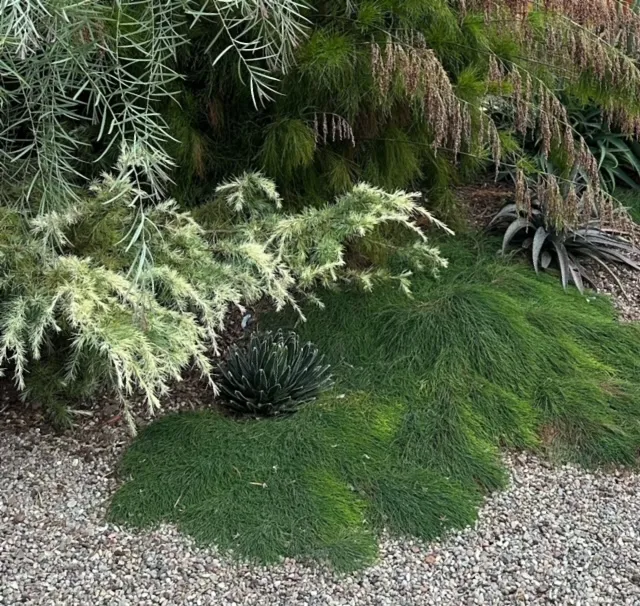
Prostrate swamp oak is a low, trailing evergreen shrub that hugs the ground, hangs down walls, and mounds over rocks. Good in containers.
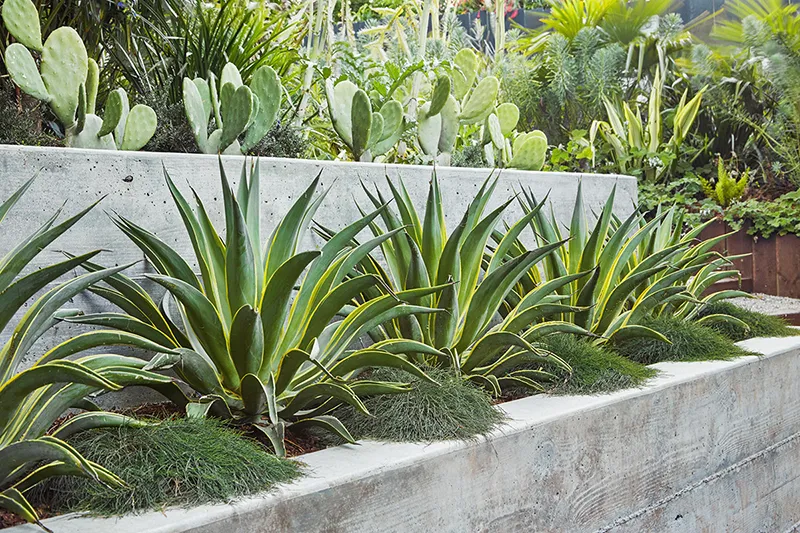
Seen in Flora Grubb’s New Home Garden →
 Height | 4–18in |
|---|---|
 Width | 4–6ft |
 Tolerates | Coast, Cool Summers, Drought, Fog, Moist Soil, Pots, Salt, Wind |
 Water needs | Low – Moderate |
Water this plant regularly, when the top inch or so of soil feels dry. If you establish this pattern over several years, then you can cut back to watering every week or two in dry weather. Use drippers, emitters, or a slow stream of water so that it doesn't run off; allow the water to trickle all the way down through the deepest layers of soil. In a pot slowly water the entire surface until water comes out of the bottom of your pot. Be sure to give this plant extra water in the first weeks after it's planted as they are extra thirsty when they first get planted. They also want to be planted, either into a large pot or the ground, immediately and are intolerant of listing in their nursery cans. Drying leaves or leaves that look faded are a sign of under watering. | |
 Hardy to | 20°F |
 Exposure | Part Shade – Full Sun |
 Plant traits | Foliage Feature, Ground Cover, Spreading, Weeping |
 Indoor / outdoor | Outdoor |
 Drainage | In Ground: Planting Mix, In Pots: Potting Soil, Tolerates Heavy Soil, Tolerates Sandy Soil |
 Fertilizing | All Purpose, Low Needs |
 Origin | Australia |
 California native | No |
 Sunset zones | 8, 9, 13–24, H1, H2 |
Growing Notes
Tolerates a high water table as well as somewhat salty conditions. It is also drought-tolerant once established. Native to coastal southeast Australia, from South Australia through Victoria and New South Wales to Queensland.
Be gentle with this plant when planting and in its early seasons of growth. It's somewhat brittle.
Can be pancake-flat in its younger, especially outer, growth, while mounding starting in the center over time.
Special Interest
This sterile (non-fruiting) prostrate (low-growing) form comes from a fast-growing tree that normally reaches 25 feet to 65 feet. While the tree form is known to be invasive in Florida, the Cousin It form does not flower or set seed and thus poses no threat of escape.
The parent species is sometimes called Australian pine for its resemblance to pines and its cone-like fruits; however, it's a flowering plant with extremely reduced leaves and green photosynthesizing stems (the "needles").
Flora Grubb grows this plant in her own garden as a groundcover.
Stories featuring this plant
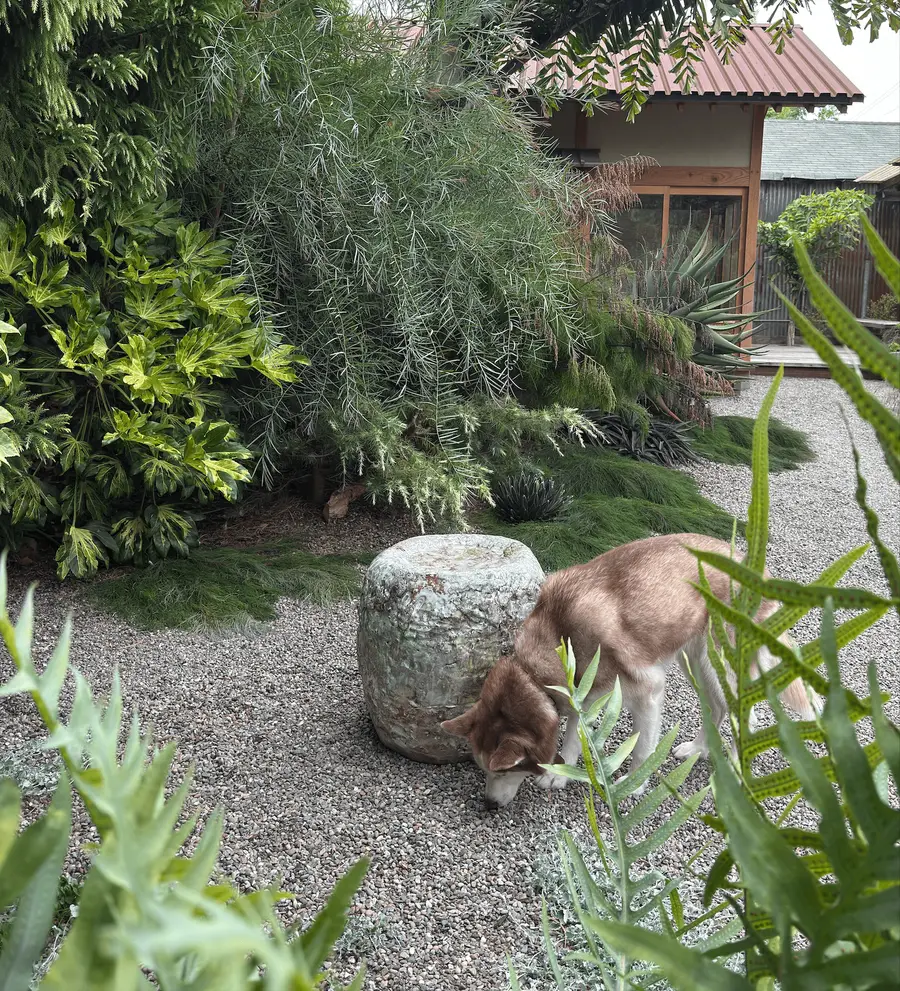
More Info
Why call this plant an "oak"? It sure doesn't look like an oak tree, but its wood resembles that of an oak.
In habitat, this plant forms a symbiotic relationship with a soil bacterium to fix atmospheric nitrogen, a key nutrient for plant growth.
Links
Which store do you shop at?
The above information reflects the observations of Grubb and Nadler and our extended plant community. We always consider input from fellow horticulturists and welcome feedback from those with additional information on the culture of this plant.
© 2020–2026 Grubb and Nadler. All rights reserved.